


Neiphiu Rio highlights hurdles in externally aided projects and seeks faster clearances for the Northeast.
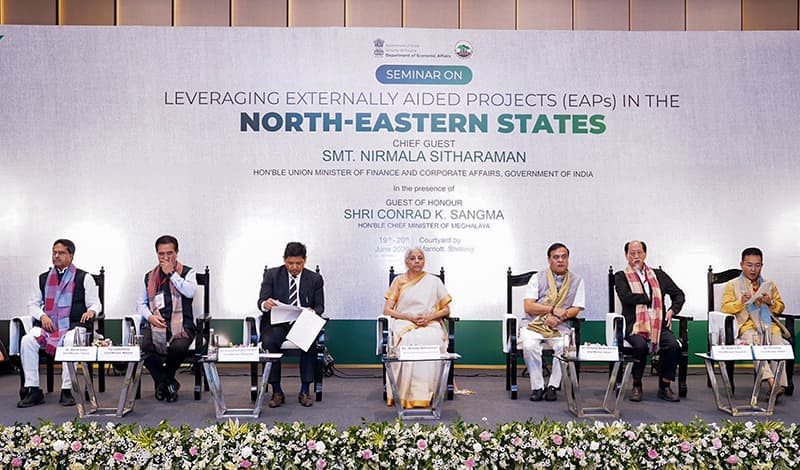
KOHIMA — Chief Minister Neiphiu Rio on Friday said that Nagaland is committed to strengthening the implementation of externally aided projects (EAPs) and ensuring they translate into tangible improvements in people's quality of life.
Addressing a seminar on ‘Leveraging Externally Aided Projects in the North-Eastern States’ in Shillong, Rio said that the state sees immense opportunities for collaboration in climate resilience, sustainable agriculture, renewable energy, urban development, digital governance, healthcare, skill development and entrepreneurship.
In a series of posts on X, the chief minister said that the unique realities of the north-eastern states—including hilly terrain, dispersed settlements, fragile ecosystems, customary land systems and limited institutional capacity—must be recognised while designing and implementing EAPs.
Highlighting the challenges in implementing such projects, Rio noted that EAPs operate on a reimbursement model that requires states to pre-finance projects.
For smaller north-eastern states, he said, this poses structural difficulties and suggested that multilateral development banks (MDBs) consider providing advance financing support.
He also pointed out that obtaining statutory clearances from multiple agencies often delays project implementation and recommended a dedicated fast-track clearance mechanism for the Northeast to improve efficiency and ensure timely execution.
Rio further observed that standard project timelines often overlook the need for community consultations and local decision-making processes, resulting in redesigns, revised cost estimates and project extensions.
The way forward, he said, lies in strengthening project preparation, enhancing institutional capacity, deepening collaboration among stakeholders, responding to community needs and maintaining a focus on sustainable outcomes.
The chief minister acknowledged the contributions of development partners such as the World Bank, Asian Development Bank (ADB), Japan International Cooperation Agency (JICA), KfW, New Development Bank (NDB) and other multilateral development banks, saying their support extends beyond financing to include technical expertise, institutional strengthening, innovation and global best practices.