


Northeast states seek region-specific education norms under NEP 2020, citing terrain, sparse populations, infrastructure gaps and funding challenges
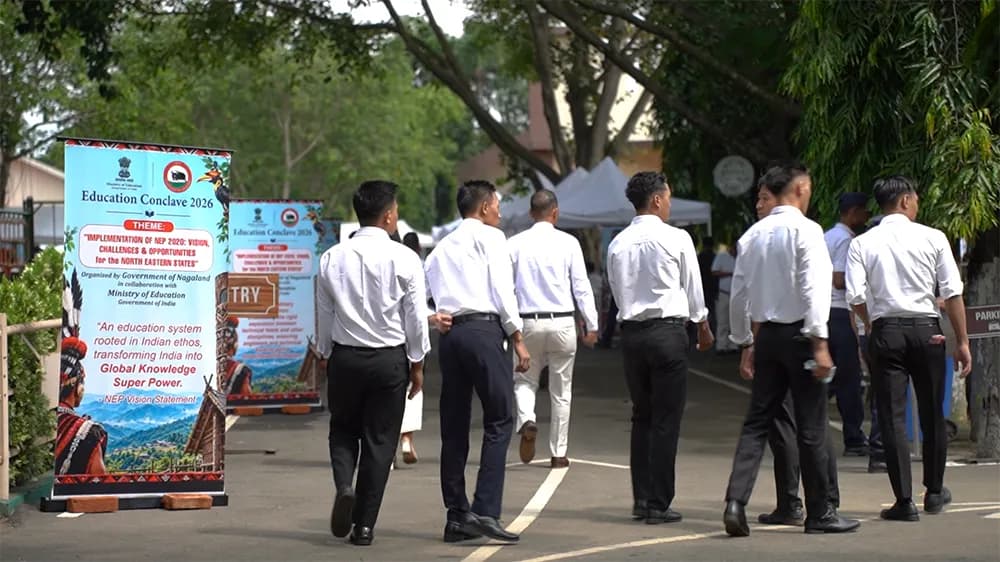
DIMAPUR — Northeast states have called for a more region-specific approach to implementing the National Education Policy (NEP) 2020, citing the region’s difficult terrain, scattered populations, infrastructure gaps and distinct educational needs.
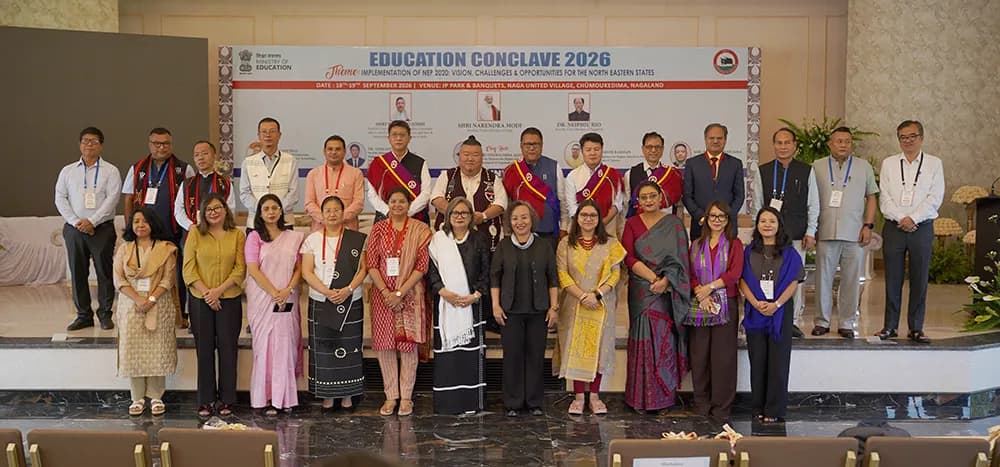
The issue came into focus at the two-day Education Conclave 2026 being held at JP Parks and Banquets, Naga United village, Chümoukedima, with representatives from all eight north-eastern states discussing the implementation of NEP 2020.
The conclave, organised by the government of Nagaland in collaboration with the Union Ministry of Education, is themed “Implementation of NEP 2020: Vision, Challenges and Opportunities for the North Eastern States”.
Mizoram’s Minister for School Education and Higher & Technical Education, Dr. Vanlalthlana, called for education norms suited to the region’s geographical and demographic realities, particularly for small schools and institutions in hilly and sparsely populated areas.
He pointed to the higher cost of constructing and maintaining educational infrastructure in hilly terrain and the difficulty of maintaining institutions with low enrolment. He also highlighted declining enrolment in government schools, dropout rates, uneven distribution of teachers and limited access to higher-secondary education as challenges requiring region-specific responses.
Vanlalthlana proposed the creation of a forum of education ministers from the eight north-eastern states, supported by a common technical secretariat, to coordinate on education-related issues and make joint submissions to the Centre.
Mizoram, he noted, was declared India’s first fully literate state in 2025, but literacy should be viewed as only the beginning of a broader educational transformation.
According to UDISE+ 2025-26 data cited at the conclave, Mizoram has 3,965 schools, 2.84 lakh students and 25,282 teachers. The minister said the state continued to face challenges relating to low or zero enrolment, dropout, teacher distribution and access to higher-secondary education.
He also pointed to difficulties faced by north-eastern states in accessing central funds, particularly where matching contributions are required, and called for greater consideration of the region’s circumstances while framing education policies and funding norms.
Nagaland Minister for Higher Education and Tourism Temjen Imna Along said NEP 2020 had the potential to transform the education system but stressed the need for constructive discussion on how it should be implemented in the Northeast.
He said degrees alone did not necessarily guarantee employment and emphasised the need to equip students with critical-thinking, problem-solving and other skills.
Along also raised the possibility of introducing Christian studies in university curricula in Nagaland, Mizoram and Meghalaya, saying the subject could be discussed positively and critically in the context of the region.
Assam Education Minister Ranoj Pegu highlighted the NEP’s emphasis on mother-tongue and multilingual education, saying it could help strengthen learning while preserving the linguistic diversity of the Northeast.
He also spoke about the introduction of new academic and skill-based options, including traditional arts, artificial intelligence and soft skills. Assam, he said, had introduced Bihu dance as a subject, with around 32,000 students taking it.
Pegu also highlighted the introduction of four-year undergraduate programmes and the need to focus on employability, critical thinking, creativity, leadership, problem-solving and technology.
Arunachal Pradesh MLA and adviser to the Higher and Technical Education Minister Mutchu Mithi said geographical, human-resource and financial constraints posed particular challenges to education delivery in the state.
He called for flexibility in resource allocation and greater emphasis on digital literacy, critical thinking and the ability to identify misinformation.
Tripura Education Minister Kishor Barman stressed the need to shift the focus from marks to learning and skills, describing the approach as “local roots with global aspirations”.
He identified infrastructure, trained teachers, connectivity, research, industry partnerships and teacher capacity building as key areas requiring attention.
A common thread among the participating states was the need to account for the Northeast’s distinct demographic and geographical conditions while implementing a national policy.
The conclave is expected to provide a platform for the states to share their implementation status, identify common gaps and work towards a coordinated regional approach. The findings are also expected to be placed before the Centre during its review of NEP implementation.
The keynote address was delivered by Nagaland University Vice-Chancellor Jagadish K Patnaik. The inaugural session was followed by plenary discussions and presentations from participating north-eastern states.