


NEPEx-8 in Nagaland exposed gaps in disaster response systems despite good district performance during a large-scale earthquake mock drill.
Share


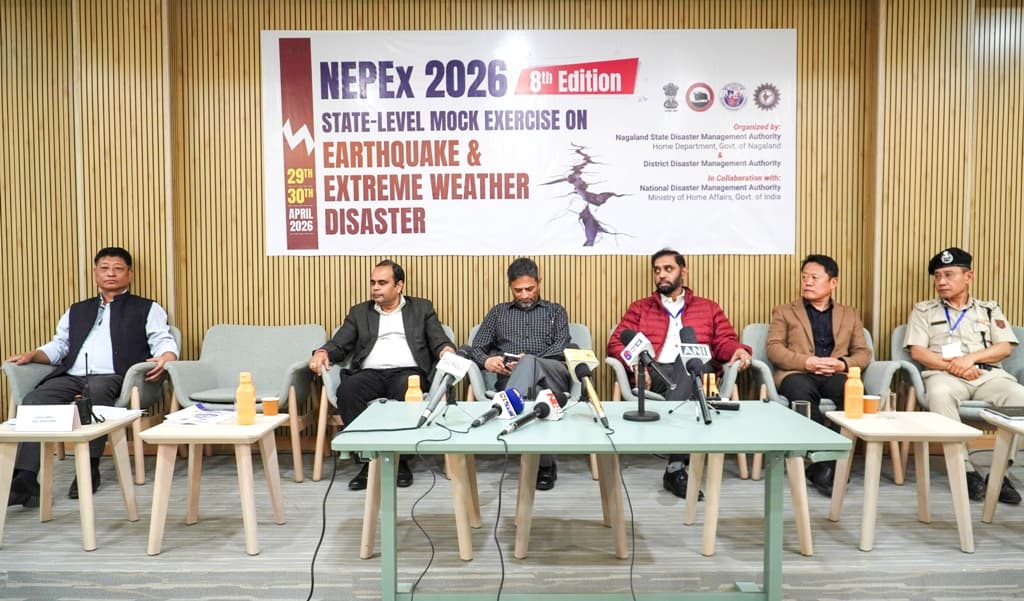
KOHIMA — The eighth edition of the Nagaland Emergency Preparedness Exercise (NEPEx-8) on Thursday highlighted gaps in disaster response systems even as officials described overall district-level response as “quite good”.
The large-scale mock drill, conducted by the Nagaland State Disaster Management Authority (NSDMA), simulated a 7.7 magnitude earthquake with the epicentre at Piphema under Kohima district, to assess preparedness, coordination and response across the state.
Principal Secretary and Home Commissioner Abhijit Sinha said the exercise activated the State Emergency Operations Centre and district-level centres, with response carried out under the Incident Response System (IRS).
Also read: Beauty & Aesthetics Society of Nagaland restricts participation in unverified national pageants
“Step-by-step actions were taken as per the laid-down manual, ensuring proper flow of information and coordination among all stakeholders,” he said, adding that the exercise was aimed at identifying gaps in communication and response mechanisms.
A debriefing session was held to assess shortcomings, with officials noting that systems that did not function as intended would be reviewed for improvement.
Lead Consultant (ME & IRS), National Disaster Management Authority (NDMA), Sudhir Bahl said the drill was impact-based, incorporating projected casualties, hospital requirements and logistical needs across districts.
He said the scenario included landslides disrupting connectivity, damage to Dimapur airport, potential impact on the Doyang dam and structural collapses causing casualties.
“The response from districts was quite good, but disaster preparedness always has scope for improvement,” Bahl said, identifying communication breakdown as a key concern, particularly in the event of mobile network failure.
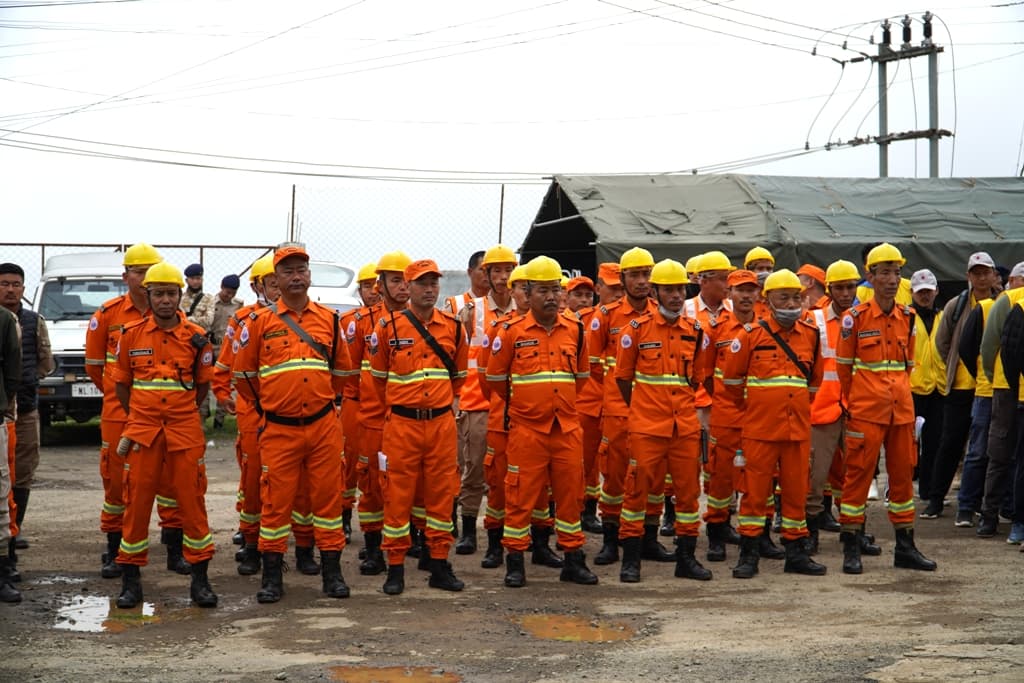
He called for stronger redundancy through satellite communication and greater coordination with telecom providers, while also stressing the need for coordinated restoration of critical routes by agencies including the Roads and Bridges department, Border Roads Organisation (BRO), and National Highways & Infrastructure Development Corporation Limited (NHIDCL).
Bahl further flagged petrol pump safety risks, noting the possibility of fires during earthquakes, and called for dedicated response plans. He also said school safety measures require further strengthening.
Responding to observations of confusion during the drill, he emphasised the need for greater seriousness in conducting such exercises and urged both officials and the public to treat mock drills as real scenarios.
NSDMA Joint CEO Dr. Johny Raugnmei cautioned media against misreporting, clarifying that volunteers acting as casualties during the exercise should not be portrayed as actual victims.
The exercise also included an “Operation Night Guard” component as part of the preparedness activities.