


Chief Minister Neiphiu Rio presents Nagaland Agriculture Policy 2025, outlining a roadmap for sustainable, climate-resilient and market-driven farming.
Share


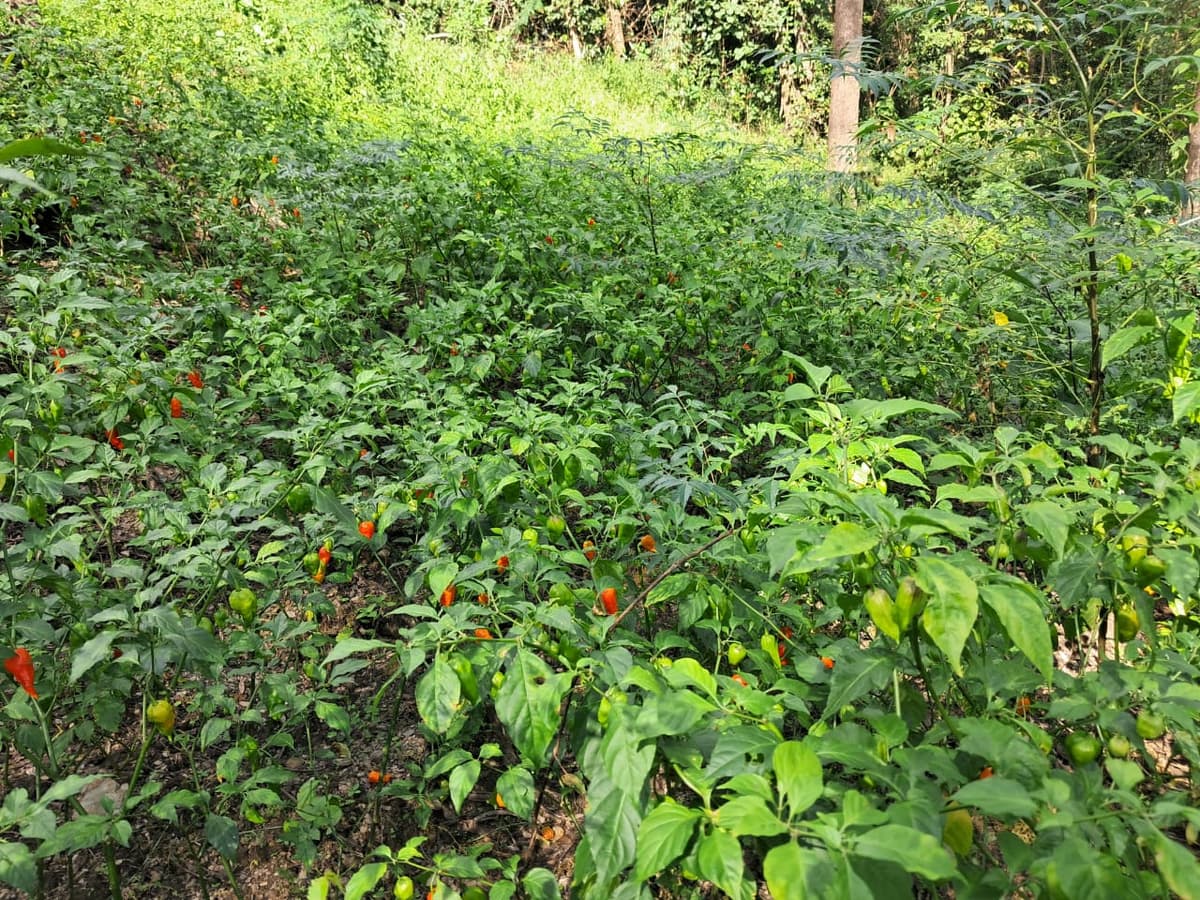
KOHIMA — The Nagaland Agriculture Policy (NAP) 2025 lays out a comprehensive roadmap to modernise the state’s agricultural sector by promoting sustainable, climate-resilient and market-oriented farming while improving rural livelihoods.
Chief Minister Neiphiu Rio presented the policy document on Monday during the eighth session of the 14th Nagaland Legislative Assembly in Kohima.
The policy is designed as a guiding framework for the state government to diversify agriculture, integrate traditional knowledge with modern science, and develop an environmentally sustainable and economically viable agricultural system.
It aligns the state’s agricultural development with national and global frameworks including Viksit Bharat 2047, Nagaland Vision 2030, and the UN Sustainable Development Goals (SDGs).
Backbone of economy
According to the document, agriculture continues to be the backbone of Nagaland’s economy, providing livelihoods to nearly 70% of the population and contributing significantly to the state’s Gross State Domestic Product (GSDP).
The state’s agricultural landscape includes jhum (shifting cultivation), terrace farming, horticulture, agroforestry and livestock rearing, which are closely tied to the culture, food security and livelihoods of local communities.
However, the sector faces multiple structural challenges, including low productivity, soil degradation, climate vulnerability, weak market infrastructure and limited access to credit.
Also read: Nagaland notifies process to reconstitute village councils for 2026–2031
The policy notes that heavy dependence on rain-fed agriculture, declining soil fertility, high post-harvest losses and fragmented market systems have kept many farmers in subsistence farming.
Customary land ownership patterns, while strengthening community cohesion, also present challenges for credit access, private investment and land-use planning, the document states.
To address these challenges, the policy proposes transforming agriculture in the state into a resilient, market-driven and sustainable system.
It promotes the adoption of agro-ecological principles, climate-smart farming practices and digital technologies to enhance productivity, strengthen market access and improve financial inclusion.
The policy emphasises the expansion of organic farming, regenerative agriculture and integrated pest management to protect soil health and ensure long-term sustainability.
Recognising the value of indigenous agricultural knowledge, the policy calls for systematic documentation and integration of traditional practices with scientific research, while supporting farmer-led innovation and local seed conservation.
It also highlights the need to strengthen market linkages, agricultural value chains, digital platforms and agribusiness opportunities so farmers can secure better incomes.
Nine strategic goals
The policy outlines nine strategic goals aimed at transforming Nagaland’s agriculture into a productive, sustainable and climate-resilient sector.
Key priorities include enhancing agricultural productivity through crop diversification, agro-climatic crop zoning, improved planting materials and integrated farming systems that combine crops, livestock and poultry.
To address environmental risks, the policy highlights the importance of climate-smart agriculture, including resilient crop varieties, agroforestry systems and improved climate advisory services for farmers.
Infrastructure development is another key component. The policy proposes strengthening local seed systems, community seed banks, storage facilities, agro-processing units and rural market connectivity to reduce post-harvest losses and improve value addition.
It also calls for greater investment in agricultural research, innovation and digital systems to help farmers access real-time information on weather, soil health and markets.
In addition, the policy stresses the need to expand agricultural finance and insurance, improving farmers’ access to institutional credit and government schemes such as the Kisan Credit Card and PM Fasal Bima Yojana.
The policy proposes a flexible implementation framework, providing broad strategic direction while allowing departments to align existing and future programmes with changing priorities and funding availability.
At the state level, the Nagaland State Agricultural Policy Steering Committee (NSAPSC) will oversee policy execution and inter-departmental coordination.
The Nagaland Agroecology Advisory Council (NAAC) will function as a technical advisory body comprising experts, research institutions and farmer organisations.
A dedicated sub-committee will focus on market infrastructure and digital agriculture, while the Planning and Statistics department will monitor performance indicators.
At the district level, District Agricultural Development Committees (DADCs) will oversee implementation and adapt programmes to local agricultural conditions, supported by community-based agriculture committees to strengthen grassroots participation.
The policy also encourages public-private partnerships to strengthen agricultural value chains, particularly in market linkages, aggregation, storage, transportation and basic processing.
Monitoring and evaluation
The policy proposes a robust monitoring and evaluation (M&E) framework to ensure transparency and accountability.
An Agricultural Policy Monitoring and Evaluation Unit (APMEU) will be established under the department of Agriculture in coordination with the Planning and Statistics department to track progress and assess outcomes.
An Annual Agriculture Progress Report will be published to provide updates on implementation.
The framework also provides for periodic reviews, including a mid-term assessment in the third year and a comprehensive impact evaluation in the seventh year, followed by policy reviews every five years.
To strengthen monitoring, the policy proposes using digital tools such as GIS mapping, remote sensing, mobile-based surveys and AI-driven analytics to track agricultural data and district-level performance.
The policy aligns Nagaland’s agricultural development with global sustainability frameworks, including the Paris Agreement on Climate Change and the Convention on Biological Diversity, while promoting biodiversity conservation through protection of traditional crop varieties and indigenous livestock breeds.
Overall, the Nagaland Agriculture Policy 2025 outlines a long-term vision for building a resilient, inclusive and sustainable agricultural sector, combining traditional knowledge with modern technology while expanding market opportunities for farmers.