


Nagaland begins organ transplant registration and licensing process as NHAK advances plans to establish transplantation services across the state
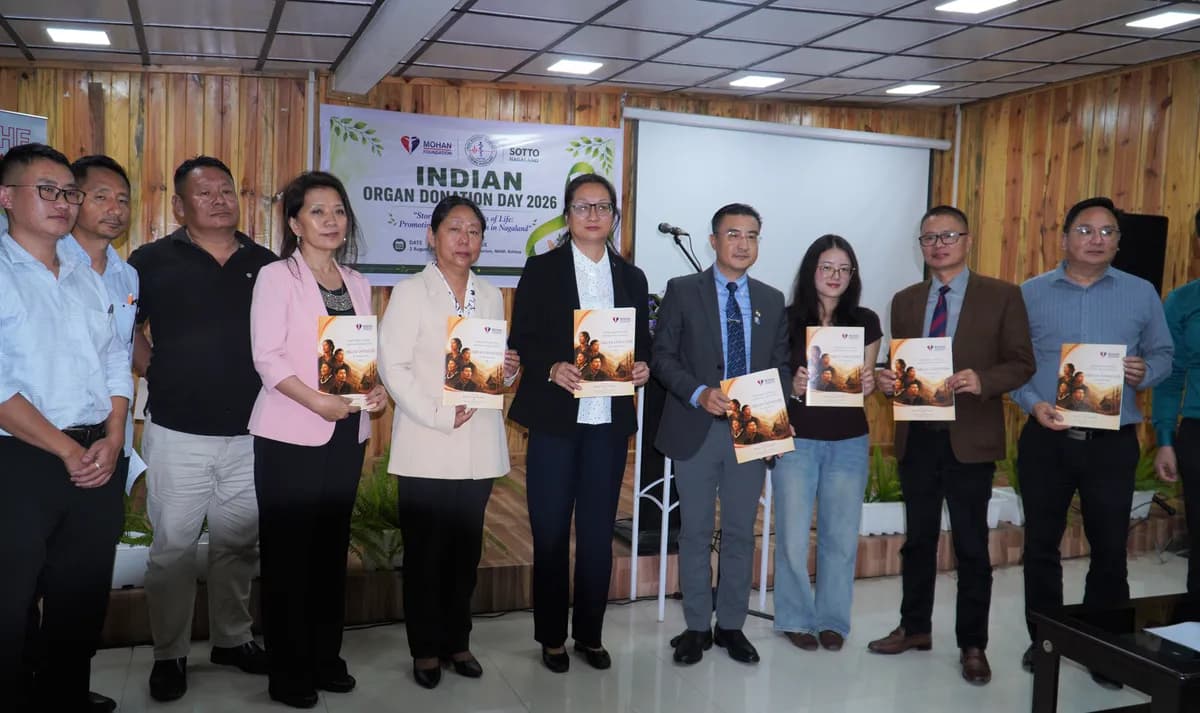
KOHIMA — Nagaland has taken its first formal step towards establishing organ transplantation services, with the Naga Hospital Authority Kohima (NHAK) initiating the process of obtaining the registration and licences required to perform organ transplants in the state.
Announcing the development at the observance of Indian Organ Donation Day on Monday, Principal Director of Health and Family Welfare, Dr. Mereninla Senlem, said that although organ transplantation services are not yet available in Nagaland, efforts are underway to establish the necessary systems, infrastructure and regulatory framework.
The programme was organised by the MOHAN Foundation in association with NHAK and the State Organ and Tissue Transplant Organisation (SOTTO), Nagaland.
Dr. Senlem said that organ donation remains one of the noblest acts of humanity, with the power to save and transform multiple lives. Referring to the testimonies shared by organ donors and transplant recipients during the programme, she said their experiences reflected courage, compassion and the life-changing impact of transplantation.
She highlighted that nearly 90,000 patients across India were on the organ transplant waiting list as of March 2026, underscoring the urgent need to promote awareness and participation in organ donation.
While Nagaland is yet to offer organ transplantation services, she said NHAK's move to secure registration and licensing marks a significant milestone and reflects the government's commitment to improving access to advanced healthcare in the state.
Dr. Senlem also commended the MOHAN Foundation for supporting awareness campaigns, capacity building, professional training and institutional preparedness for organ transplantation services in collaboration with NHAK, SOTTO Nagaland and the Department of Health and Family Welfare.
She acknowledged the efforts of healthcare professionals and other stakeholders working to strengthen the state's organ donation and transplantation programme and stressed that public participation would be equally important.
Calling for greater awareness, she urged citizens to discuss organ donation with their families, dispel misconceptions and consider pledging to donate their organs.
The doctor asserted that through collaboration among government departments, healthcare institutions, civil society organisations, community leaders and development partners, Nagaland could create an environment where organ donation is understood, supported and embraced as an act of humanity.
She also encouraged every citizen to learn more about organ donation, discuss it with family members and become an ambassador for the cause by spreading awareness and supporting organ donation.
NHAK nephrologist Dr. Vikieo Khroumo highlighted the growing burden of chronic kidney disease, stating that more than 670 million people globally and nearly 100 million in India are living with the condition, with many progressing to kidney failure. He said that although around 20,000 organ transplants were performed in India in 2025, nearly 90,000 patients are still awaiting transplants.
Dr. Khroumo informed that around 5,000 patients across Northeast India are on regular haemodialysis, including about 750 in Nagaland. He said that patients requiring kidney transplants currently have to travel outside the state, as Nagaland does not yet have a kidney transplant programme.
He appealed for organ donation to become a conversation in every household, adding that a single donor has the potential to save multiple lives.
During the programme, living organ donor Tekhe Colo and transplant recipients Neibalie Rio and Colo Mero shared their transplant journeys.
A Knowledge, Attitude and Practice (KAP) Study on Organ Donation in Nagaland, conducted by the MOHAN Foundation, was also released by Dr. Senlem during the programme.