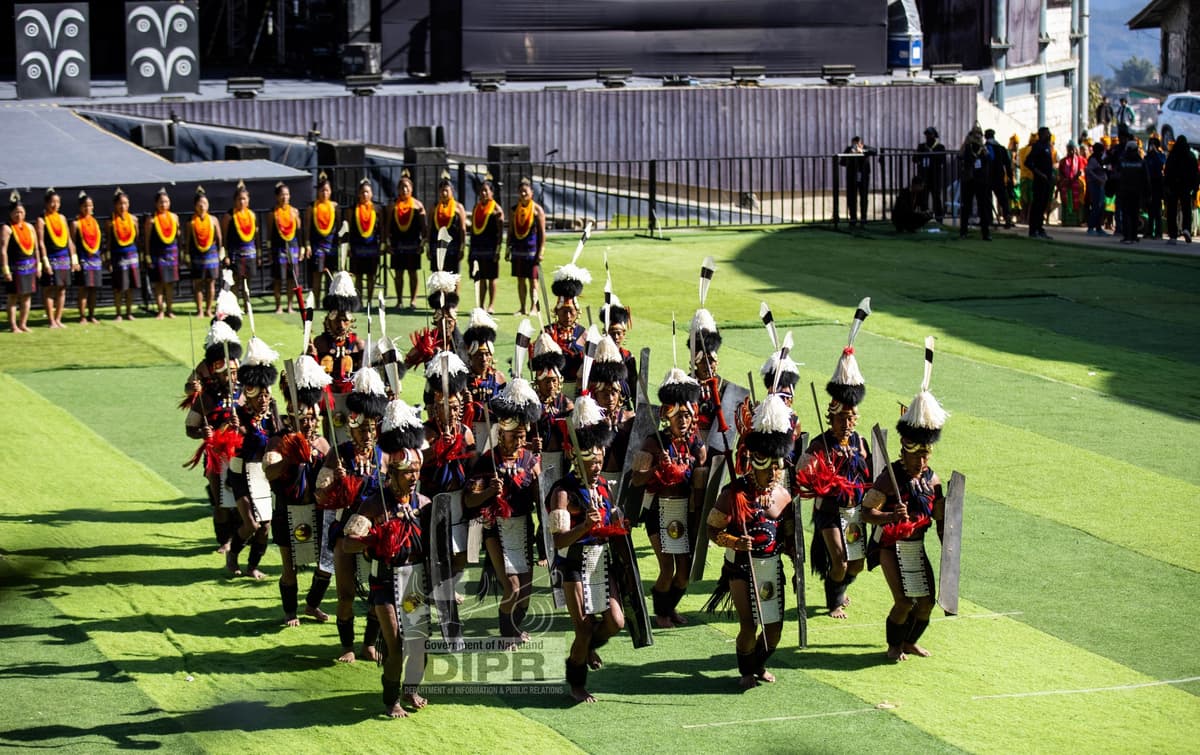

Hornbill Festival 2025 concludes at Kisama with cultural performances by various Naga tribes showcasing traditional songs and dances.
Share


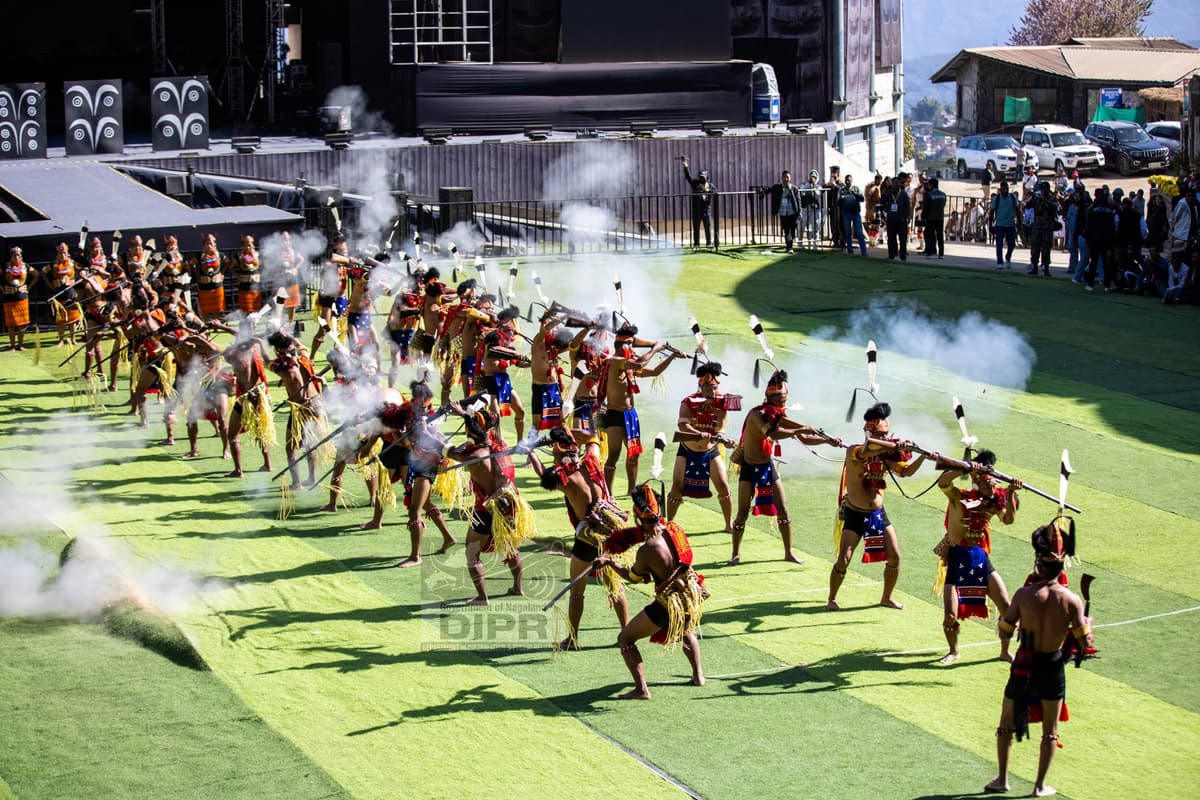
DIMAPUR — Marking the culmination of the 26th edition of the Hornbill Festival 2025, a cultural show was held at the Unity Plaza, Naga Heritage Village, Kisama, on Wednesday.
The programme was hosted by Salhoutuonuo Kruse, minister for Women Resource Development and Horticulture, and co-hosted by Hekani Jakhalu, advisor for Industries and Commerce, according to a DIPR report.
Also read: Hornbill Carnival Parade held in heart of Kohima
Special guests included Larsing LD Sawyan, managing director, Centre Point Group Enterprise; S Ramann, chairperson, PFRDA; the executive director and state head, Indian Oil AOD State Office, Guwahati; and others.
The cultural show featured performances from various Naga tribes, each presenting their traditional heritage through song, dance, and indigenous games.
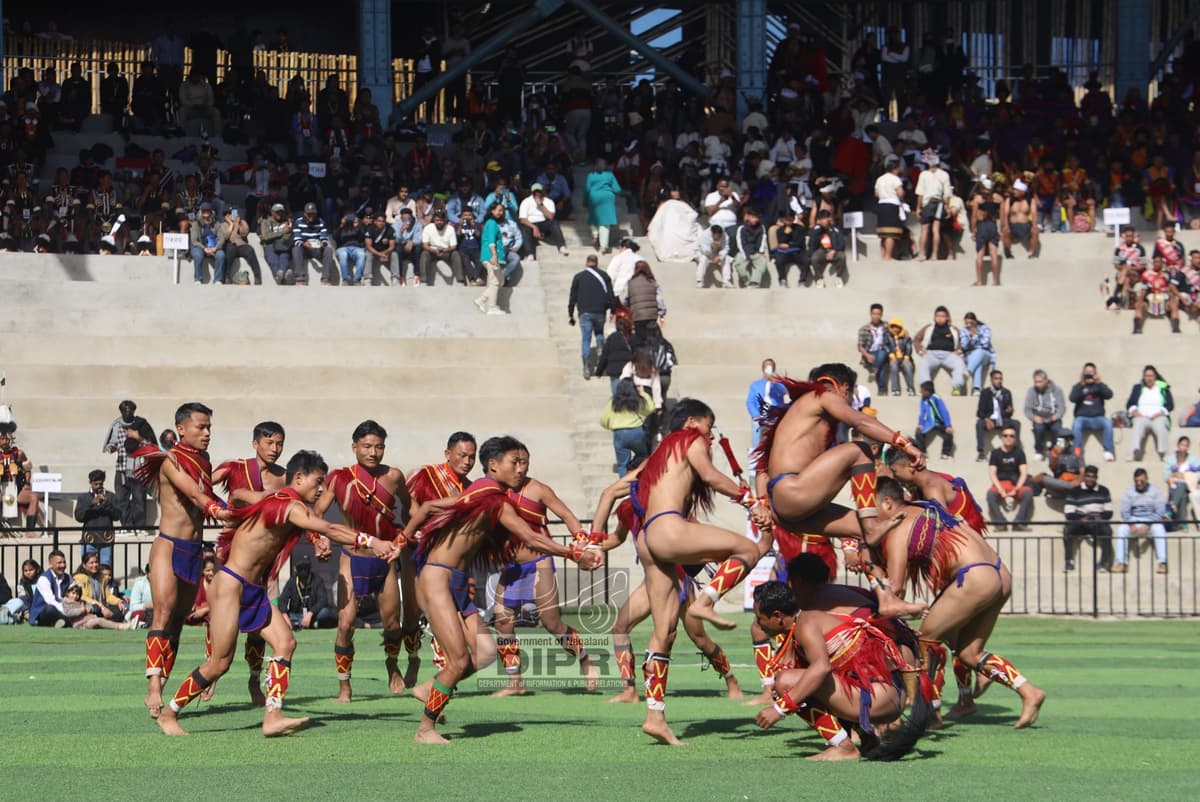
The Rengma cultural troupe presented Künyhun, a war dance depicting the induction of newly selected warriors who undergo training in warfare under the guidance of elder warriors. The Sangtam troupe showcased Athrongrü Nyichi (Warrior Dance), a celebratory dance performed after victorious battles during the era of headhunting.
The Lotha troupe performed Kha-Kina Kha-Khungchanthung Na, a traditional game designed to train warriors in jumping and crawling over enemy fences, followed by Kongts Kongyaa, a trial to determine a warrior’s physical readiness for headhunting. The Konyak troupe presented Pong-Win Boa, a coronation song depicting the hereditary kingship system.
The Chakhesang troupe performed Chotali, a song of procession sung in unison by large groups forming a human chain. The Kuki troupe showcased Salu Lap Lam, a men’s dance invoking animal spirits before the hunting season. The dance is also performed to honour hunters who return with large game.
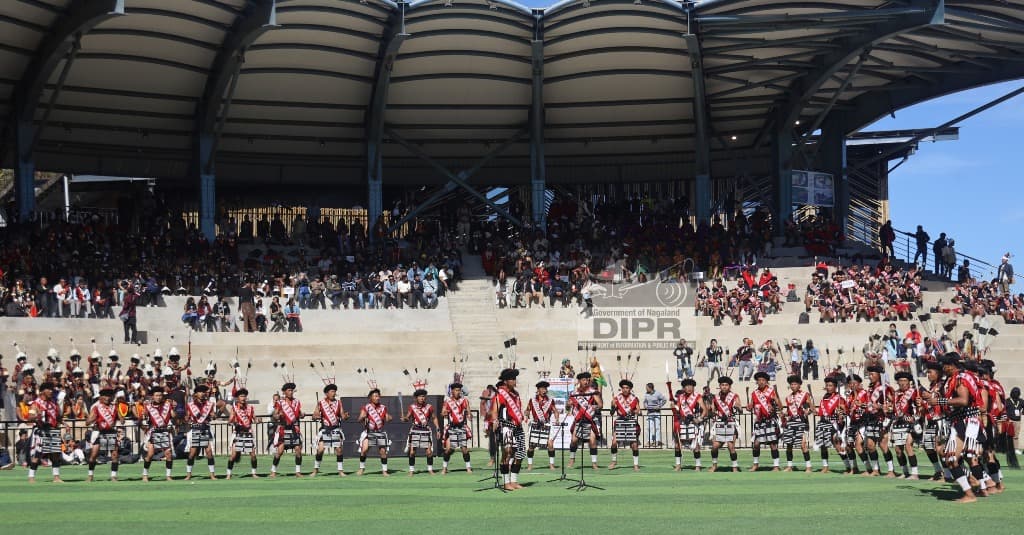
The Yimkhiung troupe performed a folk fusion presentation, a popular musical style that evolved with the coming of modernity. The Zeliang troupe presented Khuigiuna Lin, a song and dance symbolising lovers compared to bees circling joyfully around their hive.
The Garo troupe performed Ro’ong Dea (Stone Lifting), an indigenous strength game where participants attempt to lift a 100-kg stone, followed by the Wangala Dance, a post-harvest thanksgiving dance. The Khiamniungan troupe showcased Poklih Tsuichong, a victory dance performed by warriors after successful raids.
The Kachari troupe presented Thaokri Lunai, depicting women extracting yarn from Endi cocoons. The Chang troupe performed Sekmouoneed, a cultivating song sung during farming seasons. The Sumi troupe showcased Aghakighilhe (Crow Dance), a ritualistic performance symbolising mourning for fallen warriors.
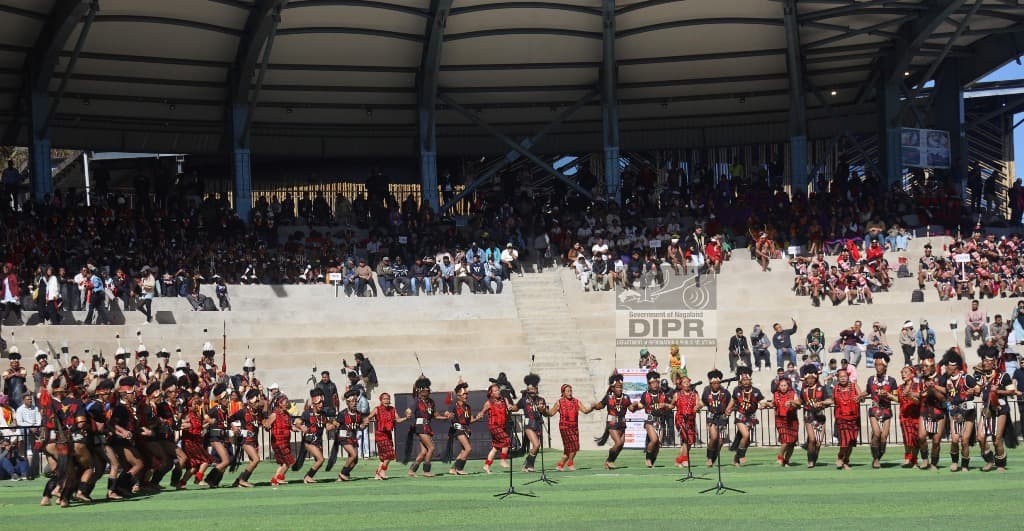
The Ao troupe performed Ango Kazü, a fish dance imitating the swift and rhythmic movements of fishes in rivers. The Tikhir troupe presented Ngyong Jüh Shoo Ooh, a rice-pounding song sung by women. The Angami troupe performed Phita (Helim), a traditional dance rendered during special chants.
The Pochury troupe presented Nanoni Hoha, a traditional song and dance celebrating victory. The Phom troupe concluded with Oh! Phaoshei-yü Jehovah-e Phaoshei-yu, a folksong of praise and thanksgiving.