


Zunheboto District Water and Sanitation Mission meeting focuses on water quality monitoring, infrastructure mapping, and sustaining Open Defecation Free status.
Share


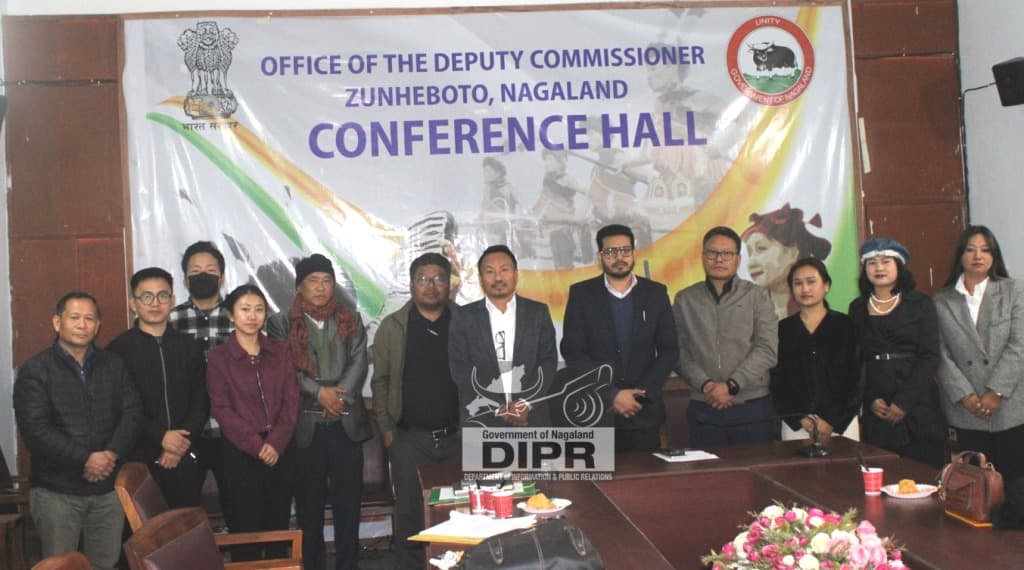
DIMAPUR — A meeting of the District Water and Sanitation Mission (DWSM) was held at the Deputy Commissioner’s Conference Hall, Zunheboto, on February 24. The meeting was organised under the aegis of the Public Health Engineering Department (PHED), Nagaland.
The committee discussed the formation of a District Technical Unit (DTU), whose role will be to support villages in ensuring water sustainability, identify gaps in the Jal Jeevan Mission (JJM), and train villagers to manage water resources through institutional strengthening and capacity building.
Deputy Commissioner (DC) of Zunheboto, Dharam Raj, who is also the chairman of DWSM, enquired about water quality in the district and underscored the need for regular testing and monitoring of water sources to prevent contamination.
Also read: Wokha District Planning and Development Board discusses water crisis, hospital upgradation
According to a DIPR report, he also sought information on the challenges faced by the department in implementing various water and sanitation schemes under JJM.
The department pointed out that once water supply sources are constructed under JJM, the respective village authorities are responsible for the daily maintenance of water resources. The deputy commissioner urged the department to map specific areas where water infrastructure has been constructed so that others can identify these locations and help prevent damage to pipelines and water storage facilities.
The session focused on reviewing the progress of water supply and sanitation initiatives across the district, with special focus on improving access to safe drinking water, strengthening sanitation infrastructure, and ensuring effective implementation of ongoing government schemes.
Officials and stakeholders discussed key challenges, including maintenance of rural water supply systems, community participation in sanitation programmes, and strategies to sustain Open Defecation Free (ODF) status in villages.
The meeting also highlighted the importance of interdepartmental coordination to enhance service delivery and promote public health.