


On World Radio Day, broadcasters in Nagaland say Artificial Intelligence supports studio work, but human voice and credibility remain central to radio.
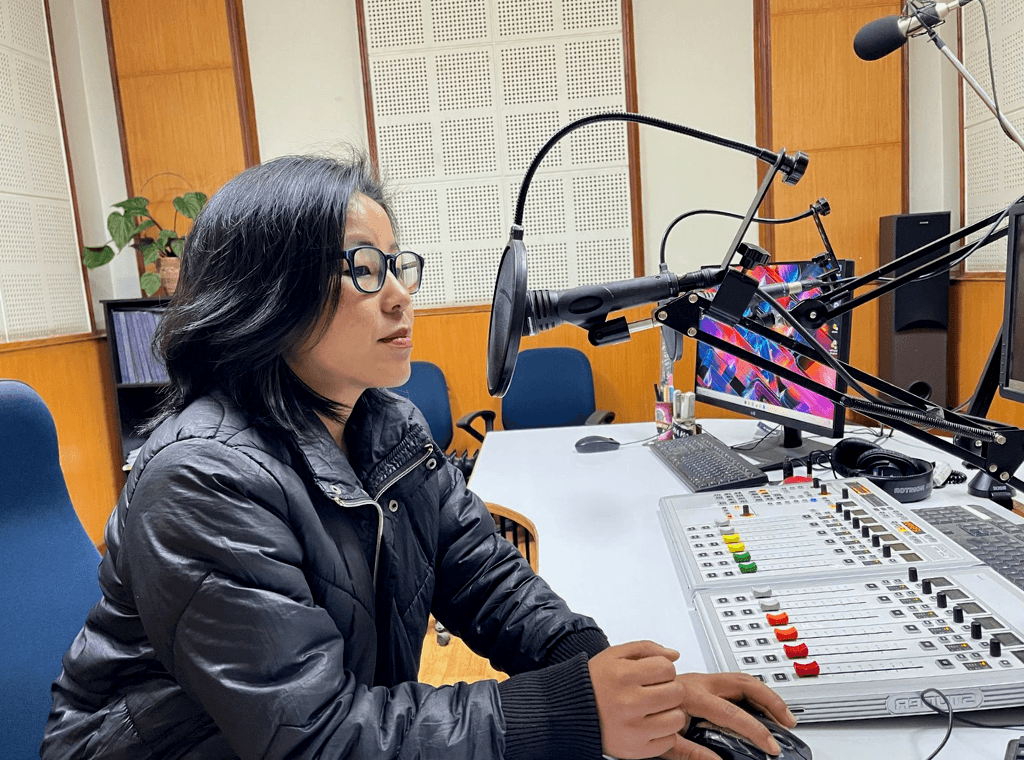
Thejakhrie Metha
DIMAPUR — As World Radio Day is observed this year under the theme “Radio and AI”, broadcasters in Nagaland say that while Artificial Intelligence is becoming part of everyday operations, the human voice and credibility remain the foundation of radio.
Akashvani Kohima, one of the oldest means of radio broadcasting in Nagaland, was launched in 1963 with the purpose of disseminating accurate, timely and reliable information, while promoting education and preserving the cultural and linguistic heritage of the region. The station functions under Prasar Bharati and operates through its primary channel and FM channel, focusing on news, educational, cultural and developmental programming.
Ella Kayina, Head of Programmes at Akashvani Kohima, in an electronic interview with Eastern Mirror, said the station continues to disseminate information on government flagship programmes such as Viksit Bharat while also reaching all corners of the state during emergencies and disasters.
Reflecting on the theme “Radio and AI”, Kayina said Artificial Intelligence can support radio operations through transcription, translation, digital archiving, audience analysis and workflow efficiency. However, she stressed that the human element cannot be replaced.
From exclusives read: Keeping clay alive: Mimi’s women potters revive a fading tradition
“AI serves as a supportive tool to enhance efficiency while preserving the authenticity and trust that Radio represents,” she said, adding that editorial responsibility and credibility remain central to broadcasting.
Despite the advent of television, digital media and streaming platforms, Kayina said radio continues to remain relevant in both urban and rural regions because of its accessibility and adaptability. Over the years, listenership has shown positive growth through digital outreach and service-based programmes such as the “Hourly Traffic Update”. Digital accessibility through FM in cars and platforms like the NewsOnAir App has also expanded listenership beyond traditional radio receivers.
While technology evolves, older listeners recall radio’s roots in Nagaland.
An elderly man, who did not wish to be named, said turning on the radio comes automatically once he starts his car. “This is a habit I have followed for more than three decades,” he said, adding that the radio still plays songs of his taste.
Eighty-six-year-old Hevilhou Metha recalled his earliest memory of radio, when a single government radio station was set up in each village and attached to a loudspeaker to broadcast news to all. Villagers would gather at the local ground at a fixed time to listen.
Wati Imchen, 63, described radio as a “wonderful invention of mankind that helped us know about the outside world.” He remembered waiting anxiously for news in their own dialect (Ao), and the joy of hearing a requested song broadcast in their name.
His wife, Chuba, recalled how twice a week they would eagerly wait for “Listeners’ Choice” at 7:30 in the evening, while older generations tuned in to programmes such as “Bosti Manu” and “Kheti programme” on farming.
At the same time, radio culture has also had to adjust to changing generations. A 32-year-old listener, Senti, said, “We did not grow up listening to the radio as much as our parents, because we had television.” Even so, radio in Nagaland, though dimming, is still alive.
Alongside Akashvani, community radio has also taken root.
Nagaland-run 90.8 Hills FM, licensed by the Union Ministry of Information and Broadcasting, was established on September 8, 2022, after more than a decade of struggle. Pioneered by S Hukavi Zhimomi and now headed by his daughter, station manager Lilimi Zhimomi, it remains the first and only private community radio station in the state.
“It took a long time because of insurgency problems, and back then they had to do all the paperwork manually and send it. They had to get clearance from many departments,” Zhimomi said.
The purpose of the station, she said, is to uplift the community through awareness. “It was my dad’s passion to uplift the Naga community through awareness, and his consistency being the key we were able to establish the community radio.”
Hills FM covers topics ranging from healthcare to women empowerment, with specific themes allotted to different days of the week, such as “Doctors Corner” on Mondays and “Tourism Tuesday”. The station maintains constant interaction with listeners and conducts physical surveys to stay connected with the community.
On the use of AI, Zhimomi said, “Yes, we do, we use AI for script editing, editing voice assistance and programme scheduling,” and expressed openness to utilising it further if opportunities arise.
Read our Education series: Bees and Business: Insights from the founders of JOME Foods
Former RJ Lipoksunep Jamir, who joined Hills FM during its initial years out of passion, said, “Growing up listening to the RJs communicating with the community, I always wanted to become one.” During his time with the station, he handled entertainment segments, song requests and live interactions with local artistes, helping to build the station’s listener base.
Even as radio continues to evolve from traditional one-way broadcasting to live interactions and now AI-assisted operations, Zhimomi shared concerns on sustaining operations.
The station depends entirely on collaborations with government departments and advertisements for revenue, which she said is limited. She sought support from government departments, the community and businesses to keep the radio station operational, stating that such collaborations would be a “win-win situation”.
(The writer is currently an intern at Eastern Mirror)