


Dimapur Women for City Impact-cum-Esther Challenge launched to promote safety, unity and empowerment of women.
Share


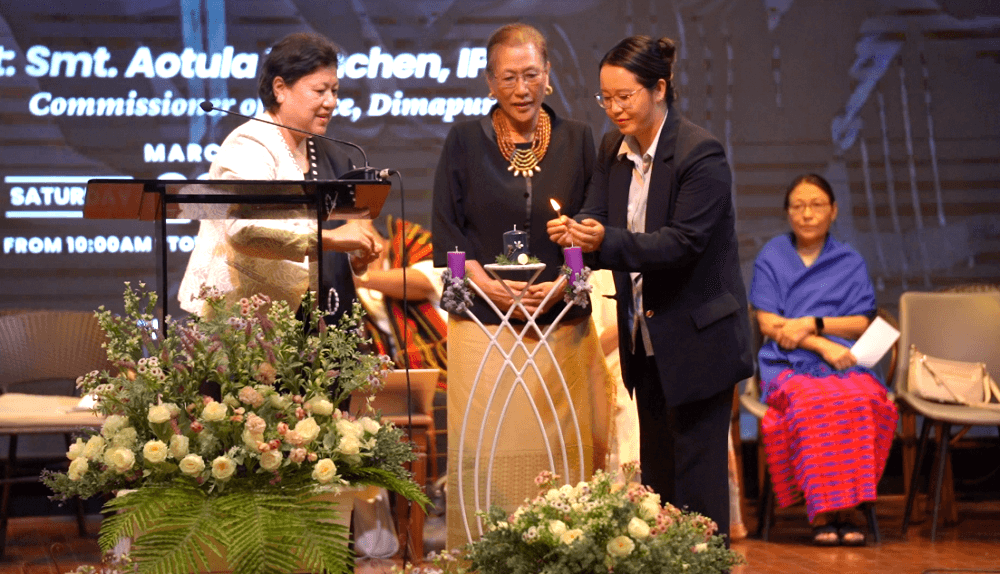
DIMAPUR — Dimapur Women for City Impact-cum-Esther Challenge, a gospel-driven movement aimed at creating safe spaces for women and girls and promoting civic engagement and holistic development through partnerships and collective impact, was launched in Dimapur on Saturday.
The initiative comes at a time when, despite Nagaland’s reputation as a relatively safe place for women, incidents of violence against women are reportedly on the rise.
Increasing cases of substance abuse among women and unemployment have also been cited as contributing factors to growing social concerns.
While various efforts are being undertaken by churches, government agencies and NGOs, the impact has been limited due to fragmented and siloed approaches.
With an urgent call for women across sectors to unite for Dimapur’s holistic transformation, making it safe and empowering for all, the movement was launched.
The goal, as per the movement, is to unite women and girls, build alliances with men and boys and empower females for leadership, creating safe spaces and amplifying their voices.
Also read: Centre rolls out MSME push in Nagaland with Dimapur awareness camp
City Initiative of North East India (CI NEI) coordinator Khontele Seb said the plan is to bring women together through seminars, trainings and meetings to equip them for leadership and drive Dimapur's transformation.
Key activities include organising capacity-building initiatives, building relationships with organisations and leaders, monthly core team meetings to review progress and daily prayer commitment from members.
The Dimapur Women for City Impact is part of the international "City to City" movement, aiming to connect dots among existing organisations in Dimapur.
WATCH MORE:
The "Esther Challenge" she said is to inspire women to dedicate themselves like Esther in the Bible, with courage and prayer.
“Though it is a women's stream, it is inclusive needing men like Mordecai to work alongside,” she clarified.
According to her, churches are doing great things, yet often work in isolation from civil society, leading to blame games of "church didn't do this, government didn't do that".
“We are breaking this by ‘connecting dots’inviting groups to share their work and unite for Dimapur's progress.”
Seb said that it is a collaborative movement, not an organisation, aimed at uniting existing groups in Dimapur including churches, legal, medical, police and NGOs, as shared visions showed that everyone wants Dimapur to improve but together they are stronger.
She added that the movement is urging churches to be safe havens for women and raising awareness, adding that problems like domestic violence should not be hidden due to shame, but addressed openly to create safe spaces.
The Nagaland State Commission for Women, during one of their meetings noted that “there are many good programmes for women, but they couldn't be fully realised because churches hadn't joined in”, she said.
She further said that church participation could enhance women’s programmes. By uniting, churches and civil society can tackle issues such as domestic violence and crimes against women more effectively, making their collective voice stronger.
Dimapur Commissioner of Police Aotula T Imchen termed the movement’s start a significant day for Dimapur, urging honesty and truth among participants.
She emphasised that since it is their city, where they will grow old and businesses will thrive, everyone should stand united for justice.
The police officer, citing her first-hand experience in her role, drew attention to harsh realities, stating that women and children continue to face crimes, drug addiction devastates families, and unemployment breeds hopelessness.
She believed stated that they are here today because “women unite us, the backbone of every big movement.”
“With so many organisations doing good work from churches, NGOs, government agencies, the question however is, what can we do as a collective force? We are all part of various groups but women's collective power can drive change.”
The real question, she pondered, was what Dimapur Women for City Impact will refuse to do — refuse to work alone, compete, or build its own kingdom.
“It is about uniting existing efforts, not adding another name to the list. It is about bringing everyone together, that is the impact,” she reminded.
Dr. Alongla P Aier, in her keynote address, described the gathering as unique, stating that NGOs, government, police, churches, and civil societies had united with one aim of transforming Dimapur.
Preaching the gospel centred on Queen Esther from the Bible, she urged prayer for the city’s prosperity, saying “if the city prospers, you too will prosper,” adding that this is the Esther challenge Dimapur Women for City Impact has taken up.