


A week-long power outage in Noklak leaves students preparing for examinations by candlelight and torchlight amid electricity supply disruptions
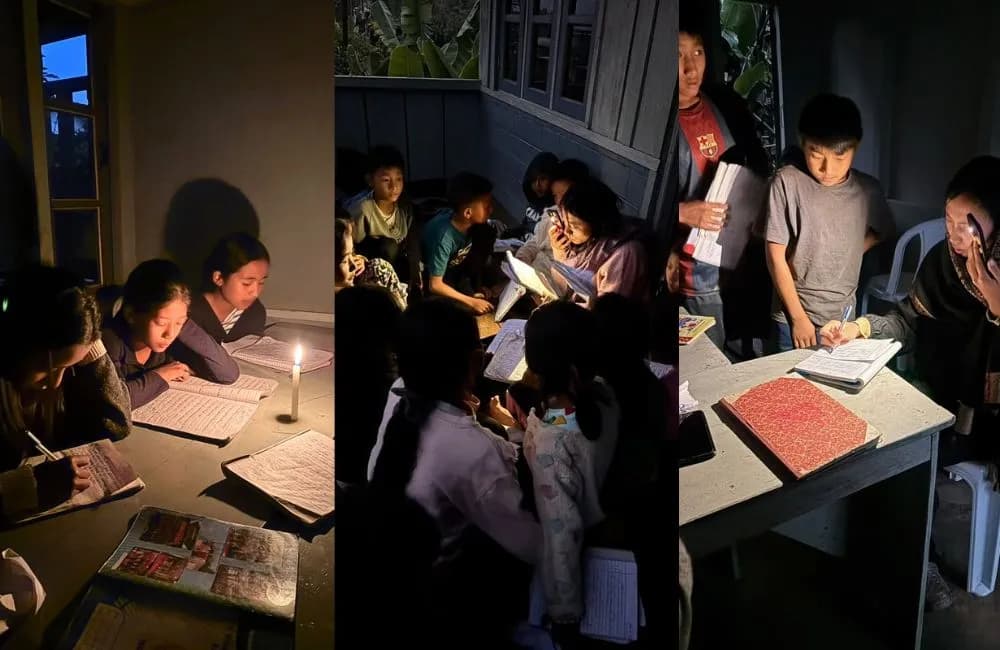
DIMAPUR — While students elsewhere in Nagaland switch on lights to study, their counterparts in Noklak district are preparing for examinations in darkness. For nearly a week, the district has been without electricity, leaving students unable to charge their phones or access online study materials. Many have been forced to revise by candlelight and torchlight.
“Just the flicker of a candle and children and adults holding up torches so they can finish studying—that is the reality in Noklak,” says Vikuonuo Sachü, founder of Miraculum Society Nagaland, who spoke to Eastern Mirror fearing that her phone battery could die any moment.
Through Sachü’s social media post on the power outage, the plight of the district and its students came to light. “When we talk about rights, we're talking about the basic facilities which the local public deserve. While one part of Nagaland gears up for the festive season with lights, colour and excitement, another part of Nagaland still remains unseen and unheard,” she wrote.
In another post, she said the power disruption was expected to continue for a week, leaving students to prepare for their examinations without regular electricity.
“One district is still adjusting, still living with the bare minimum, still no basic regular facilities. We talk about multi-crore projects coming to our state and we gear up for the Hornbill Festival, but what about all those silent corners of our state that still remain ignored?” she wrote.
Also read: Kiphire schools face 304-teacher gap, crumbling infrastructure
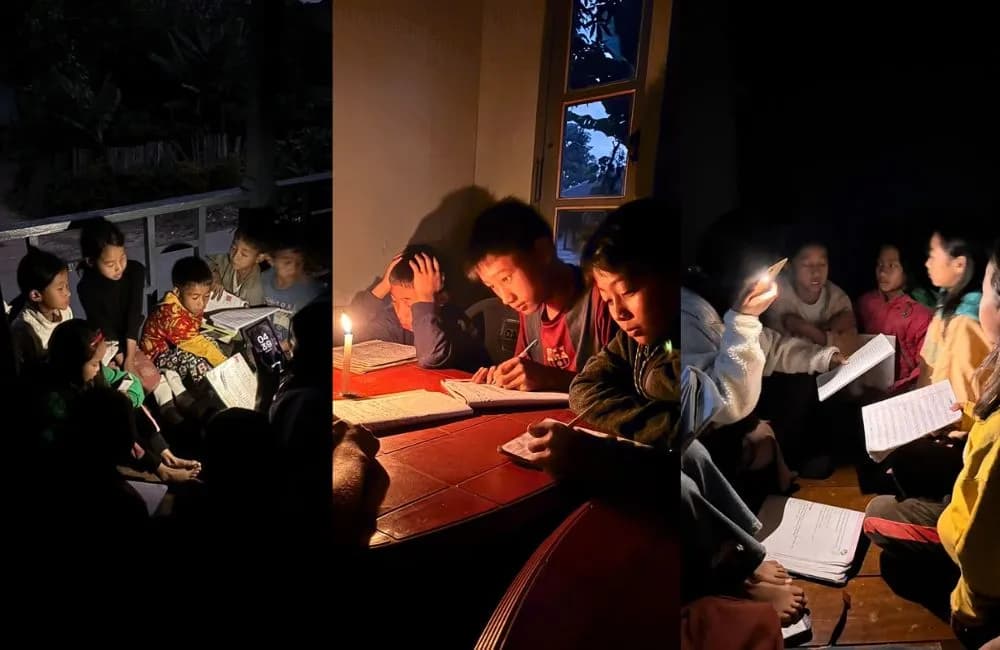
Sachü’s 200 students from Grades 1 to 8 gather every evening from 4 to 6 pm, after school, at her Creative Children’s Friendship Centre in Noklak, which operates under the Miraculum Society Nagaland, for their studies. The last seven days, however, have not been easy on them as they have had to study under phone flashlights and candles.
With exams on, Sachü, who has been living in Noklak for the last six years, expressed disappointment over how this had become acceptable, with people not speaking up for their basic rights. “If this was to happen in other districts, the situation would have been very different, with people taking to social media and the media as well,” she pointed out.
She said a two-day power outage is considered normal in Noklak and people have learnt to live with it. This time too, they assumed power would return in two days—but it has now been seven. To her dismay, she later learnt that the transformer had developed a fault and was taken to Dimapur for repair only the previous day, questioning why the authorities had waited so long to send it down.
With no power at home, residents are moving from place to place to charge their phones, even going to the Assam Rifles camp. Even finding candles to buy has become difficult, she added, asking wryly, “Who uses or even buys candles in this era of progress?”
A few villages under Noklak district receive power supply from Shamator and therefore have electricity, she clarified.
When asked why the people of Noklak do not turn to solar lights despite government schemes being available, she said the reality on the ground is very different. Not everyone can afford the scheme, and not everyone has the network or the know-how to access it—for many families, even applying for a scheme feels like a distant luxury.
She said her only intention in sharing their plight on social media was for the children at her centre. Their exams are ongoing, she said, adding that every hour without light is an hour stolen from their future.
She also questioned why people have become silent and started accepting darkness as normal, even as the rest of the state and the world move ahead with light, technology, and progress while the district’s woes continue.
With the examinations still on, she said, “Perhaps the power will return only after the exams are over.”
“They are not asking for much,” she noted. “Just light—to read and to revise, as every student is determined to study.”