


PHED Dimapur and district administration sensitise WATSAN committees on waste rules and water source sustainability.
Share


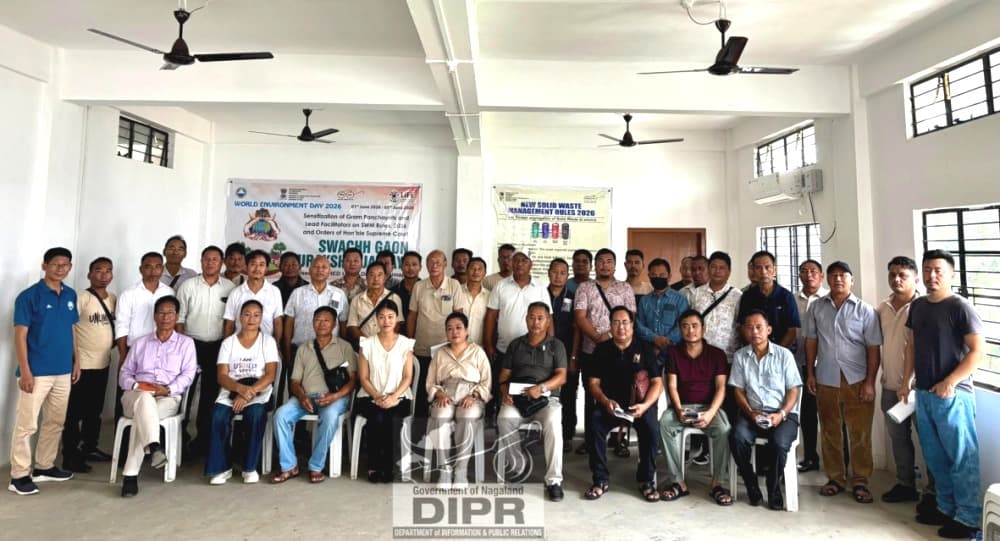
DIMAPUR — The PHED urban division, Dimapur, in collaboration with the district administration, conducted a sensitisation programme for WATSAN committee members under Dimapur district on the provisions of the Solid Waste Management Rules, 2026, source sustainability, and the observance of World Environment Day 2026 at the Office of the Superintending Engineer, PHED Dimapur circle, on Monday.
According to a DIPR report, the programme held on the theme “Swachh Gaon, Surakshit Jalvayu,” formed part of the World Environment Day 2026 and Environment Week observance.
Participants were sensitised on the key provisions of the Solid Waste Management Rules, 2026, including segregation of waste at source, scientific processing and disposal of waste, prevention of littering and open dumping, community participation, and the responsibilities of local institutions in maintaining a clean and healthy environment.
Officials also highlighted the directions of the Supreme Court regarding the effective implementation of the Rules, stressing the importance of source segregation, stakeholder accountability, and strict enforcement at the grassroots level to ensure sustainable waste management practices.
Read more local news: Fresh flooding hits Dimapur despite weeks of drain-cleaning drives
Paid for a year, but no pickup: East Dimapur traders protest garbage backlog
The session further focused on source sustainability and the need to protect drinking water sources through catchment area protection, groundwater recharge initiatives, afforestation, pollution prevention measures, rainwater harvesting, and community-led conservation efforts.
Participants were informed that safeguarding water sources is essential for ensuring long-term water security for present and future generations.
As part of the observance, the programme also emphasised environmental conservation, sustainable living practices, and the collective responsibility of communities in preserving natural resources.
The programme concluded with a call for village councils and WATSAN committees to actively promote waste segregation, protect water sources, and strengthen environmental stewardship in their respective villages, contributing towards a cleaner, greener, and more sustainable future.