


Swarup Acharjee discusses taxation careers, GST opportunities and the future scope of commerce education in Nagaland.

DIMAPUR — Swarup Acharjee is currently serving as an assistant professor in the Department of Commerce at Public College in Dimapur. Prior to this, he worked at Tetso College for two years, which was his first appointment in the teaching profession.
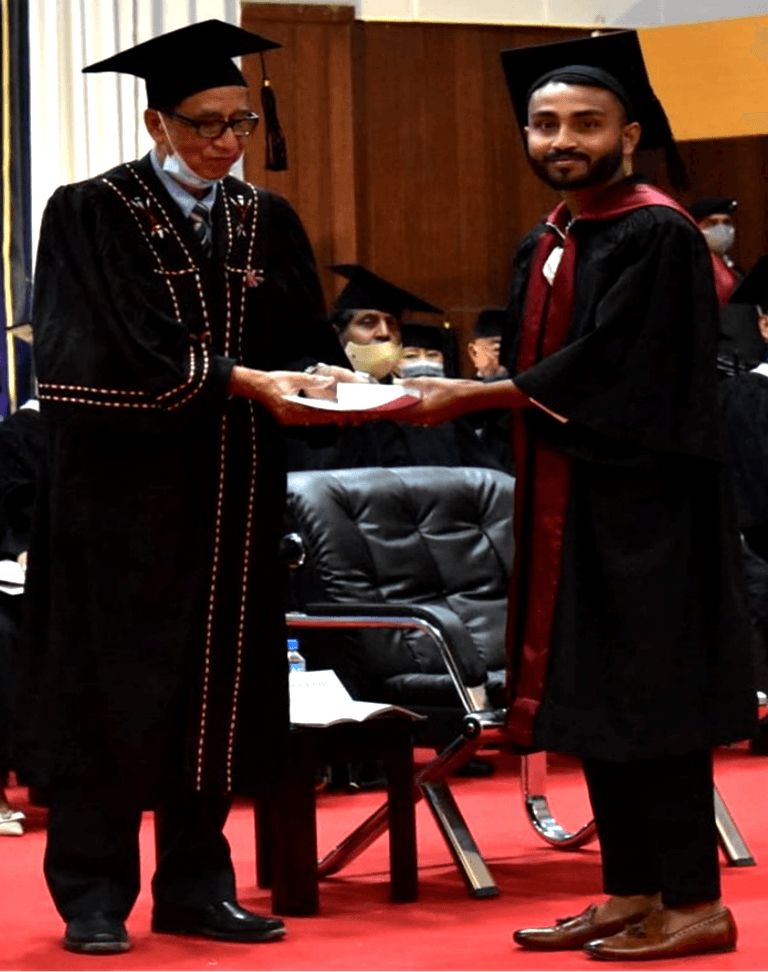
He completed his matriculation from MGM Higher Secondary School in 2013 and his higher secondary education from Pranab Vidyapith Higher Secondary School in 2015, where he stood 9th in the commerce stream. He completed his Bachelor of Commerce (B.Com) at the Public College of Commerce in 2018 and his Master of Commerce (M.Com) at Unity College in 2021, where he was awarded a gold medal for being a subject topper in commerce.
In 2023, he successfully cleared both the University Grants Commission – National Eligibility Test (UGC-NET) and State Level Eligibility Test (SLET) examinations and aspires to pursue a PhD in the near future.
Acharjee’s journey in teaching began in 2014 when he started working as a private tutor while studying in Class 12. Over the years, interacting with students from different backgrounds helped him gain confidence and deepen his understanding of various subjects. According to him, the experience strengthened his passion for teaching.
Also read: Career Opportunities in Statistics — Insights from Zakir Alam
Alongside teaching, he also worked as a tax consultant under the guidance of an experienced professional, where he gained practical exposure to GST and income tax return filing. He believes this experience helped him develop technical expertise in taxation and finance while also improving his analytical thinking, professional ethics, and understanding of real-world financial practices. He further feels that practical exposure to taxation helps him connect theoretical concepts with real-life applications in the classroom, making the learning process more practical and relevant for students.
In this interview with Eastern Mirror, Acharjee shares insights about taxation and opportunities in this field.
For school and college students, how would you explain taxation in the simplest way possible?
Taxation is the small amount of money common people and businesses give to the government from their income so that the country can provide facilities and services to everyone. Services include proper roads, hospitals, schools and colleges, streetlights, public transport and all other services which would benefit the general people of the county.
Why are taxes important for a country and for ordinary citizens?
Taxes are the backbone of a nation’s economy. It helps the government build infrastructure, create employment opportunities, improve healthcare and education, and support welfare schemes that directly benefit ordinary citizens.
How does taxation impact businesses, startups, and even online creators today?
For businesses, taxes reduce the final profit a business keeps, so proper tax planning helps businesses save money legally and grow faster. For startups, tax benefits and government incentives can help them grow, and on the other hand, startups need to manage taxes carefully from the beginning to avoid penalties. For online creators who are involved in brand promotions, advertisements, affiliate marketing, and paid subscriptions, if their earnings cross a certain limit, they may need Goods and Services Tax (GST) registration and must report their income properly.
Which subjects should students focus on in school or college if they want to build a career in taxation?
Students should focus on gaining deeper insights in Accountancy, Business Studies, Economics, Mathematics, and commerce-related subjects (Financial Management, income tax, and GST). These subjects help build analytical and financial understanding, which is important in taxation careers.
What courses or degrees are ideal for students interested in taxes and GST?
If a student is interested in the taxation field, the best path is to combine a commerce degree (B.Com) with professional or practical taxation courses (chartered accountant, cost and management accountant, company secretary, GST practitioner courses, income tax return filing, and Tally with GST). Specialisations like a B.Com in Taxation or a B.Com in Accounting and Finance are better for this field.
How different is taxation from accounting, finance, or economics?
Accounting focuses on recording financial transactions; finance deals with managing money and investments, while economics studies the economy as a whole. Taxation mainly focuses on tax laws, compliance, tax planning, and government revenue systems. In simple terms, accounting records money; finance manages money; economics studies money; and taxation deals with how the government collects and regulates money.
What are the most popular career paths available in taxation today?
Taxation offers multiple career paths, making it one of the most stable and growing fields in commerce. The major career options include becoming a GST consultant, income tax expert, corporate tax professional, tax analyst in multinational corporations (MNCs), or government tax officer. Through competitive exams, one can even start an independent tax consultancy firm. Due to the rise in startups, online creators, and businesses, the requirement of skilled taxation professionals who will provide their expert knowledge in tax planning and finance-related issues is always in demand.
Which industries hire taxation and GST professionals the most?
Almost every sector requires taxation professionals, especially banking, manufacturing, IT companies, e-commerce, consulting firms, startups, multinational corporations and government departments. The scope is wide for anyone who is interested in pursuing a career in the area of taxation.
What opportunities exist in the private sector for tax experts?
Tax experts have a wide range of opportunities in the private sector because every company needs professionals who can manage taxes, ensure legal compliance and reduce financial risks. Some of the opportunities are GST specialist, tax analyst, tax manager, corporate tax consultant, and international tax expert. To grab those opportunities, one should have skills in ITR, GST filing, financial analysis, advisory skills and accounting software knowledge.
Can taxation professionals work independently or start their own consultancy firms?
Yes, taxation offers strong opportunities for self-employment. Many professionals start their own tax consultancy firms, GST service centres, GST Suvidha Kendras or financial advisory businesses after gaining experience.
How is technology changing the taxation industry today?
Technology has transformed taxation through online filing systems, automated compliance, AI-based accounting tools, cloud accounting, digital payments and e-invoicing. Technology has not reduced the importance of professionals; rather, it has increased the scope for professionals who understand taxation and digital tools.
What digital tools or software should students start learning early?
Students should start learning tools like MS Excel, Tally Solutions, Busy software, Marg, Zoho Books, QuickBooks, SAP basics, and the GST filing portal. Practical knowledge of digital accounting and tax software increases employability significantly.
How do you see GST and taxation careers evolving over the next decade?
As businesses become more digital and compliance-driven, the demand for skilled taxation professionals will continue to rise as routine tasks like tax calculation, return filing, invoice matching and compliance are increasing. GST and international taxation are expected to create strong career opportunities over the next decade.
What advice would you give students who want to build a successful and future-ready career in taxation?
Students should build a strong foundation in accounting, taxation, finance and business laws while learning tools like Excel, Tally, GST software, SAP and cloud accounting systems. Along with academics, gaining practical exposure through certifications and internships, communication skills, analytical thinking, digital expertise, and a strong understanding of taxation laws will play a major role in a taxation career.

With technology and changing industries, is pursuing a B.Com still a good career choice?
Yes, pursuing a B.Com is still a very relevant and valuable career choice, especially in today’s rapidly changing business and technology-driven world. In fact, as industries become more digital and financially complex, the demand for professionals with knowledge of commerce, taxation, finance, accounting, and business management continues to grow.
The biggest misconception among students today is that only technical degrees guarantee good careers, but in reality, every business from startups to MNCs still needs professionals who understand commerce, taxation, finance and business operations.
A B.Com degree provides the foundation for some of the most stable and respected professional careers in India, such as CA, CS, CMA, MBA in finance, the banking sector, financial analysis, and taxation consultancy. Companies today are looking for people who combine commerce knowledge with digital skills. Students who only complete the degree without practical exposure may struggle, but those who combine their knowledge with certifications, software skills, communication abilities and continuous learning can build excellent careers in both private and government sectors.
RAPID INSIGHTS
One financial habit every teenager should develop?
Save a part of everything you earn, even if it’s small.
If taxation has a slogan, what would it be?
No tax, no transformation.
Which app or tool do you use the most for work?
MS Excel and MS Word