


Social work students from St. Joseph University conducted an eight-day rural camp in Alaphumi village, Zunheboto.
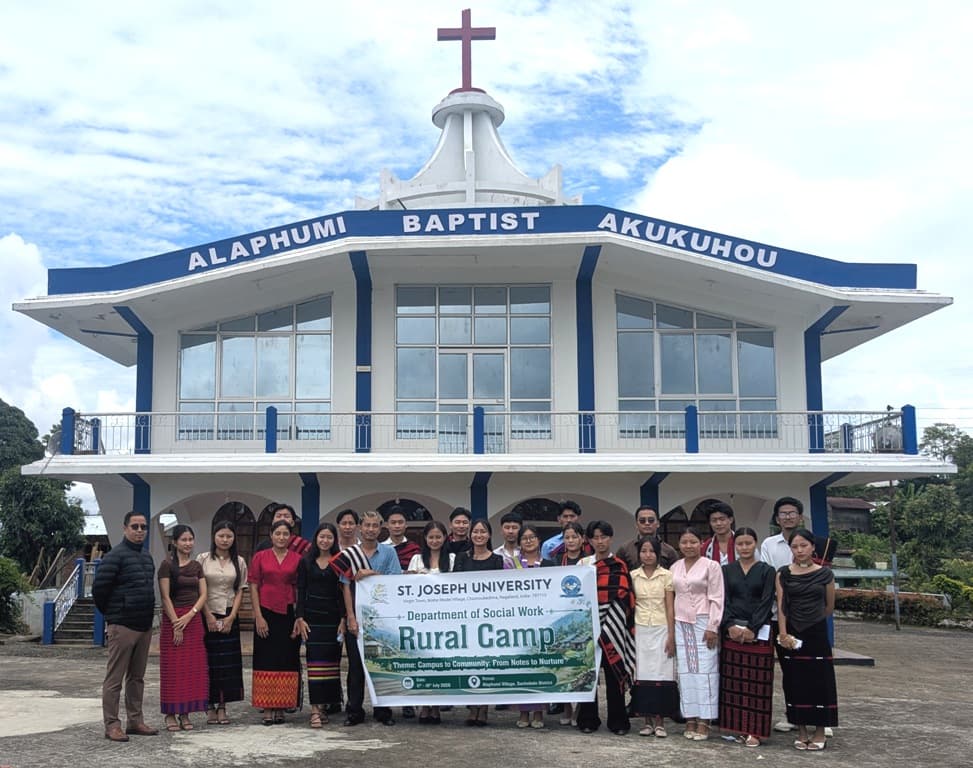
DIMAPUR — The Department of Social Work at St. Joseph University, Chümoukedima, organised a rural camp for its Bachelor of Social Work third-semester students at Alaphumi village in the Zunheboto district from July 11 to the 18th.
According to a press release, the camp was held on the theme "Campus to community: From notes to nurture". It aimed to bridge classroom learning with real-life community engagement by enabling students to understand rural life, identify community needs, and contribute through service.
Throughout the eight-day programme, participants engaged in various educational, developmental, and awareness activities.
The camp commenced with a meeting attended by the village chairman, community leaders, faculty members, and students, where the objectives and schedule of the camp were explained.
One of the major activities conducted was a Participatory Rural Appraisal (PRA) exercise. With the active involvement of the villagers, students prepared a social map, a resource map, and a seasonal diagram.
The social mapping exercise helped identify the distribution of households, educational institutions, community facilities, and other landmarks within the village. Resource mapping highlighted available natural and human resources, including agricultural land, forests, water sources, and public infrastructure. The seasonal diagram provided information on agricultural practices, climatic conditions, disease patterns, employment opportunities, and seasonal livelihood activities.
Read more local news: Wokha on alert as relentless rain leaves trail of destruction
A comprehensive socio-economic and health survey was also carried out during the camp. Students visited households to collect information regarding family composition, occupation, income sources, education, sanitation, drinking water facilities, healthcare access, and common health concerns to generate baseline information for future developmental initiatives.
To create awareness, a street play on substance abuse was organised. Through their performance, students highlighted the harmful effects of alcohol and drug addiction on individuals, families, and society, while stressing the importance of healthy lifestyles, family support, and community responsibility in preventing substance abuse.
The camp also focused on skill development programmes for school-going students. The social work students taught crochet to the village students.
Interactive sessions were also conducted to enhance communication skills, leadership qualities, teamwork, creativity, and problem-solving abilities.
Additionally, a cleanliness drive was undertaken in collaboration with the villagers. Students cleaned public spaces, roadsides, and community surroundings while spreading awareness about proper waste management and environmental hygiene.
The camp concluded with a cultural exchange programme, where students and villagers showcased their cultural heritage through traditional songs, dances, music, and cultural performances to foster mutual respect and strengthen social bonds.