


Hope Helpers' Community is empowering young volunteers across Nagaland to support orphanages, families in distress and community welfare through self-funded initiatives.
Vimetuo Toto Pienyü
DIMAPUR — On weekends, while many students are engaged with assignments, examinations or spending time with friends, a group of young volunteers can be found carrying bags of groceries, visiting orphanages or reaching out to families facing unexpected hardships.
With no banners announcing their arrival and no major organisation backing their work, the efforts of these students are often sustained through contributions from their own pocket money.
This quiet commitment gave shape to ‘Hope Helpers’ Community’, a youth-led voluntary organisation established on March 28, 2024.
At the heart of the organisation is a simple belief that meaningful change begins when ordinary people choose to support one another.
For president Soihiamlung, the roots of the organisation go back much further than its official establishment. Some of his earliest memories are of watching his mother struggle to keep the family afloat.
He recalls her collecting leftover vegetables from the market, selling her traditional mekhala and making personal sacrifices to provide for her children.
Those experiences remained with him and later became a personal commitment to support children and families facing similar challenges.
Years later, that commitment took shape through Hope Helpers’ Community. The name reflects the group’s guiding philosophy — ‘Hope’ represents what the organisation seeks to provide to people going through difficult times, ‘Helpers’ reflects its identity as ordinary individuals rather than an institution with abundant resources, and ‘Community’ represents the belief that lasting change is built collectively.
Guided by the motto, “Together today for a brighter tomorrow”, the organisation focuses on orphanage visitations, financial assistance and emotional support for individuals and families in distress.
Since its inception, members have supported children, families and students while gradually building a network of young volunteers dedicated to community service.
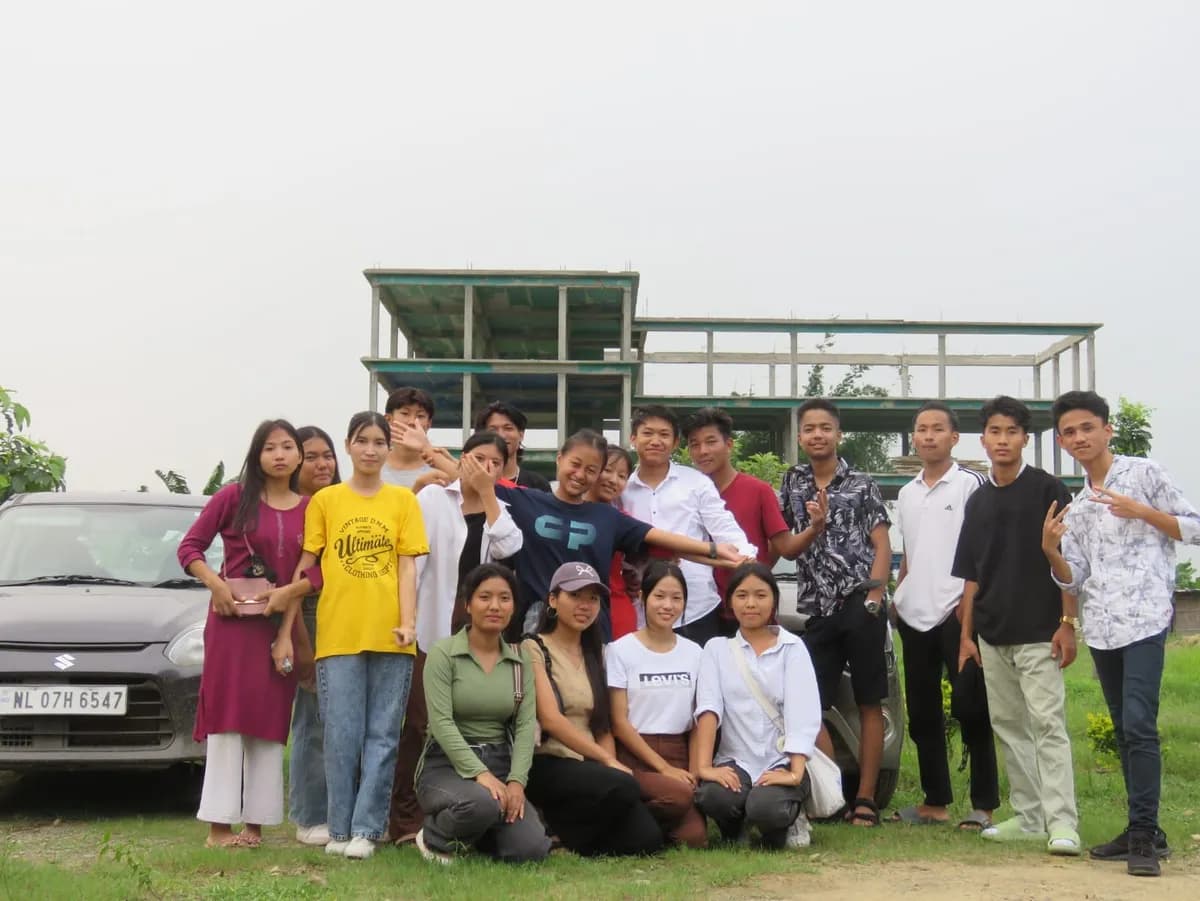
Today, Hope Helpers’ Community comprises around 70-80 active members, most of whom are between the ages of 17 and 24.
While the majority of members are from Dimapur, the group also includes members from Mon, Kohima, Zunheboto and Mokokchung, as well as volunteers residing in Assam and Karnataka.
Among the many experiences shared by the team, one incident continues to stand out. A student living with her sister in a rented house became a victim of a late-night theft when intruders stole their cooking gas cylinder.
After learning about their situation, members of Hope Helpers’ Community pooled their resources to purchase a replacement cylinder along with essential food supplies.
According to the team, the assistance not only helped ease the immediate hardship but also inspired the student to become a member of the organisation herself.
For the volunteers, the impact of their work cannot always be measured through statistics. Although records are maintained on outreach activities and beneficiaries, members believe the true value of their efforts lies in whether people feel supported, encouraged and remembered.
Volunteers contribute more than just their time; they bring ideas, skills, and personal experiences that shape every initiative.
However, sustaining the organisation’s activities has not been without challenges. The group currently operates without regular sponsors or long-term financial supporters.
While fundraising activities, contributions from well-wishers and donations help continue their programmes, members acknowledged that many initiatives are made possible through small contributions from students’ own pocket money.
Balancing voluntary service with academic responsibilities is another challenge.
Amrito Zhimo, an active member of the organisation, said one of the biggest difficulties as a student volunteer is the inability to give as much time or financial support as he would like.
He said there are occasions when academic commitments and assignments prevent him from participating in outreach activities despite his willingness to be present.
Despite such limitations, members have continued their work while maintaining records of all income and expenditure to ensure transparency.
The organisation’s attempt to register as a non-governmental organisation (NGO) has also faced hurdles.
According to the president, the absence of a permanent office or centre has delayed the registration process, posing another obstacle for a group largely run by students.
Leading the organisation has also reshaped Soihiamlung's understanding of leadership. He said he now sees leadership less as standing ahead of others and more as serving alongside them.
Also read: NPMC joins Chalo Sansad march in New Delhi
He added that community service has taught him patience, gratitude and the value of consistently carrying out small acts.
Looking ahead, Hope Helpers’ Community aims to expand its reach across Nagaland through more orphanage visits, educational support programmes, youth mentorship initiatives and skill-building workshops.
The organisation also hopes to encourage more young people to participate in community service.
For the team, the message remains simple: making a difference does not always require wealth, influence, or position.
Sometimes, it begins with the willingness to recognise another person's struggle and respond, however small the effort may be.
As Hope Helpers' Community continues its journey, that conviction remains the thread connecting every visit, every contribution and every volunteer who chooses to serve.
(The writer is a third-semester student of Mass Communication & Journalism at Tetso College, Sovima, and is currently an intern at Eastern Mirror.)