
Kopele V Tepa calls for more inclusive schools and better support systems for persons with disabilities in Nagaland.
Share


Bumblebee Society highlights challenges faced by PWDs in Nagaland
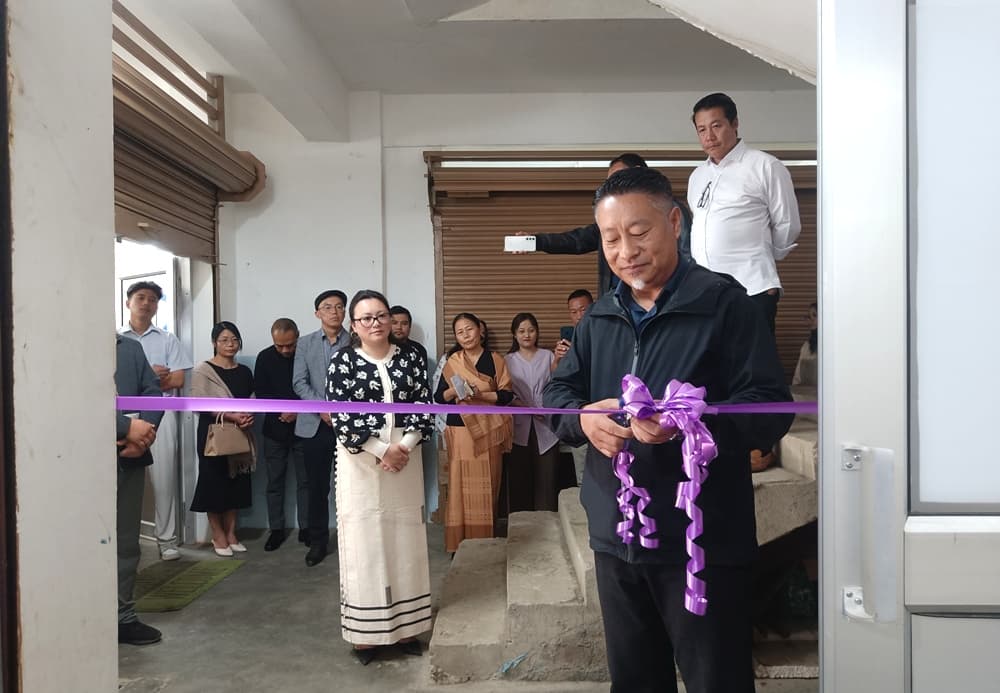
KOHIMA — Stressing the urgent need for greater inclusion and support for persons with disabilities in Nagaland, Bumblebee Society founder Kopele V Tepa on Tuesday said the state needs more schools willing to “open their doors and hearts” to children with disabilities.
She was speaking at the inauguration of the Early Intervention and Community Based Rehabilitation (CBR) Centre at the new building of Bumblebee Inclusive School at Upper Agri Colony, Kohima.
Tepa said inclusion must go beyond policies and discussions and become visible in schools, communities and daily interactions.
She stressed the need for public spaces that are accessible, welcoming and safe, where persons with disabilities can participate freely without fear of ridicule or exclusion.
She also addressed that there is a need for easier access to healthcare facilities, government schemes, and support systems that enable persons with disabilities and their families to live with dignity, independence, and equal opportunity.
“Inclusion cannot remain limited to policies and discussions — it must become visible in our schools, our communities, and our everyday interactions”, she maintained.
Outdated data masks disability challenges
Highlighting the lack of updated data on persons with disabilities (PWDs), Tepa cited the 2011 Census, according to which Nagaland has 29,631 persons with disabilities. Of these, only 12,904 are literate while 16,727 remain illiterate.
However, she noted that the figures do not fully reflect the reality, as disability often goes unreported in many parts of the state due to stigma, fear and social exclusion.
“At the same time, the data itself urgently needs to be updated because without accurate and current representation, it becomes difficult to advocate effectively for resources, policies, healthcare, education and support systems for persons with disabilities,” she said.
Drawing from her experience of working with families over the years, Tepa said many parents spend years hoping that they would no longer have to identify with the word “disability.”
Once children complete school or move beyond support systems, many families quietly distance themselves from the disability community in the hope of blending into what society considers “normal”.
Questioning this mindset, she said disability should not be viewed as something shameful to outgrow or hide.
Stigma and fear of judgement
Tepa continued that disability has been part of the human community since time immemorial and yet, even today, many persons with disabilities and their families continue to live in silence because of stigma and fear of judgement.
According to her, when families remain silent about their struggles and achievements, society loses valuable voices that could encourage others facing similar challenges in isolation.
Calling disability “another dimension of God’s creation”, Tepa said her decade-long work in disability inclusion and advocacy has shown her the transformative impact of early intervention and family support.
“Early intervention not only improves outcomes for the child, but also empowers families with understanding, confidence and the ability to advocate for their child’s needs,” she said.
Free services for low-income families
Tepa informed that with support from partners and well-wishers, the centre would provide therapies, remedial support and family capacitation services within the state. She further announced that families earning below INR 20,000 per month would be able to access these services free of cost.
She also shared that Bumblebee Inclusive School currently has 107 students, including 28 children with disabilities.
Speaking at the programme, MLA Dr. Tseilhoutuo Rhütso appreciated the teachers and staff of the school for their dedication and support to children with special needs and their families.
“In any way, if I can be your mouthpiece to the government and in the Assembly to speak for children with special needs, please come forward and give me your innovative ideas and suggestions,” he said.
Physiotherapist Dr. Nzani spoke on physiotherapy in neurodevelopment disorders, while special educator Tsikholi Medoze highlighted the importance of special education support.
Community Based Rehabilitation worker Thejangunuo Leno shared insights on CBR initiatives, and counsellor Atsonuo Thapo spoke on the theme “Inclusion Begins with Understanding”.
Dr. Sao Tunyi, a physician-turned agri-entrepreneur, also shared a parents’ review during the programme.
The newly inaugurated centre will offer services for children with learning disabilities and ADHD, autism spectrum disorder, speech and language delays, developmental delays, sensory processing needs, intellectual disabilities and hearing impairment.
The centre will cater to children requiring early support between 0 and 8 years of age, children with developmental delays and individuals in need of home-based rehabilitation support.
Services to be provided include special education, physiotherapy, counselling and community-based rehabilitation.