
Nagaland signs MoUs with SCERT, NBSE and Lend A Hand India to boost skill education and vocational learning in schools.
Share


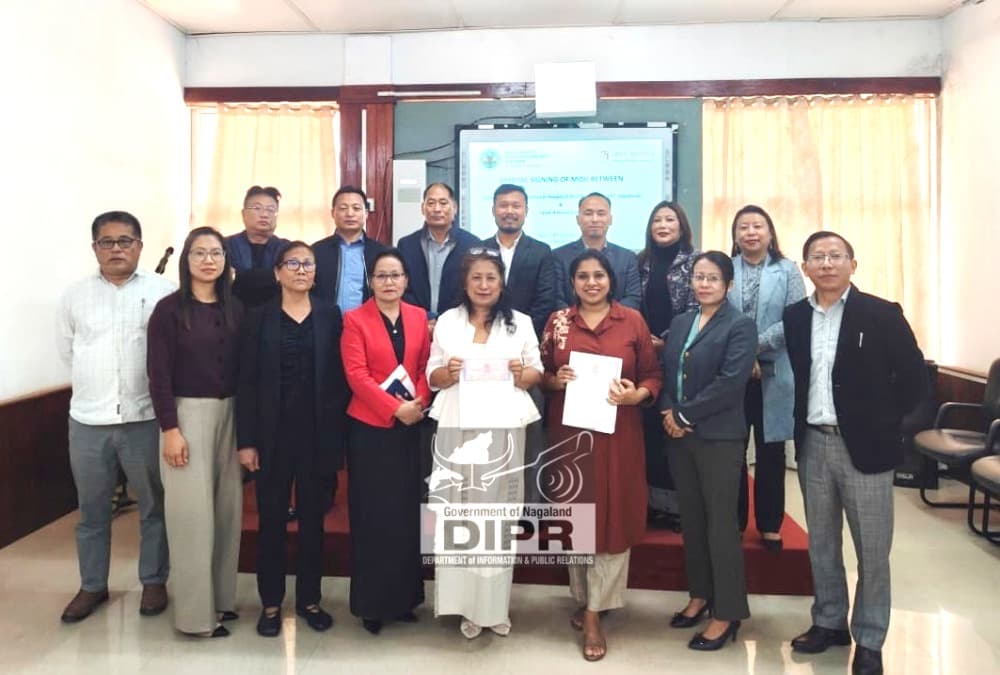
DIMAPUR — Skill education in Nagaland’s school system took an important step forward with the signing of two Memoranda of Understanding (MoUs) between the State Council of Educational Research and Training (SCERT), the Nagaland Board of School Education (NBSE), and Lend A Hand India (LAHI) on March 18.
In a press release, the NBSE stated that the partnership with SCERT focuses on introducing Kaushal Bodh textbook for students in Classes 6 to 8, creating early exposure to practical, hands-on learning.
The programme is aligned with the national curriculum framework and is organised around three areas of work: life forms, machines and materials, and human services.
The programme combines hands-on learning with the development of essential 21st century skills such as problem-solving, teamwork, creativity, and communication.
The collaboration will include curriculum and textbook contextualisation, development of teaching-learning materials, teacher training, and on-ground implementation support.
Speaking on the occasion, Keviraleü Kerhuo, Director of SCERT Nagaland, said, “The MOU with Lend A Hand India aims to strengthen vocational education in line with NEP 2020 by making learning practical and relevant. Through initiatives such as Kaushal Bodh and 10 Bagless Days, SCERT will adapt content to local needs while Lend A Hand India provides technical support.
“Together, we aim to build an ecosystem where students can explore their potential and develop essential life skills early, while also empowering teachers to deliver skill-based education, transforming learning beyond textbooks.”
A parallel collaboration with NBSE focuses on strengthening systems for skill assessments and certifications for students in Classes 9 to 12.
This includes supporting NBSE’s progression towards becoming a recognised awarding body under the National Council for Vocational Education and Training (NCVET), through alignment with national standards, development of assessment frameworks, and capacity building of assessors.
In his keynote address, Rangumbuing Nsarangbe, Secretary and chairperson (additional charge), NBSE, expressed confidence in partnering with Lend A Hand India, citing its experience with over 21 state governments across India in strengthening vocational education.
He noted that while the work ahead would require sustained effort, the collaboration provides a strong foundation for strengthening skill education in alignment with the broader vision of the National Education Policy.
Taken together, these partnerships reflect a growing focus on making education more connected to real-world contexts- linking what students learn in classrooms with the skills they will need beyond school, it stated.
Sharing her perspective on the collaboration, Malathy Madathilezham, Senior Manager, Founder’s Office, Lend A Hand India, emphasised the significance of the partnership.
“We are deeply grateful to SCERT Nagaland and NBSE for the trust they have placed in Lend A Hand India. These partnerships are a shared commitment towards operationalising the National Education Policy- by strengthening vocational education so that every child in schools across Nagaland can access quality skills that prepare them for life and work,” Madathilezham said.
The collaborations also highlight the continued efforts of the Government of Nagaland, along with SCERT and NBSE, in recognising the aspirations of young people and the role of skill education in supporting them.
“Strengthening these pathways within the school system is an important step towards preparing students not only for examinations, but for meaningful participation in the world of work and society,” the release added.