
The repatriation of 39 Naga ancestral remains from Oxford’s Pitt Rivers Museum is not just about returning bones but restoring dignity, memory and wholeness to a fractured people says Rev. Dr. Wati Aier
DIMAPUR — The repatriation of 39 Naga ancestral remains from Oxford’s Pitt Rivers Museum is not just about returning bones but restoring dignity, memory and wholeness to a fractured people, Rev. Dr. Wati Aier, Convenor of the Forum for Naga Reconciliation (FNR), said on Saturday.
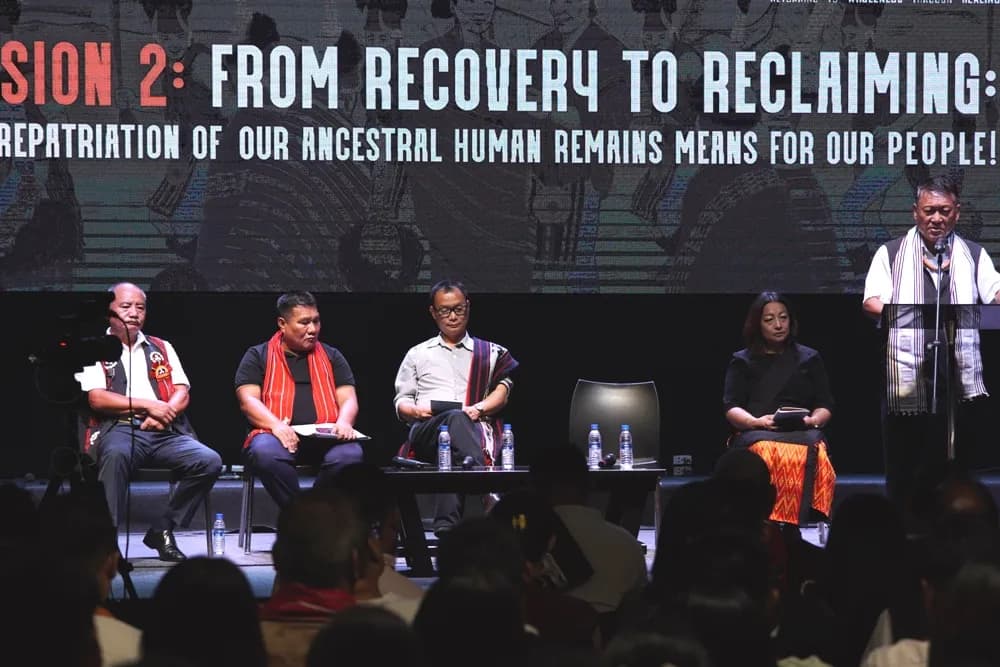
He was speaking at the Recover Restore And Decolonise (RRaD) and FNR’s September Dialogue on “Returning to Wholeness through Healing” at The Lighthouse Church in Dimapur.
Aier said the Naga people’s journey of trauma is collective, historical and intergenerational, carrying wounds of colonial intrusion, political violence and cultural disruption. In the light of repatriation, he said, there is an opportunity to return to wholeness through healing by reclaiming ancestral remains, dignity, memory and belonging.
According to him, the burial of the repatriated remains in Kohima, at a site chosen by the Naga tribe hohos and FNR, will serve as a communal sacred moment of closure and inspire cultural renewal by reconnecting people to ancestral land and traditions.
Calling for redemptive rather than weaponised memory, Aier spoke of refusing to let wounds define the future, shifting from victims to storytellers and experiencing spiritual release, saying “we will never forget what happened, but we will not allow that injustice to make us permanently resentful."
Also read: Oxford agrees to repatriate 39 Naga ancestral remains
Call for shalom
Envisioning the return as a moment of collective healing, Aier said he imagines all Naga tribe hohos joining hands to bid the past to rest and begin anew, while Naga political groups reconcile with the past and move forward together.
“This imagination is not utopian but a necessary act of socio-political imagination," he said, adding that repatriation is a repayment of dignity owed to ancestors while creating a “covenantal debt” of responsibility towards future generations.
What it means for Nagas
During a panel discussion on “from recovery to reclaiming—what repatriation of our ancestral human remains means for our people”, Angami Public Organisation (APO) President Thejao Vihienuo recalled that tribal leaders initially agreed to accept the repatriation on the condition that it involved an act of apology and regret.
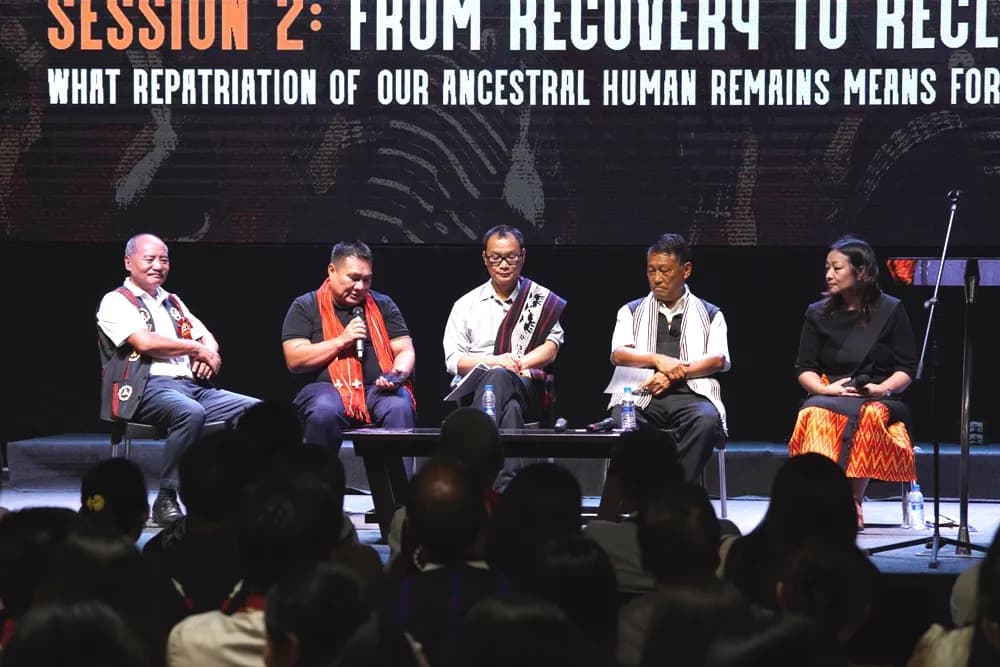
It was also decided that irrespective of how many tribes have human remains to be repatriated, they would be accepted as Nagas, as one community. As the Nagas neither have the technology to preserve the remains nor trace lineage, they decided on a dignified burial that would testify to Naga oneness.
Vihienuo said FNR later shared a video in which the Director of Pitt Rivers Museum expressed regret over the manner in which the remains were taken away.
“Nobody knew exactly the manner and style in which these remains were taken away. But one thing is sure: no person, however primitive, would have given the remains of his dear ones as gifts to another person, irrespective of influence and might. Therefore, we all felt these remains were taken away in dubious ways," he said.
Ao Senden General Secretary Imtipokyim said repatriation is not merely the return of remains but the recovery of history, dignity, memory and identity.
“What is coming home is not an object but someone whose life and memory belong to us," he said, adding that while museums treat remains as specimens, for Nagas they are ancestors.
He said repatriation creates an intergenerational connection, allowing young people to see history as a relationship rather than just text. “Recovery in repatriation is a healing in itself," he added.
Phoms account for 24 of 39 human remains
Recalling his promise made to ancestors at Pitt Rivers Museum on June 9, 2025, N T Thamlong, Vice President of Phom People’s Council, said the repatriation is particularly significant for the Phom community, as Phoms account for about 24 skulls among the 39 remains expected to be brought back.
“In our Phom tradition we never abandon the head of our people even during head-hunting days and try our very best to retrieve at least the head even after he is killed. Even today we take back mortal remains to our native place because we believe the spirit of the dead will find eternal rest only in its own homeland and that blessings of the dead remain with its own people," he said.
Sumi Hoho Vice President Otova Swu said the repatriation should matter to every Naga, as it concerns Naga heritage and identity. He said the timing was appropriate when Nagaland was passing through divided and disturbed times, adding that if the dead could bring oneness by coming home, the living should not allow anything to divide them.
Logistics poses challenges
During the discussion hour, Vihienuo said meetings were being held to prepare people mentally so that repatriation becomes a process of healing rather than merely receiving the remains.
It was clarified that the repatriation is being undertaken in collaboration with Pitt Rivers Museum, a private institution, and not the British government. The remains were collected by private individuals and donated to the museum, while the museum director has expressed regret over the manner in which they were taken.
The Indian government has not been officially informed yet but will be approached when the remains are brought back.
The panellists said logistics remain a major challenge. A process that took other communities 40 years is being completed in six years for the Nagas, with the remains expected by November. The consignment cannot be carried on passenger flights, and cargo options are limited. Negotiations are underway for the museum to deliver the remains to Guwahati instead of Delhi.
They also cited rumours about wasteful expenditure, lack of preservation technology and accusations of reviving animism as challenges.
“That is totally outrageous. The main intention is not to revive animism but to give a final resting place and find wholeness through healing," Thamlong said.
On whether identified remains could be returned to individual villages, the panellists said leaders had unanimously decided to treat them as common Naga property in the larger interest of unity.
Asked about artefacts, they said the current focus is only on human remains, although engagement with the museum on artefacts remains open for students and researchers.
JOIN OUR WHATSAPP CHANNEL