


PAC blames faulty surveys, land acquisition lapses and poor oversight for sevenfold cost escalation in Dimapur-Kohima rail project
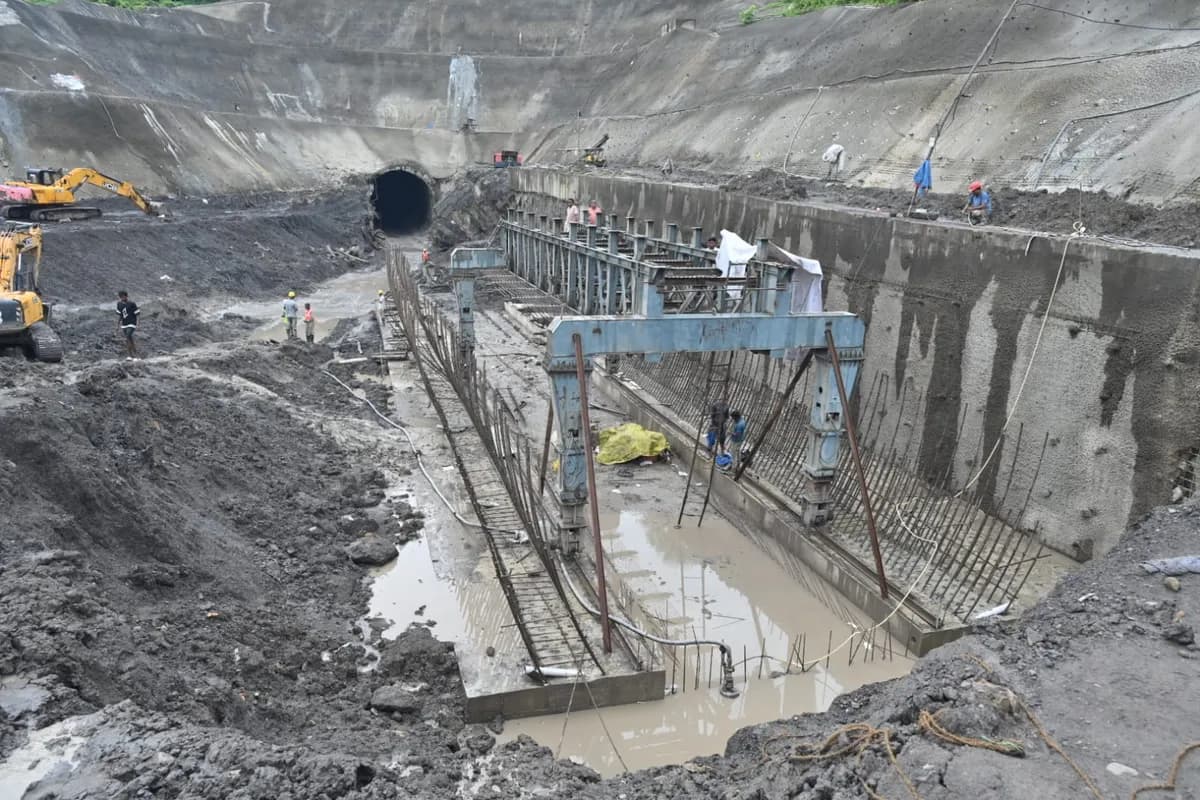
NEW DELHI — The cost of the Dimapur-Kohima rail link project in the Northeast Frontier Railway zone has escalated more than sevenfold, from INR 850 crore during sanction in 2006-07 to INR 6,663.20 crore by May 2022, while physical progress remained below 25 per cent as of March 2022, the Public Accounts Committee (PAC) said in a report presented in Parliament on Tuesday.
The report, titled ‘Construction of Dimapur-Kohima New Line Project: Northeast Frontier Railway’, observed that the stalling of the project exemplifies a series of shortcomings that are encountered during large railway infrastructure projects in geographically complex regions. These include inadequate initial surveys, rushed land acquisition, designs not backed by cost-benefit analysis, poor contract oversight and insufficient accountability, the report said.
The committee observed that this level of cost escalation, coupled with such poor physical progress, represents a failure of financial oversight and project governance. It stated that Nagaland, a landlocked hill state with only 11.13 km of existing broad-gauge railway lines, remains heavily dependent on road transport for majority of its connectivity needs.
According to the committee, to address this infrastructure gap and promote all-weather rail connectivity, the Ministry of Railways had sanctioned the Dimapur-Kohima New Line Project in 2006-07 at an estimated cost of INR 850 crore.
“However, the project has been plagued by repeated alignment revisions, persistent land acquisition challenges, tunnelling design issues, premature procurement, and systemic failures in contract management," the report said.
"These lapses caused the project cost to escalate sevenfold to INR 6,663.20 crore by May 2022 while physical progress remained below 25 per cent, significantly delaying the socio-economic benefits that the project was designed to deliver to the people of Nagaland," it added.
The committee noted that the pre-construction survey between Dimapur to Zubza was allocated to M/s RITES, which completed the work at a total cost of INR 7 crore, however, the survey did not address construction challenges in the Neo-Himalayan terrain.
Thereafter, the Railway ministry employed services of M/s AYESA for a fresh alignment review using advanced digital terrain modelling (DTM) and digital elevation modelling (DEM) tools, the report said. It recommended the Ministry of Railways institutionalise a robust pre-project survey framework that mandates multi-stage, technology-assisted geotechnical and geological investigations.
The committee also urged the ministry to review all ongoing and future hill-railway projects in the Northeast to identify similar survey-related risks and take preemptive corrective action.The panel also pointed out many "avoidable irregularities" in land acquisition at every stage, resulting in infructuous expenditure of INR 141.70 crore.
While examining contract management and extension of time in the project, the committee found that till December 2025, a total of 42 Extensions of Time (EOTs) were given to contractors since 2015, resulting in additional price variation costs of INR 42.38 crore.
The panel also noted that signalling materials worth INR 11.44 crore were procured prematurely when civil works were only 25 per cent complete, resulting in idle blockage of funds. Additionally, tunnel radio communication equipment was imported from the United States due to absence of Indian manufacturers, raising concerns about procurement planning, the report said.