

Dimapur organisations condemn DNSU’s shop closure, demand lawful procedures and warn against parallel authority in dispute resolution
Share


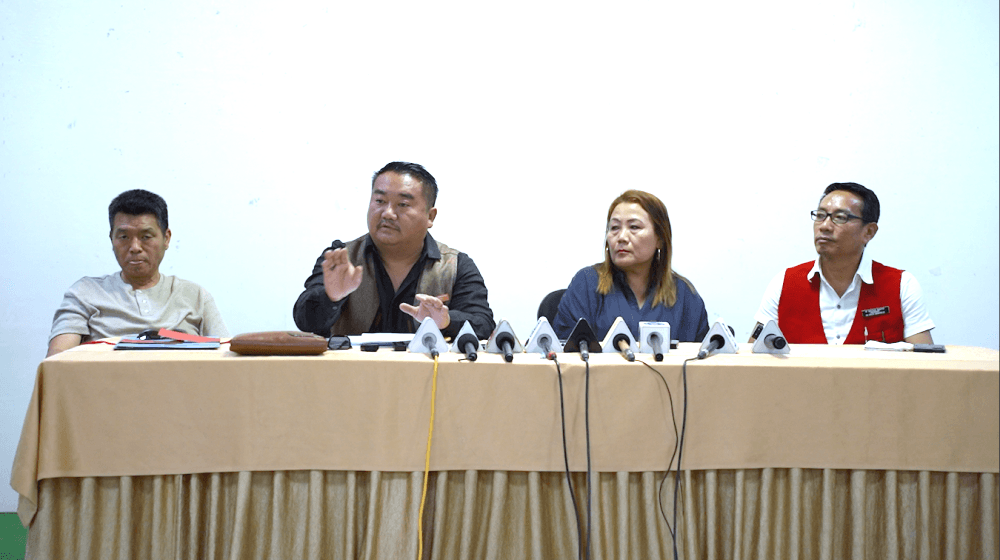
DIMAPUR — The Dimapur Urban Council Chairmen Federation (DUCCF), GB Union Sadar, Dimapur Chamber of Commerce and Industry (DCCI), and Churches Colony Council on Thursday adopted a six-point resolution over the recent closure of JDS Interior Shop by the Dimapur Naga Students’ Union (DNSU), maintaining that no organisation should take the law into its own hands.
The joint meeting, held at Hotel Saramati in Dimapur, resolved that the action of locking the shop was “wrong and illegal” and amounted to trespassing on the authority of the colony council and DCCI.
Addressing media persons after the meeting, DUCCF president Zasivikho Zakiesato clarified that the organisations were not opposing DNSU’s objectives but objected to the manner in which the action was carried out.
“We support DNSU, but there are limitations. Even DUCCF and GB unions function within the framework of the law and coordinate with the district administration in handling disputes,” he said.
The resolution stated that DNSU, being a student body, should confine its activities to student welfare and student-related matters. It further stated that DNSU should not interfere in business-related matters without the knowledge of DCCI, while issues concerning indigenous certificates should be referred to the district administration for investigation and action as per law.
The organisations also appealed to the district administration to summon the accused, Girdhari Lal Sharma, for questioning in the presence of DUCCF, GB Union Sadar, DCCI and DNSU regarding allegations that he had fraudulently obtained a Non-Naga Indigenous Certificate.
They warned that if the points adopted by the house were not complied with, DUCCF, DCCI and GB Union Sadar would not cooperate with DNSU in future.
Churches Colony Council chairperson Kuholi Chishi said the council appreciated efforts against illegal acquisition of indigenous certificates and acknowledged DNSU’s role in raising such concerns. However, she questioned why the colony council was not informed before the shop was locked.
WATCH MORE:
“It would have been better if they had at least informed the colony council,” she said, adding that the issue escalated through public statements instead of dialogue.
GB Union (Sadar) president W Kholie Kapfo said colony councils and GBs assist the administration in resolving minor disputes through dialogue, while matters beyond their scope are referred to the competent authorities.
“If organisations start taking up the work of the administration and law-enforcing agencies, it makes no sense. Closing shop is illegal,” he said.
DCCI president Akashe Zhimomi disclosed that the chamber had initially considered filing an FIR after learning about the closure through media reports. However, after intervention from senior leaders and discussions with the Naga Council Dimapur, the decision was withheld in favour of dialogue.
Maintaining that DCCI supports efforts concerning indigenous and ILP-related issues, he said student organisations should function through proper channels.
Questioning the practice of organisations summoning individuals to their offices, he asked what kind of settlements, judgements or compromises were being made outside the legal framework.
“That is why, for the near future, this resolution is done for the good of the organisation, not because they are against anyone. This is a chance given to them to rectify themselves or rectify the organisation,” he said.
The organisations reiterated that while they support action against illegal activities, grievances and allegations must be addressed through lawful and established procedures.