


Nagaland reaches 50% PM SVANidhi target with 6,511 loans sanctioned as officials address implementation challenges and vendor inclusion
KOHIMA — Nagaland has achieved nearly 50% of its PM SVANidhi loan target, with banks sanctioning 6,511 loans worth INR 10.75 crore against the state's target of 13,000 loans to be approved by March 31, 2030, Petevilie Khatsu, Additional Director of Urban Development and State Mission Director of DAY-NULM, said on Monday.
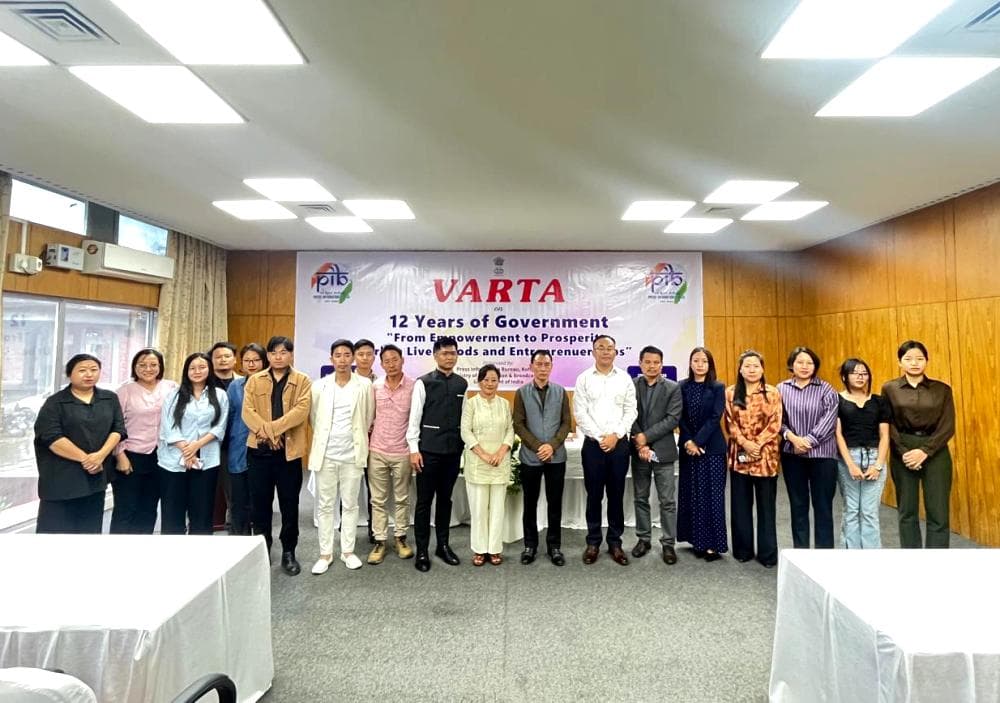
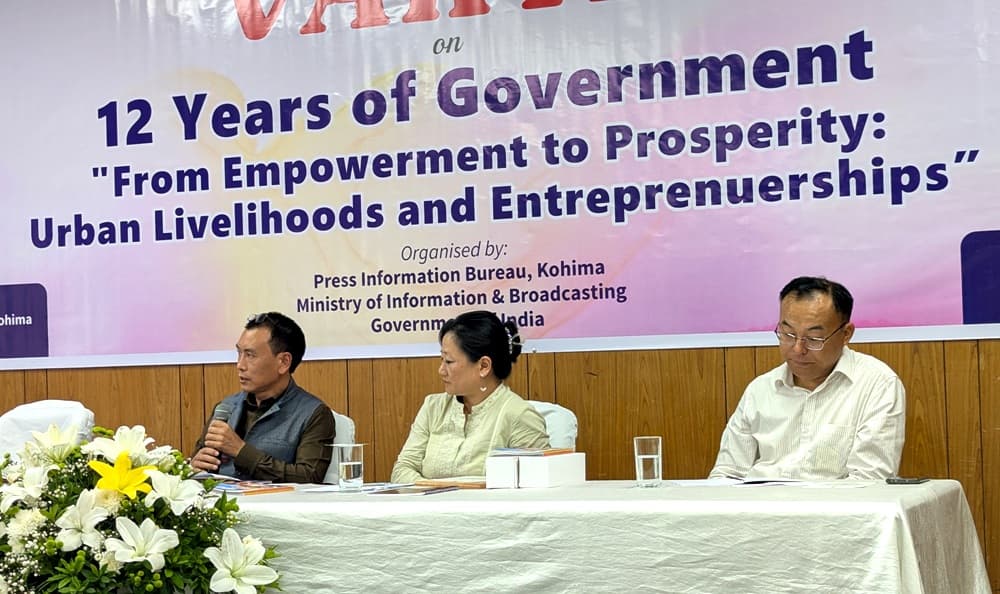
Khatsu was speaking during the ‘Varta on 12 Years of Government’ programme held in Kohima. The event, organised by the Press Information Bureau (PIB), Kohima, under the Ministry of Information and Broadcasting, was attended by members of the media on the theme, 'From Empowerment to Prosperity: Urban Livelihoods and Entrepreneurship.'
Of the 6,511 loans sanctioned, 6,394 loans worth INR 10.52 crore have already been disbursed. About 60% of the beneficiaries (3,864 vendors) have repaid their loans on time, making them eligible for higher loan amounts under the scheme.
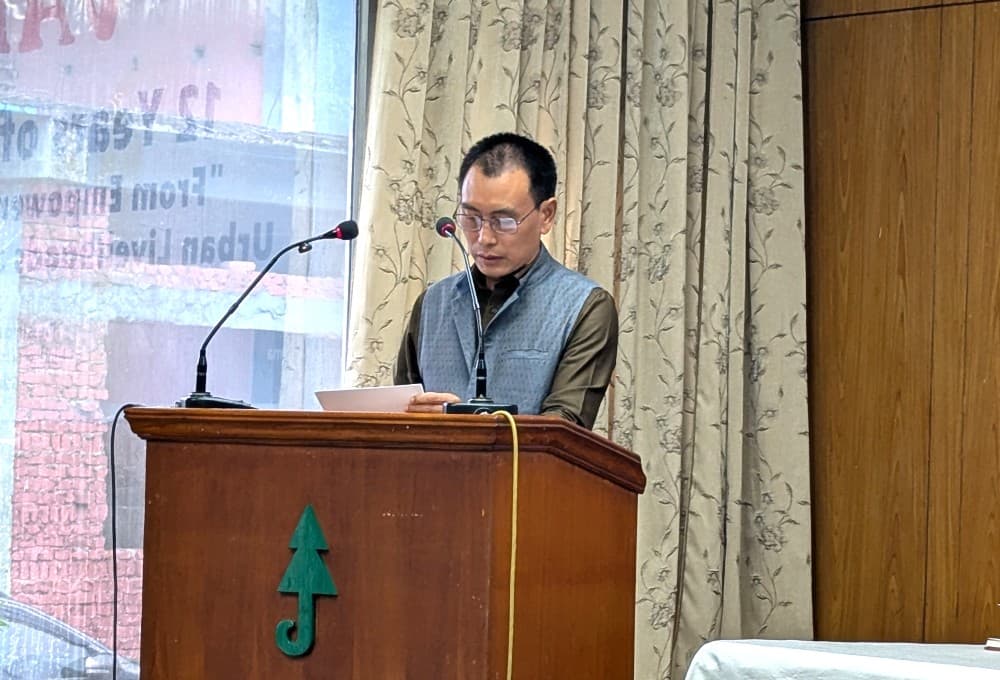
Across the state's 39 urban local bodies (ULBs), 8,657 applications were found eligible. Dimapur accounted for the highest number of eligible applications with 3,524, followed by Kohima with 1,362.
Khatsu said that 200 bank branches across the state are participating in the implementation of PM SVANidhi, although performance varies across towns. Among the best-performing ULBs, Aghunato and Meluri recorded 100% repayment rates, albeit with only two and one beneficiaries respectively. Noklak recorded a 92% repayment rate, followed by Changtongya at 90%.
However, eight ULBs—Naginimora, Tizit, Tobu, Atoizu, Satakha, Shamator, Seyochung and Chiephobozou—have yet to sanction a single loan and require focused intervention, he said.
Highlighting the challenges in achieving the target, Khatsu shared that many vendors face difficulties because their Aadhaar cards are not linked to their current mobile numbers. Around 1,500 loan applications were initially rejected or returned by banks. Limited digital literacy among vendors, poor internet connectivity in remote areas and inadequate banking infrastructure continue to hamper implementation.
"PM SVANidhi is not just about providing loans; it is about giving respect and economic independence to street vendors," he said, adding that while reaching the halfway mark was encouraging, greater coordination with banks was needed to reduce loan rejections, resolve Aadhaar-mobile linkage issues through local camps and improve implementation in underperforming towns.
The PM SVANidhi scheme provides collateral-free loans to eligible street vendors to help them sustain and expand their businesses. Vendors who repay their loans on time become eligible for higher loan amounts in three stages— INR 15,000, INR 25,000 and INR 50,000. The scheme also offers an interest subsidy of up to 7%, digital transaction incentives, access to credit cards and linkage with various welfare schemes.
To avail these benefits, beneficiaries must be enrolled through the Svanidhi Se Samridhi (SSS) socio-economic profiling initiative, facilitated by stakeholder departments and urban local bodies.
Speaking on the Deendayal Antyodaya Yojana-National Urban Livelihoods Mission (DAY-NULM), Abaü Suokhrie, State Mission Manager, Directorate of Urban Development, said that the mission, launched in Nagaland in 2014-15, has focused on reducing urban poverty by creating sustainable livelihood opportunities.
She explained that the programme organises the urban poor into Self-Help Groups (SHGs), promotes skill development and supports self-employment and entrepreneurship, with women at the centre of its interventions. A total of 884 SHGs remain functional across the 11 district headquarters covered under DAY-NULM.
According to Suokhrie, the initiative has enabled beneficiaries to access skill training, credit support and opportunities to establish small enterprises, strengthening livelihoods, particularly among women and economically weaker sections.
She informed that the implementation period of DAY-NULM concluded on September 30, 2024. Building on its experience, the Ministry of Housing and Urban Affairs has launched the pilot phase of the Deendayal Jan Aajeevika Yojana-Shehari (DJAY-S) under a "Test-Learn-Scale" approach.
Kohima is among the 25 cities selected nationwide for the pilot project, which focuses on vulnerable occupational groups, including gig workers, transport workers, construction workers, waste workers, care workers and domestic workers, through an integrated approach to skills development, livelihoods and social protection.