


Nagaland DGP Rupin Sharma calls for accountability, transparency and responsible decision-making in government institutions
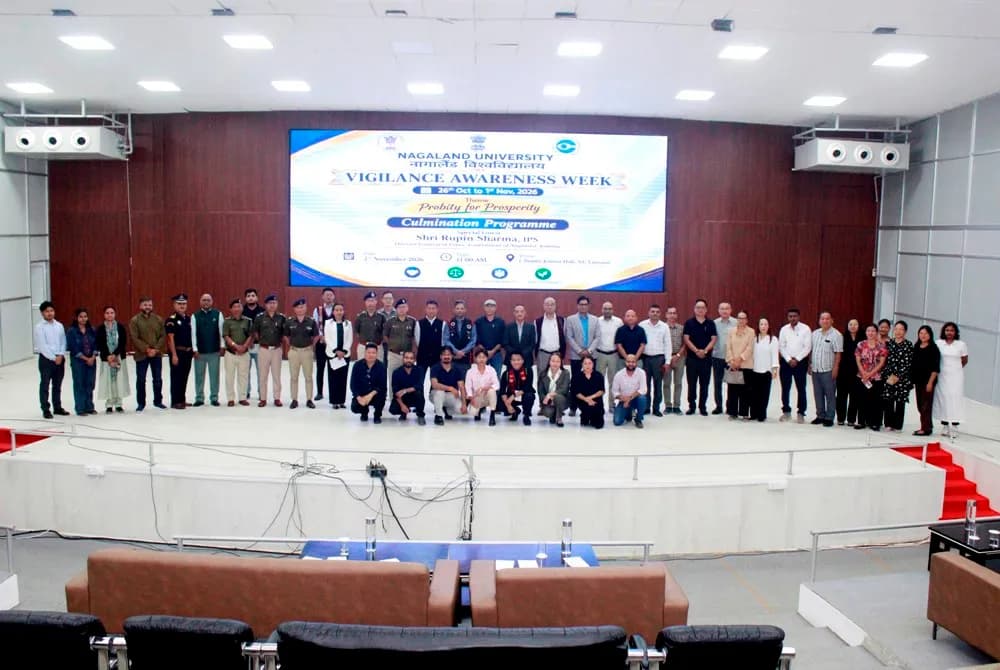
MOKOKCHUNG — Nagaland Director General of Police (DGP) Rupin Sharma has flagged a culture of buck-passing in government institutions, observing that junior officers often push files upwards instead of taking decisions and accepting responsibility.
Addressing the observance of Vigilance Awareness Week at Nagaland University's Lumami headquarters on Monday, Sharma called for a work culture that encourages decision-making, accountability and transparency at every level.
He suggested that when junior officers were reluctant to take decisions, authority became increasingly centralised, leaving higher officials burdened with matters that could otherwise be handled at lower levels.
Also read: Nagaland woos investors to boost its energy sector

“When the fountainhead of authority starts taking responsibility, that responsibility starts trickling down to the bottom,” he said.
Sharma urged officers to distinguish between mala fide and bona fide decisions, arguing that the latter should be given the benefit of the doubt unless the decision was clearly improper from the outset.
He maintained that vigilance should not be reduced to fault-finding or confrontation but should serve as the starting point for addressing problems. “I think vigilance is the stepping stone for solving a problem,” he said, regretting that in Nagaland, people often treated the discovery of a problem as the end of the process rather than working towards a solution.
He cautioned that unattended irregularities and bad practices could grow into larger problems. Vigilance, he added, was not a one-time exercise but a continuous responsibility.
“Vigilance and security is a 24/7 project where you cannot let your guard down for even a second,” he said.
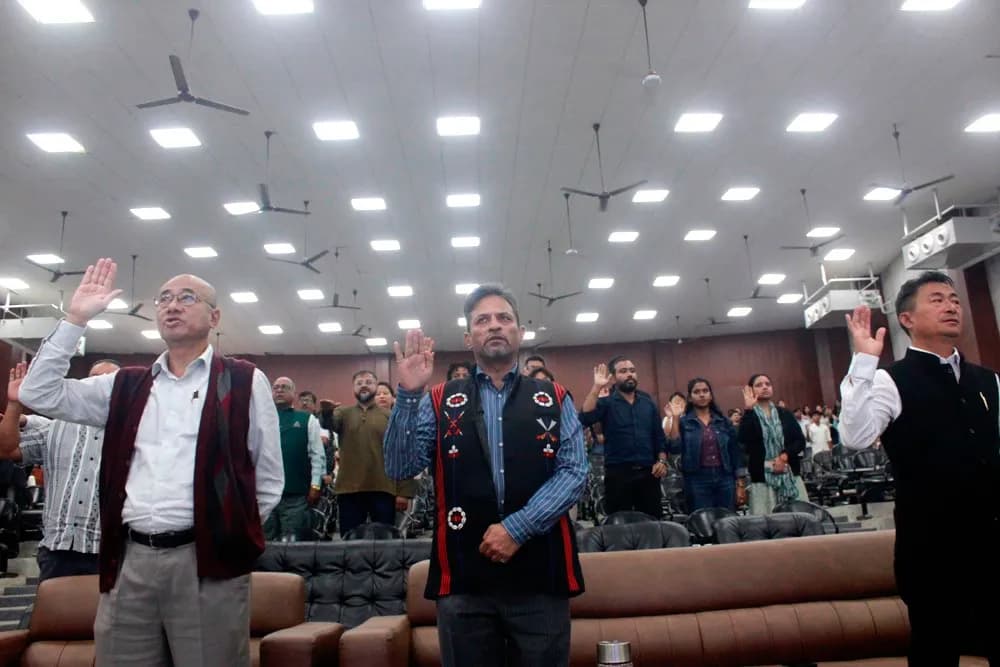
On transparency, the DGP said that a secret system was no system at all. He stressed that people should have access to accurate information to form opinions based on verified facts.
“What is sacrosanct and most important in transparency is the facts. If the facts are correct and presented properly, there will be more unanimity of opinion,” he said.
He highlighted that transparency remained a major challenge in governance worldwide, particularly because governments were among the largest service providers in modern society.
Citing recruitment reforms in the Nagaland Police, Sharma highlighted the importance of equal opportunity and transparent selection processes. He said that the open recruitment exercise, conducted with the backing of the state government and the chief minister, had helped the department avoid much of the criticism that often accompanied recruitment.
He said that in 2023, about 84% of personnel at the rank of head constable and below—who constitute nearly 80-85% of the force—were below matriculation.
In contrast, 82% of personnel inducted through the latest open recruitment exercise, the results of which were declared in April-May, were Class 10 and above, he said.
Sharma added that the recruitment process had provided candidates with equal opportunities, while allocation of seats on a tribal basis had helped the force select capable personnel from every community.
Turning to policing, he said the profession was fundamentally about upholding the rule of law rather than displaying force. Comparing policing practices, he observed that in some states a single constable commanded greater respect through knowledge of the law, whereas Nagaland often deployed large numbers of armed personnel at polling stations.
With a more educated constabulary, he expressed hope that the force would increasingly rely on the authority of law rather than the barrel of a gun.
The DGP also called for greater space for people to speak and dissent without fear or favour, whether in villages, classrooms, universities or public platforms. Encouraging students to question authority without fear of failure, he said such an environment would help individuals and institutions improve.
He further said leaders who voluntarily placed checks on their own authority and restricted arbitrariness in favour of transparent systems were the ones who should be valued.