


A workshop on fabricating monolithic complete dentures using PolyJet 3D printing technology was held at NHAK.
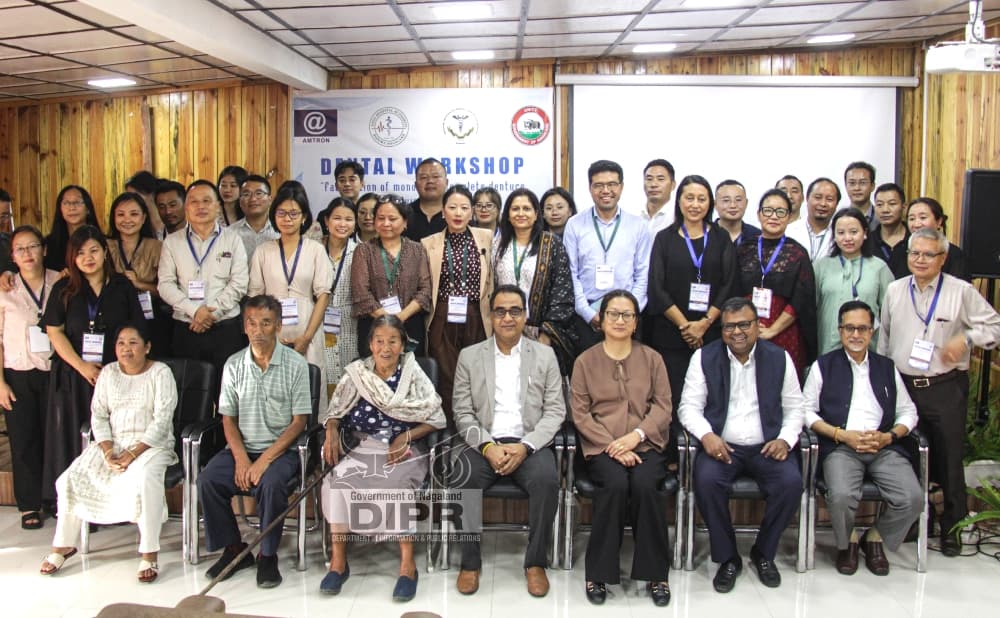
DIMAPUR — A workshop on the fabrication of monolithic complete dentures using PolyJet 3D printing technology was held at Naga Hospital Authority Kohima (NHAK) on Saturday, with around 30 participants attending the programme.
According to a DIPR report, Commissioner & Secretary for Health & Family Welfare, Anoop Khinchi, said that healthcare is being redefined by technology and that dentistry was no exception.
He noted that treatment planning, prosthetic design and patient care delivery are evolving rapidly, with digital tools becoming an integral part of present-day practice rather than a future prospect.
He stated that technologies such as digital impressions, CAD-CAM and 3D printing have brought about a significant shift towards greater precision, efficiency and patient comfort.
The government, he said, views digital dentistry as an important component in making healthcare more accessible and efficient across the state and the region.
Khinchi said that monolithic complete dentures fabricated through PolyJet 3D printing represent a major advancement in dental care.
He observed that traditional workflows are technique-sensitive and time-consuming, whereas 3D printing enables the production of strong, biocompatible and accurately adapted dentures within a much shorter time frame, directly benefiting patient care and quality of life.
Also read: NEIGRIHMS achieves historic heart surgery milestone
He emphasised that workshops of this nature play a crucial role in bridging the gap between theory and practice and encouraged participants to actively engage in the hands-on sessions, seek clarification when needed, practise the techniques and collaborate with experts.
The Commissioner & Secretary further stated that the government remains committed to supporting continuing education and skill development to ensure that healthcare professionals kept pace with emerging technologies.
He underscored the importance of collaboration among hospitals, academic institutions, industry partners and government agencies in driving innovation.
He explained that hospitals provide the clinical foundation, academia contributes research, industry supplies technological expertise, and the government offers policy support and infrastructure.
Such coordinated efforts, he said, would accelerate innovation and help ensure that advanced treatments reach patients who needed them most.
Khinchi also acknowledged the contribution of the Technology advisor at the Industry 4.0 Innovation Centre for providing technological support and facilitating the installation of a 3D printer at NHAK.
He urged stakeholders to adopt evidence-based digital workflows and work towards extending the benefits of 3D printing and digital dentistry beyond a few specialised centres to district hospitals, dental colleges and community clinics.