


Dimapur mothers share raw stories of sleepless nights, sacrifice, emotional change, and the beautiful chaos of raising children.
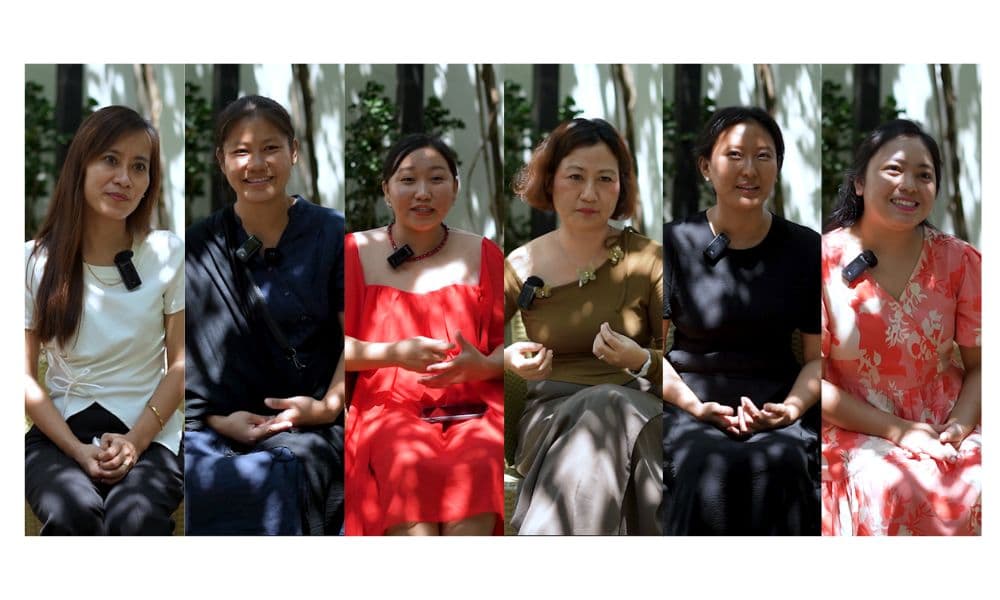
DIMAPUR — In many languages, the word “mother” begins with an ‘M’—one of the first sounds a baby learns to make. But for the mothers of Dimapur, motherhood rarely begins with a sound. It arrives quietly: in sleepless nights, cold cups of tea, leftover omelette eaten over the sink, and the gradual realisation that you have become someone stronger, softer, and entirely new.
Ahead of Mother’s Day, Eastern Mirror spoke to a few new mothers in Dimapur. Their journeys are different, but their stories echo the same truths — resilience, sacrifice, exhaustion, patience, and a love that changes everything.
For 35-year-old Kikrusenuo, motherhood was not immediate or instinctive. “It didn’t happen all at once,” she said. “But as my daughter grew and started reaching different milestones, motherhood slowly began to sink in.”
The first few months were, in her words, “a rollercoaster” for both her and her husband—3 am feedings, disrupted routines, and days shaped entirely around a newborn.
“Motherhood made me capable of doing things I never thought I could do before,” she said. The quality she says she inherited from her own mother is resilience—something she now understands more deeply than ever.
The phantom baby
For 38-year-old Lanumen, one of the strangest parts of motherhood came after childbirth. “A mother’s belly still moves after delivery, almost like there’s a phantom baby inside,” she recalled with a laugh.
Her doctor later explained that it was simply the uterus contracting back into shape. “It felt so strange to me.”
ALSO WATCH:
The birth of her daughter brought what she describes as “happy tears,” but motherhood also transformed her emotionally. “I became more careful about my words and emotions,” she said. “I realised I could no longer speak harshly or react carelessly.”
Asked what she would tell her daughter on her 18th birthday, her answer came instantly: “You are a blessing.” And somewhere between parenting and adulthood, she admitted, she recently found herself eating leftover omelette over the kitchen sink—a detail many mothers would quietly recognise.
From anger to patience
At 31, Anung says motherhood reshaped her personality completely. “I used to be very short-tempered and tomboyish,” she said. “Now my family says I’ve changed a lot. My anger has gone from 100 to 0, and honestly, that feels wonderful.”
Her hopes for her child are simple: that they grow up “God-fearing and patient.”
Like many first-time mothers, her internet search history became a survival guide. Among her most memorable late-night searches: “How to breastfeed” and “Why does a baby only cry at midnight when the parents are asleep?”
Her message to society is equally direct: “New mothers should not be pressured. Please don’t overwhelm them with unsolicited dietary advice.”
A beautiful mess
For Subeni, 36, mother to a four-year-old son, motherhood remains both overwhelming and deeply rewarding. “The word itself feels beautiful,” she said. “But becoming a mother is emotionally difficult too. There’s so much going on in a woman’s mind.”
The sleepless nights were hard, she admitted. Yet today, she describes her daily life as “a beautiful mess”—cleaning the house while answering endless questions, managing demands, and trying to keep up with a child’s boundless curiosity.
“I never imagined I would become such a messy but beautiful mother,” she laughed.
At 23, Shonyu is the youngest mother Eastern Mirror spoke to. Asked what she hopes her child remembers about her, she answered quietly: “That I sacrificed my dreams and hobbies for him.”
Her message to society reflects the pressure many young mothers feel. “This generation is different, and every new mother is trying to figure things out in her own way,” she said. “People should encourage mothers instead of criticising them.”
Above all, she wants people to remember one thing: “A mother’s love cannot be bought with money.”
Nobody warned me
For 27-year-old Kenie, motherhood came with another challenge—raising a child as a single mother. “Nobody prepared me for it,” she said candidly. “I wish someone had guided or counselled me.”
Even so, motherhood revealed strengths she never knew she possessed. “I realised I’m capable of doing so much more than I ever thought possible,” she said.
The lesson she hopes to pass on to her child is simple but profound: to love people unconditionally, regardless of their status or background.
The thread that binds
Six mothers. Six different versions of 3 am. One once described herself as a tomboy. One ate over the sink. One searched Google in desperation at midnight. Another is learning motherhood on her own.
None of them spoke about perfection. Instead, they spoke about surviving, adapting, learning patience, and discovering new versions of themselves—milestone by milestone, mess by mess.
What they ask for is not praise, but understanding. Guidance instead of judgement. Encouragement instead of criticism. Space to grow into motherhood in their own way.
Because, as Subeni put it, motherhood is “a beautiful mess.” And as Lanumen hopes her daughter will always know, every child is a blessing.