


KVK Peren holds five-day training on natural farming, equipping farmers with eco-friendly and sustainable agriculture techniques.
Share


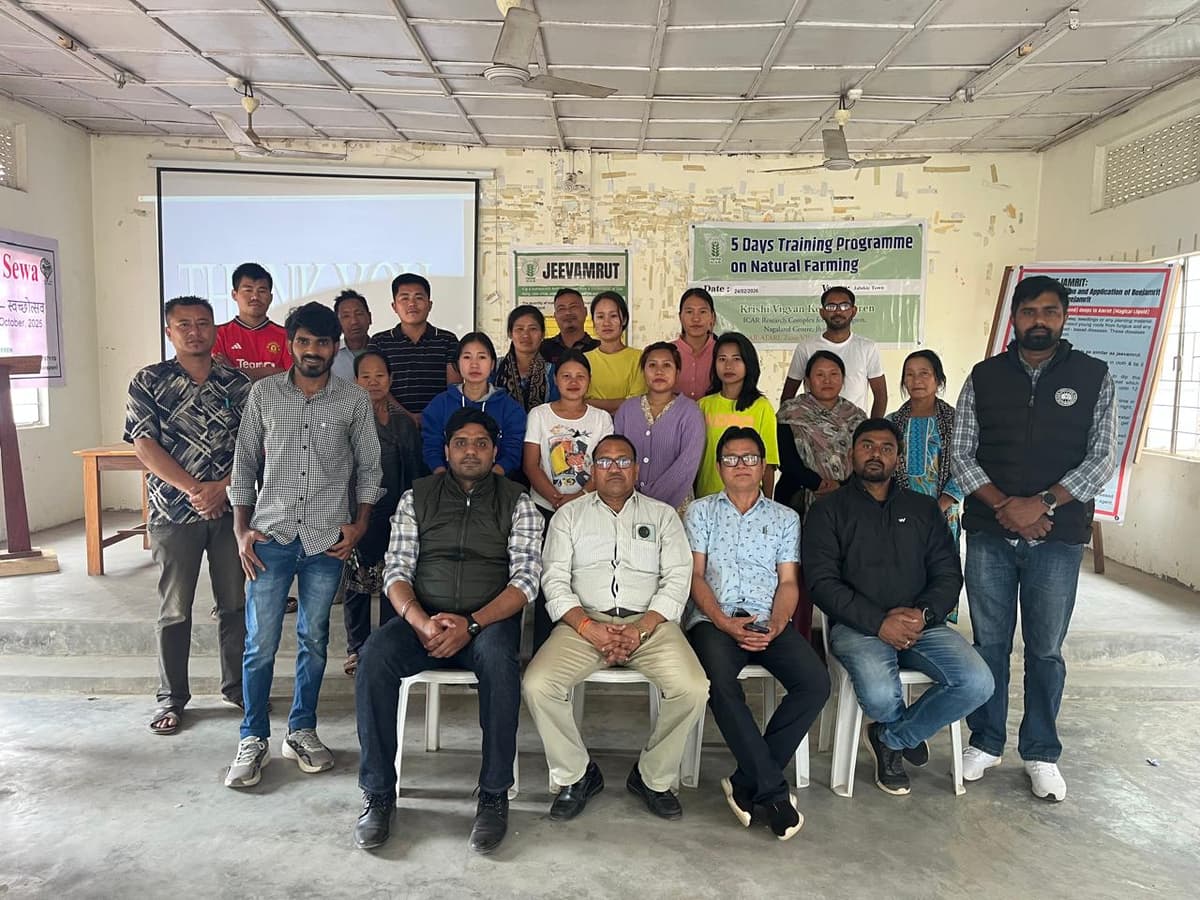
DIMAPUR — Krishi Vigyan Kendra (KVK), Peren organised a five-day training programme on natural farming for local farmers with the objective of promoting sustainable agricultural practices and reducing the dependency on chemical fertilisers and pesticides.
The programme aimed to enhance farmers’ knowledge and practical skills in adopting natural farming techniques that help improve soil health, reduce production costs, and ensure environmentally safe food production, an update stated.
The training programme was primarily conducted by Dr. Akshay Ujjwal, subject matter specialist, KVK Peren, who served as the main resource person and coordinator of the programme.
Dr. Ujjwal provided detailed theoretical knowledge along with practical demonstrations on various components of natural farming.
Also read: Free medical camp held at CHC Pughoboto
He explained the philosophy, principles, and scientific basis of natural farming and highlighted its importance in maintaining ecological balance, improving soil fertility, and producing chemical-free crops.
He conducted several sessions focusing on the preparation and application of key natural farming inputs such as Jeevamrit, Beejamrit, and other microbial formulations.
He also demonstrated step-by-step methods for preparing these inputs using locally available materials like cow dung, cow urine, jaggery, pulse flour, and soil. Farmers were taught how these formulations enhance beneficial microbial activity in the soil, improve nutrient availability, and promote healthy plant growth.
Additionally, Dr. Ujjwal provided practical guidance on important natural farming practices such as mulching, crop residue management, intercropping, and the use of botanical extracts for pest and disease management.
The sessions highlighted how mulching helps conserve soil moisture, suppress weeds, and improve soil structure. Farmers were also trained on preparing natural pest management solutions using neem, chilli, garlic, and other locally available plant materials.
The resource person further emphasised the importance of soil biodiversity and microbial life in sustaining agricultural productivity. He explained how natural farming improves soil organic matter, enhances soil microbial population, and strengthens plant immunity against pests and diseases.
Farmers were encouraged to utilize farm-based resources and adopt integrated natural farming techniques for long-term sustainability.
The programme was conducted under the guidance of Dr. KL Meena, Principal Scientist and Head of KVK, Peren, who provided valuable support and encouragement throughout the training.
In his address, he emphasised the need to promote natural farming among farmers to protect soil health, reduce environmental pollution, and ensure sustainable agricultural development in the region.
Dr. Prashant Kalal, subject matter specialist (Horticulture) delivered lectures on the application of natural farming practices in horticultural crops.
He explained how natural inputs such as Jeevamrit, Beejamrit, and botanical extracts can be effectively used in fruit and vegetable cultivation.
Dr. Kalal also discussed methods to improve fruit quality, increase plant resilience, and reduce pest and disease incidence through natural farming approaches.
James Kikon, CTO (Soil Science) provided detailed insights into the role of natural farming in improving soil health.
He discussed how natural inputs help enhance soil structure, increase microbial population, and improve nutrient cycling in the soil.
Farmers were educated about the importance of maintaining soil organic matter and adopting sustainable soil management practices.
During the programme, Dr. Harendra Verma, PBG scientist from ICAR Jharnapani, delivered an informative session on the role of natural farming in seed production and seed quality improvement.
He explained that natural farming practices help produce healthier seeds with better germination, vigour, and disease resistance.
Farmers were encouraged to adopt natural methods for maintaining seed purity and improving seed quality.
Throughout the five-day programme, farmers actively participated in interactive discussions, field demonstrations, and hands-on training sessions.
The programme helped participants gain practical knowledge about natural farming techniques and understand their benefits in reducing production costs, improving soil health, and producing safe and nutritious food.
“The training programme concluded successfully with farmers expressing keen interest in adopting natural farming practices in their own fields.
“The knowledge and skills gained during the programme are expected to contribute significantly towards promoting sustainable and eco-friendly agriculture in the region,” the update added.