


Nagaland University inaugurates a two-day international seminar on ecotourism, livelihood, and development in Northeast India
There is no such thing as sustainable development, says environmentalist Ashish Kothari
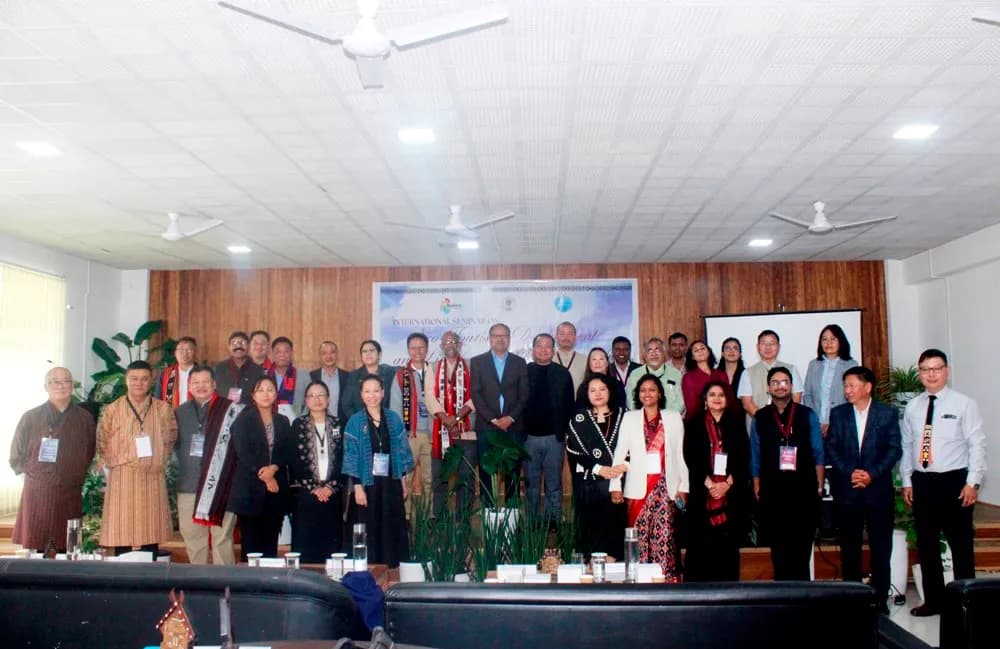
LUMAMI — A two-day International Seminar on Ecotourism and Development in Northeast India, jointly organised by the departments of Sociology and Geography, commenced at Nagaland University, Lumami, on Thursday.
The seminar features panel discussions and paper presentations by academicians, policymakers, independent researchers, and field practitioners from India and abroad.
Jagadish K Patnaik, Vice-Chancellor of Nagaland University, was the chief patron of the seminar. Addressing the gathering, Patnaik said he had lived in the region for more than two decades and had witnessed both the extent of development and the challenges arising from conflict and other factors.
He observed that while discussions on ecology and green initiatives have become fashionable in academic circles, the ground reality often differs. Tourism, he noted, frequently operates as a commercial enterprise that seeks to maximise exploitation of the natural environment for revenue generation.
He stressed the need to critically examine who ultimately benefits from such activities, local communities or a limited number of commercial operators and government agencies. While acknowledging the success and scale of the Hornbill Festival, he underlined that the core challenge remains livelihood security for the people.
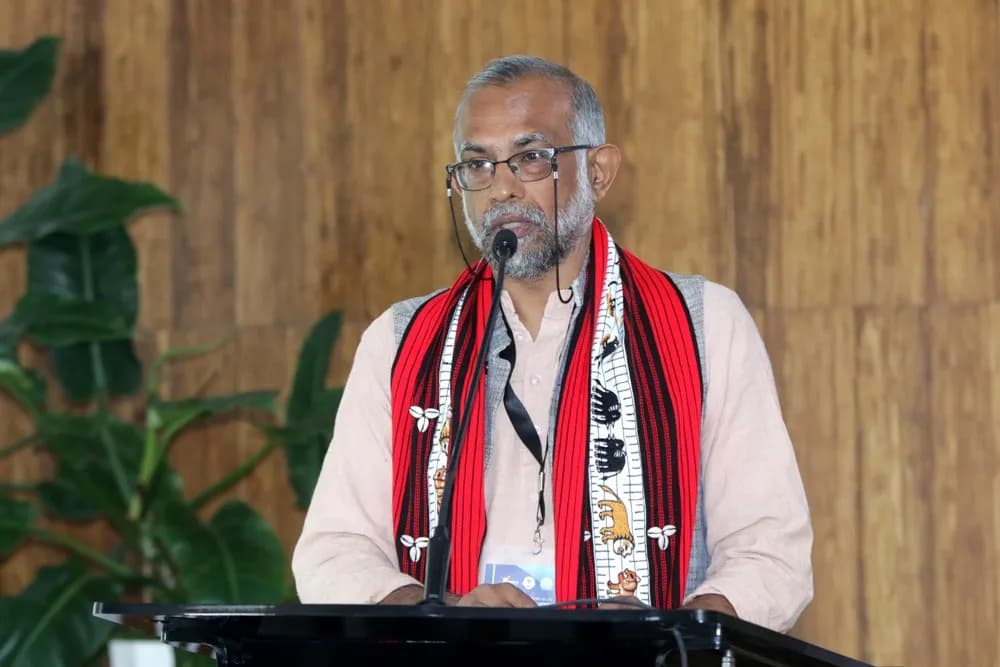
Patnaik recalled that hill communities in the region had traditionally lived in a largely self-sufficient manner before colonial times, with no acute scarcity of land resources. He cautioned that rapid developmental interventions across developing regions, including parts of India, have sometimes displaced tribal populations and eroded their standards of living even as tourism revenue grows. Protecting the cultural dimensions of livelihood and identity within the framework of tourism and ecotourism policies, he said, remains the biggest challenge.
Meanwhile, environmentalist Ashish Kothari, who was the keynote speaker at the seminar, presented a critique of conventional development models, arguing that they drive ecological collapse, deepen inequality, and erode democracy, while calling for localised self-reliance, radical democracy, and ethical transformation.
“The word sustainable development is an oxymoron,” he said. “There is no such thing as sustainable development. You can have sustainability, but not through the methods of economic growth-based development that we have today.”
He pointed out that while development has brought benefits, it has come at an enormous ecological and social cost, often treating forests, rivers, and communities as obstacles to be removed. The burden of environmental damage, he noted, falls disproportionately on the poor and marginalised, even as the causes of that damage are concentrated among the wealthy.
Parallel to ecological destruction, he observed, has been shrinkage of political and civil rights, with those questioning dominant development models frequently labelled and targeted.
Kothari rejected many mainstream “solutions” such as carbon trading, geo-engineering, and large-scale electric vehicle transitions, arguing that they often perpetuate the same extractive system. Electric vehicles, he said, depend on intensive mining and a power grid still heavily reliant on coal.
Instead, he highlighted two complementary forms of alternative action: resistance movements that say “no” to destructive projects and constructive initiatives in which communities take control of their livelihoods, resources, and governance.
Kothari cautioned against making communities overly dependent on tourism. Experiences from places such as Dal Lake in Kashmir and the disruptions during the COVID-19 pandemic showed how fragile such dependence can be, he said. Sustainable options, he stressed, must prioritise local self-reliance in food, energy, water, and other basic needs.
Kothari presented what he called a “flower of transformation” framework encompassing political, economic, social, cultural, and ecological dimensions, with ethics and values at the core. He suggested key principles include cooperation over competition, the commons over privatisation, dignity of all forms of labour, rights of nature alongside human rights, and the idea of living simply rather than endlessly accumulating material goods.
He urged universities and knowledge institutions to recognise practitioners of traditional knowledge as teachers and to treat linguistic and cultural diversity as living libraries essential for resilience, including in the face of climate change.
Kovi Meyase, Commissioner and Secretary of Tourism, spoke on sustainable tourism, ecotourism, and best practices in Nagaland.
Referring to the Nagaland Vision 2030, he said sustainable tourism can contribute to employment generation, social equity, environmental conservation, and responsible use of resources. Meyase outlined the four dimensions of sustainable tourism (economic, cultural, social, and environmental) and highlighted best practices such as community-based tourism in Khonoma, rural homestays, wildlife and biodiversity conservation initiatives, and the promotion of local culture and products.
He also identified gaps and challenges, including inadequate infrastructure and accessibility, permit-related procedural issues, risks of cultural commercialisation, shortage of skilled workforce, lack of standardised homestays and digital presence, waste management pressures, and the need for better coordination and monitoring.
Meyase further noted that the future of tourism in Nagaland lies in a high-value, low-impact, and community-centred model that safeguards the state’s natural and cultural wealth while creating meaningful opportunities for local communities.