


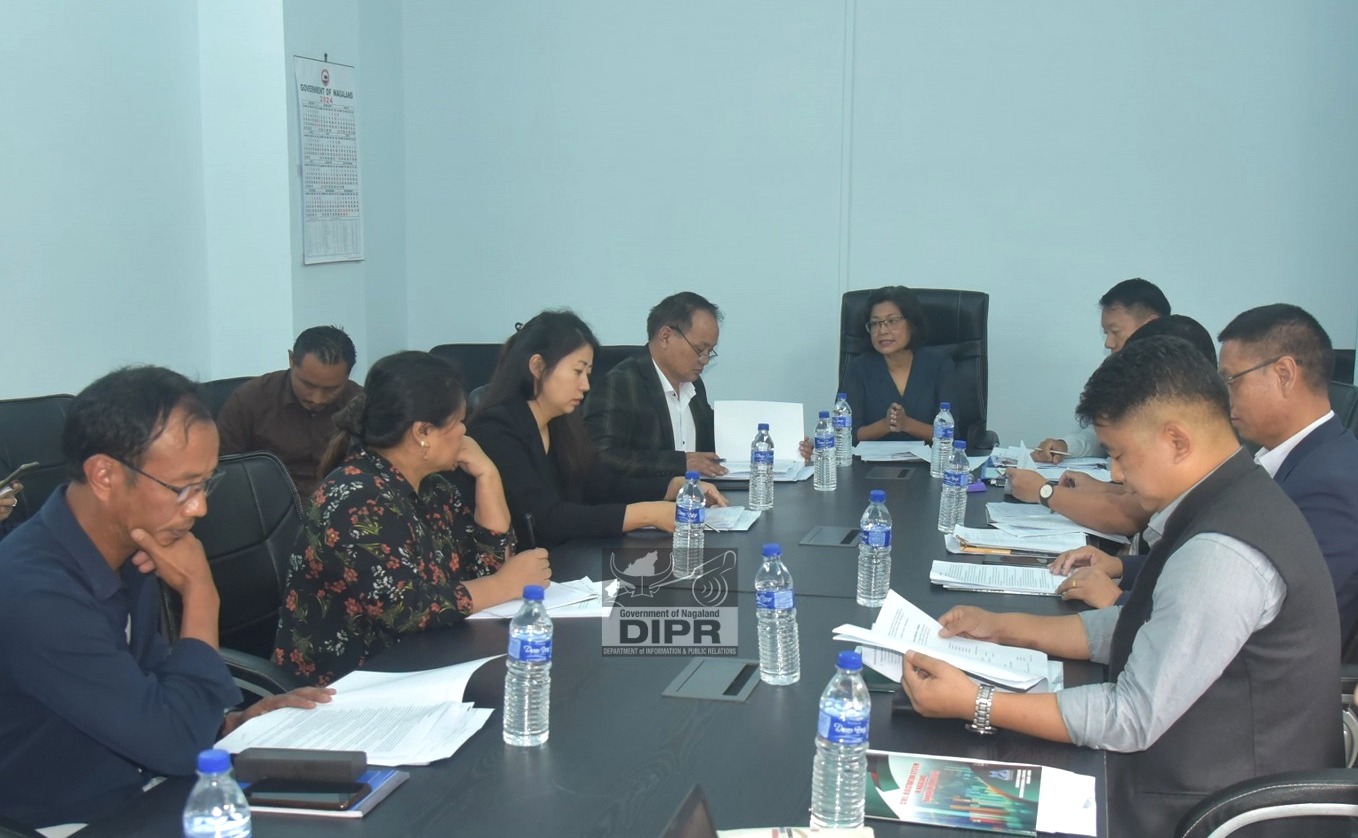
DIMAPUR — A state-level inter-departmental coordination committee (IDCC) meeting was held at the conference hall of the Directorate of Economics and Statistics in Kohima on Thursday.
A DIPR report stated that the members have discussed several key issues related to the registration of births and deaths in Nagaland as well as the efforts to improve the civil registration system (CRS) across the state.
Registration centres in Nagaland
As of March 31, 2023, Nagaland has 1,471 registration centres with 1,439 located in rural areas and 32 in urban areas.
In rural areas, each recognised village has a registration unit managed by the head teacher of government primary school, who serves as the registrar for births and deaths. In addition, registration units are also present at primary health centres (PHC) and community health centres (CHC).
Urban areas, particularly district headquarters, have registration units located in the district registrar's offices headed by the district economics and statistics officer. Units are also available in government district hospitals, municipal offices and town councils.
To facilitate operations, statistical staff such as inspectors of statistics and field investigators assists in managing those urban registration units.
Delayed registration of births and deaths
The state’s high share of delayed birth registrations—beyond 21 days—was the focal point of discussion.
A government notification dated September 20, 2024, mandated that indigenous inhabitants register births within six months as part of the process for applying for an indigenous inhabitant certificate (IIC). The members also discussed the need to streamline delayed registrations and the necessary documentary proof.
Sensitisation on birth and death registration
Despite an increase in the number of births and deaths registration, there is a need for improvement. Stakeholders from educational institutions, medical centres, village development boards (VDB) and Anganwadi centres were urged to raise awareness on the importance of timely registration.
Training programs at block level
The meeting emphasised the need for seminar-cum-training sessions for CRS functionaries including registrars, notifiers and informants to ensure they understand their roles and responsibilities.
The inter-departmental coordination was seen as crucial for the success of this initiative.
Online registration of births and deaths
With the introduction of an online registration portal under the office of the Registrar General of India (ORGI), the IDCC stressed the need for CRS functionaries to have access to smartphones, computers and the internet for effective implementation.
System of reporting
The meeting called attention to delays in the submission of reports to the ORGI due to anomalies in the current reporting system. Registrars are required to submit their reports to the district economics and statistics office.
Honorarium and incentives
The committee discussed the importance of providing honorarium and incentives to registrars of births and deaths to ensure better coordination and motivation.
A proposal to include government middle school and high school teachers as registrars was also considered to enhance the efficiency of the registration process.
The meeting concluded with a call for continued efforts to improve the overall civil registration process in Nagaland, particularly through greater coordination between departments and the adoption of new technologies.