
Meet a deaf Naga beautician whose Dimapur salon proves determination, skill and inclusion speak louder than words every day.
Yapangnaro Jamir
DIMAPUR — The first thing you notice inside the place is not what is missing, but how much is being said.
On one wall hangs a laminated price chart. On another, a handwritten sign language alphabet, put up for anyone who wants to learn. Beside the mirror sits a notepad and a pen, its pages half-used. Clients point, write, or show a photo on their phones. Khareimi Lungleng reads, nods, and gets to work.
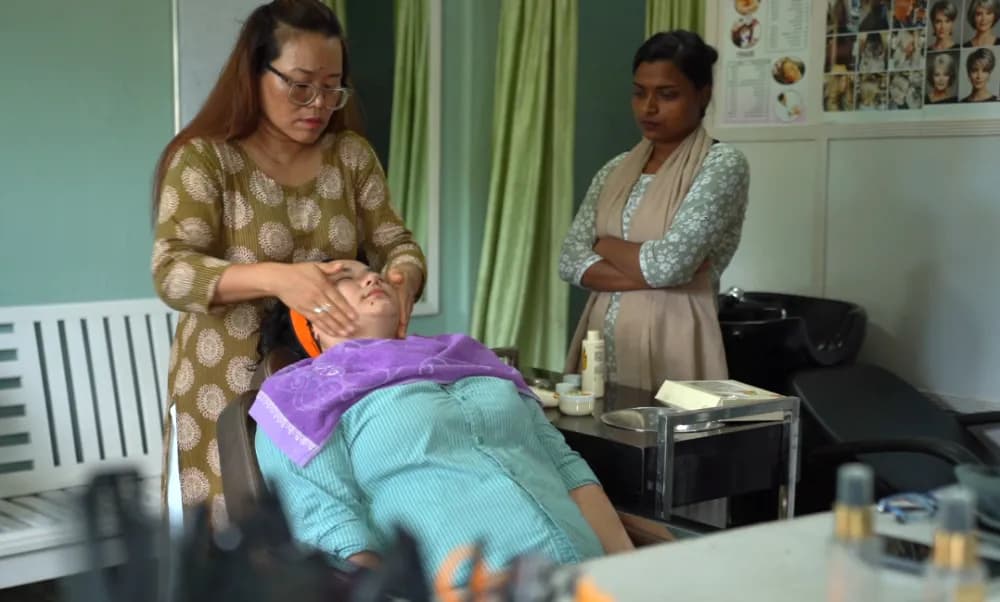
The salon is small, tucked opposite Sumi Baptist Church in Diphupar. A single board outside reads K Deaf Beauty—a name Lungleng chose herself. Inside, there is the familiar smell of hair oil and straightening cream, the hum of a dryer, and the quiet concentration of a beautician who has built a business without ever hearing her customers' voices.
For many people with hearing disabilities, finding stable employment remains a challenge. Lungleng chose a different path: she built one of her own.
A member of the Tangkhul community, Lungleng's interest in beauty work began not in a city parlour but while she was studying at the Deaf Biblical Ministry school. "I became interested there," she says through Ruth Lkr Kath, a teacher at Deaf Biblical Ministry who interpreted during the interview.
Also read: Where cure ends, care begins: Inside Chümoukedima's palliative haven
So, after completing Class 10, Lungleng travelled to Pune for formal training in hair straightening, hair colouring and curling—skills that now form the foundation of her salon.
Learning the craft was only the beginning. Building a business proved far harder.
Before K Deaf Beauty existed, there was no shop, no chair, no signboard. There was Lungleng and her friend Chingrimi Rungsung, carrying their kits from house to house, offering beauty services across Dimapur and slowly building trust, one client at a time.
"I worked with my friend and did home services. With the money I collected, I opened the parlour," she says.
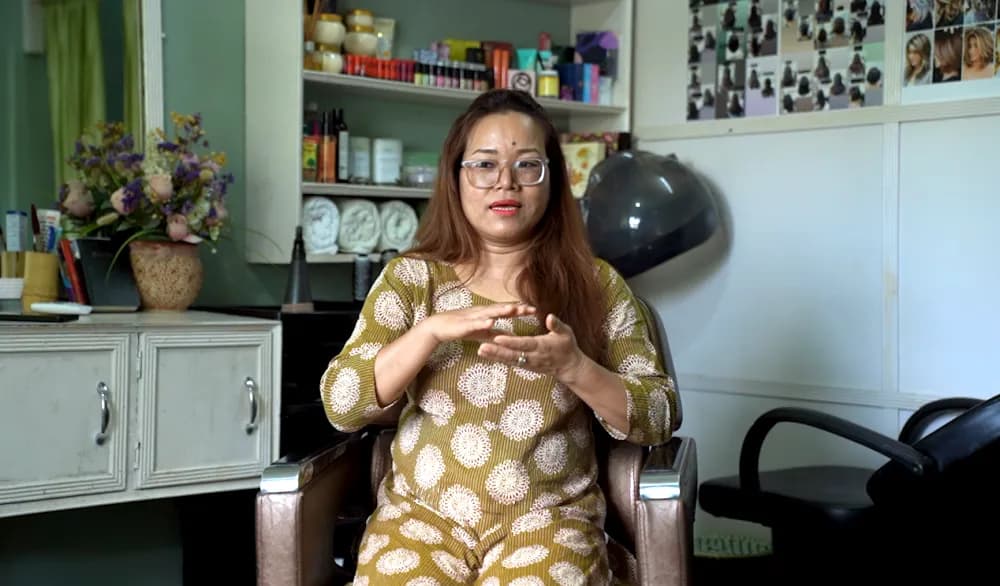
That parlour opened on October 13, 2023. Nearly two years later, it continues to grow through word of mouth—and, to her surprise, social media. “Many customers learn about her through social media, which surprises her,” Ruth translates with a smile.
Inside the salon, communication is simple. New clients sometimes hesitate, unsure how to begin. Lungleng has already found the answer. They write on the notepad, send a text message or point to the price list pasted beside the mirror. No one needs to raise their voice.
It is a quiet reminder that accessibility often requires far less than people imagine.
Ask Lungleng what she is proudest of, and she does not speak about her journey. She talks about her work. Eyebrow threading and hair straightening, she says, are the services she enjoys most and the ones that leave customers happiest.
Like many small business owners in Nagaland, she also faces familiar challenges. Professional products are expensive, while customers often expect discounts even though her rates are already lower than many salons. She says it matter-of-factly, not as a complaint. It is a challenge shared by many small entrepreneurs, whether deaf or hearing.
Visitors sometimes walk into the salon out of curiosity before becoming clients. They come wondering how a deaf beautician works. They leave having had their hair done well.
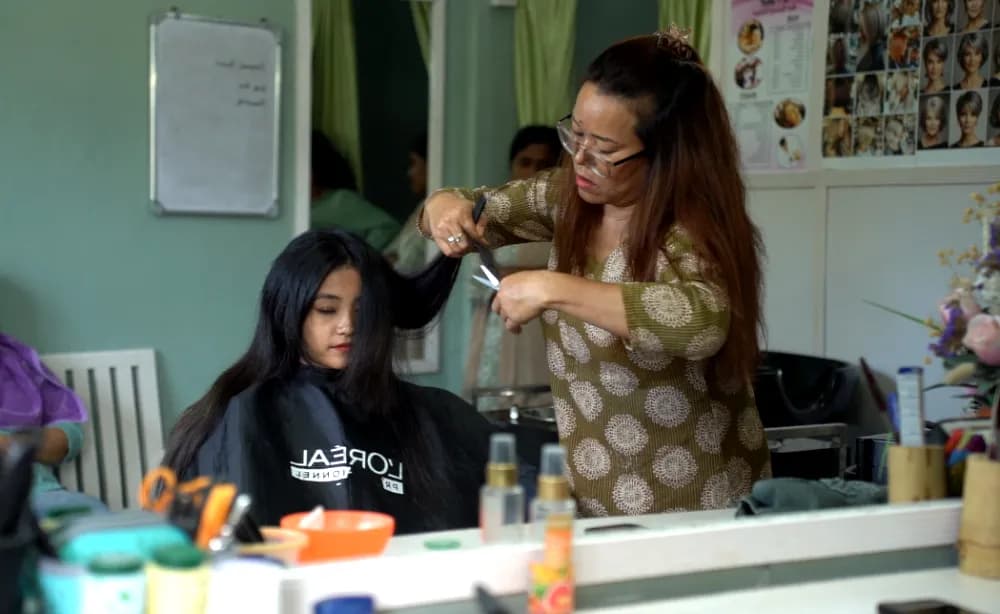
Today, Lungleng says she is happy doing what she loves. Alongside running her salon, she is a member of the Deaf Community of Nagaland and contributes to a Bible translation team.
More than anything, she hopes other deaf people will discover and develop skills that allow them to build independent lives.
Her message to the people of Dimapur is not an appeal for sympathy. It is an invitation: "I can read and write. People can write notes or send a text. I request people to visit and also learn the sign language that is hung on my parlour," she says.
The chart is still there when you leave, a little faded from being touched by many hands. Above it, the price list. Below it, the notepad.
At K Deaf Beauty, you do not need to know sign language to get a haircut. But if you leave knowing a word or two, that is part of the experience too.