
The Federal Government of Nagaland says the Vande Mataram debate distracts from the Naga right to self-determination and core political aspirations.
Share


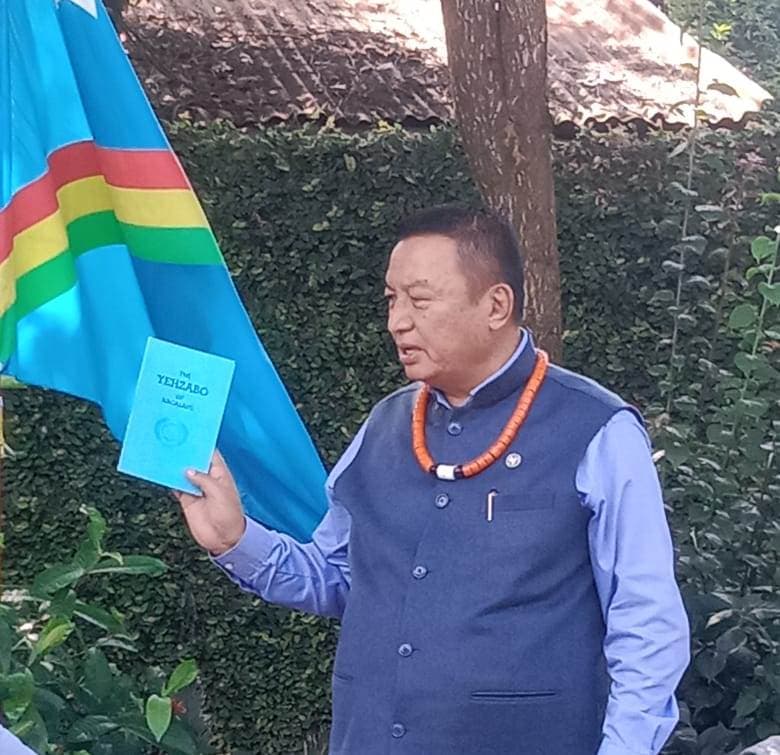
DIMAPUR — The Federal Government of Nagaland (FGN), led by Zhopra Vero, has asserted that ongoing public debates over issues such as “Vande Mataram,” “early solution,” and “Naga integration” are merely peripheral and should not overshadow the core aspiration of the Naga people—the right to self-determination.
In a statement issued on Friday, the FGN contended that while such discussions may have their merits, they distract from what it described as the fundamental political aspiration of the Naga national movement.
According to the group, Naga people already possess their own national symbols and identity.
“We have our own National Anthem, our own National Flag, our own Yehzabo (Constitution) and live in our own land,” it stated, adding that the Indian national song Vande Mataram does not reflect the historical, cultural, religious or political life of the Naga people.
Also read: Hekani Jakhalu says NLA cannot act like activist group on Vande Mataram debate
The FGN further pointed to the Framework Agreement and the Agreed Position signed between the government of India and Naga political groups (NPGs), stating that both documents recognise the historical and political rights of the Naga people to determine their own future in line with their distinct identity.
It stated that the agreements serve as basic outlines for negotiations and implicitly acknowledge the Naga people’s right to live together as one with their own flag and anthem.
These, it added, are integral parts of the Naga identity and history as a sovereign people.
The FGN also alleged that certain individuals within Naga society have either misunderstood or deliberately misinterpreted the purpose of these agreements.
It criticised what it described as opposition to the integration of Naga-inhabited areas, referring to provisions in the 16-Point Agreement, particularly Clause 13, which it said provides for the consolidation of contiguous Naga areas.
“Both the Framework Agreement and the Agreed Position are political agreements committed to seeking long term honourable political settlement. They are not meant to explore ‘early solution’ in terms of economic and related development packages.
“For the signatories, the terms of the agreements and subsequent competencies that need to be negotiated have to embody the spirit of the Naga national movement which was originally envisioned by the pioneering leaders of the Naga National Council. An honourable, inclusive and acceptable solution must safeguard Naga identity, unity and right to self-determination to enable both the parties to move forward with dignity,” the statement read.