


District Health Society Mon conducts training on Human Papillomavirus vaccination for health care providers to prepare for rollout under Universal Immunization Programme.
Share


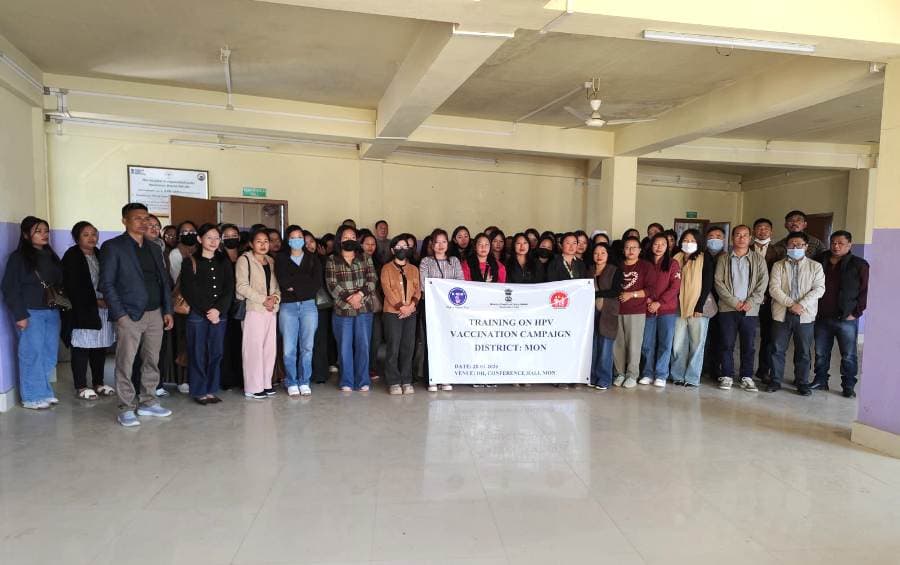
DIMAPUR — A training programme on Human Papillomavirus (HPV) vaccination for health care providers was conducted on January 28 at the Conference Hall of District Hospital, Mon.
According to an update, The training marked a milestone in preparing frontline health workers for the effective rollout of the HPV vaccination programme under the Universal Immunisation Programme (UIP).
District Programme Officer (RCH and UIP), Dr. Wungyong, speaking on the occasion, highlighted the critical role of HPV vaccination in preventing cervical cancer.
He noted the introduction of the new HPV vaccine as a public health advancement in safeguarding the health of adolescent girls through strengthened immunisation services.
The training focused on enhancing technical knowledge, operational readiness, and communication skills of healthcare providers to ensure high vaccine acceptance and coverage. Detailed sessions were conducted on cervical cancer and its association with HPV, the global progress and success of HPV vaccination, and comprehensive vaccine-related information, including schedule, safety, and efficacy.
Read more local news: Nagaland honours top artisans at handicraft awards
Advisor Hekani inaugurates banana fibre extraction unit in Medziphema
Participants were also trained on operational planning for HPV vaccination, including the use of the eVIN+ HPV vaccine module of U-WIN, ensuring efficient vaccine logistics and real-time monitoring.
Attention was placed on vaccine and cold chain management, safe injection practices, and reporting and management of Adverse Events Following Immunisation (AEFIs) to ensure safe and high-quality service delivery.
To ensure smooth implementation at the field level, sessions were conducted on preparedness assessment for HPV vaccination campaigns, session site management, and the roles and responsibilities of health workers, stakeholders, and caregivers.
Special attention was given to addressing communication challenges, equipping participants with effective strategies to counter myths and misconceptions and build community trust.