

Phangnon Konyak terms defeat of women’s reservation amendment sad, alleges politicisation and delay in ensuring 33 percent representation
Share


KOHIMA — Rajya Sabha Member of Parliament (MP) from Nagaland Phangnon Konyak on Monday termed the defeat of a proposed amendment to fast-track women’s reservation in Parliament as “sad for the women”, alleging that the bill was politicised and its intent misrepresented.
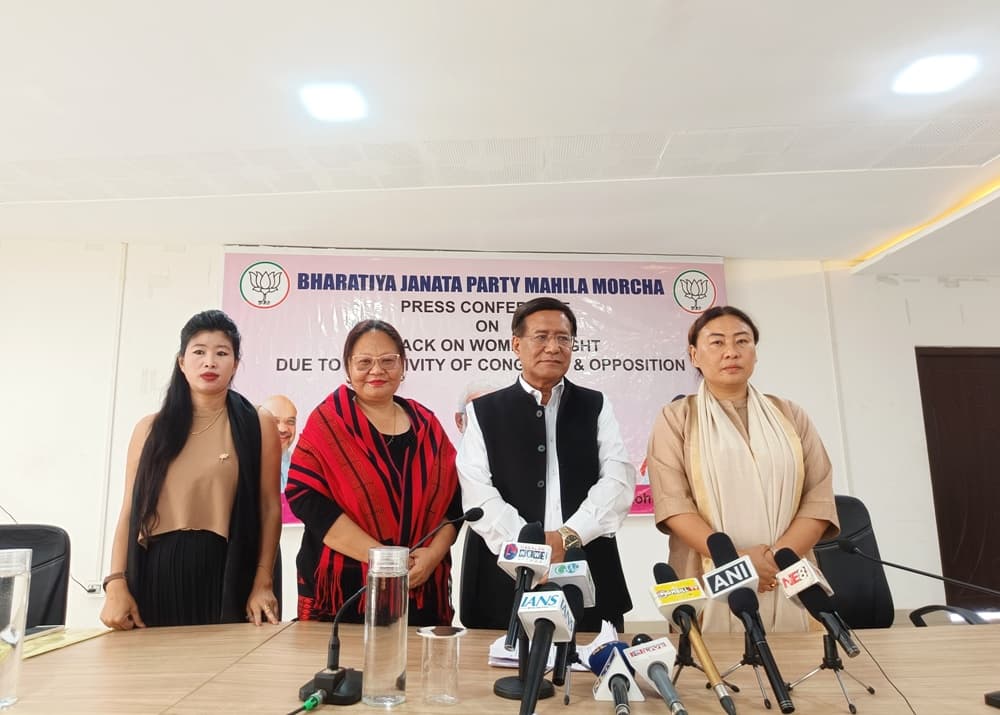
Addressing a press conference organised by the BJP Mahila Morcha in Kohima, Konyak claimed that the proposal was aimed at ensuring women benefit from 33% reservation at the earliest, including in the 2029 general elections, but the narrative around it had been changed by the Opposition.
She referred to the Constitution (131st Amendment) Bill 2026, the Delimitation Bill 2026 and the Union Territories Laws Amendment Bill 2026, stating that these were intended to enable timely implementation of women’s reservation.
She further claimed that the Nari Shakti Vandan Adhiniyam provides for reservation after census and delimitation, but argued that waiting for these processes would delay benefits.
Konyak said that the proposal sought to delink implementation from the condition of census and delimitation so that women could benefit without delay.
She maintained that if passed, the bills would have enabled 33% reservation in the Lok Sabha as early as the 2029 general elections.
Also read: Women’s quota, fair delimitation vital for democracy — Patton
She also said that there is a need to increase Lok Sabha seats in line with population growth to ensure fair representation, adding that the proposal envisaged a proportional expansion of seats across states and Union Territories while maintaining existing balances.
Konyak further stated that there were misconceptions around the proposal but maintained that there were no changes to the existing legal framework governing the Delimitation Commission.
“If we need to have good governance and want to progress, we need voices from all sections of society,” she said, adding that lack of adequate representation for women undermines equitable governance.
She noted that the women’s reservation law passed in 2023 had established the constitutional framework with broad political support, but said the present bill could not be passed as its narrative had been altered. “For women reservation, everyone should have come together, but it has been politicised,” she said.
National BJP vice president M Chuba Ao, who also addressed the press conference, alleged that the failure of the amendment was a “calculated move” by the Opposition alliance, accusing it of withholding the two-thirds majority required for passage.
He said that the proposal would have increased Lok Sabha seats to around 850 and raised women’s representation to nearly 280 MPs from the current 75.
Ao also criticised previous Congress-led governments, alleging that earlier attempts to pass women’s reservation legislation were delayed. “This is not opposition to a bill, but this is opposition to women’s political power,” he said, adding that the party would continue to pursue the issue.