

Proprietor of Debika Art Centre Debika Bhattacharjee outlines skill-building pathways and career options in visual arts.
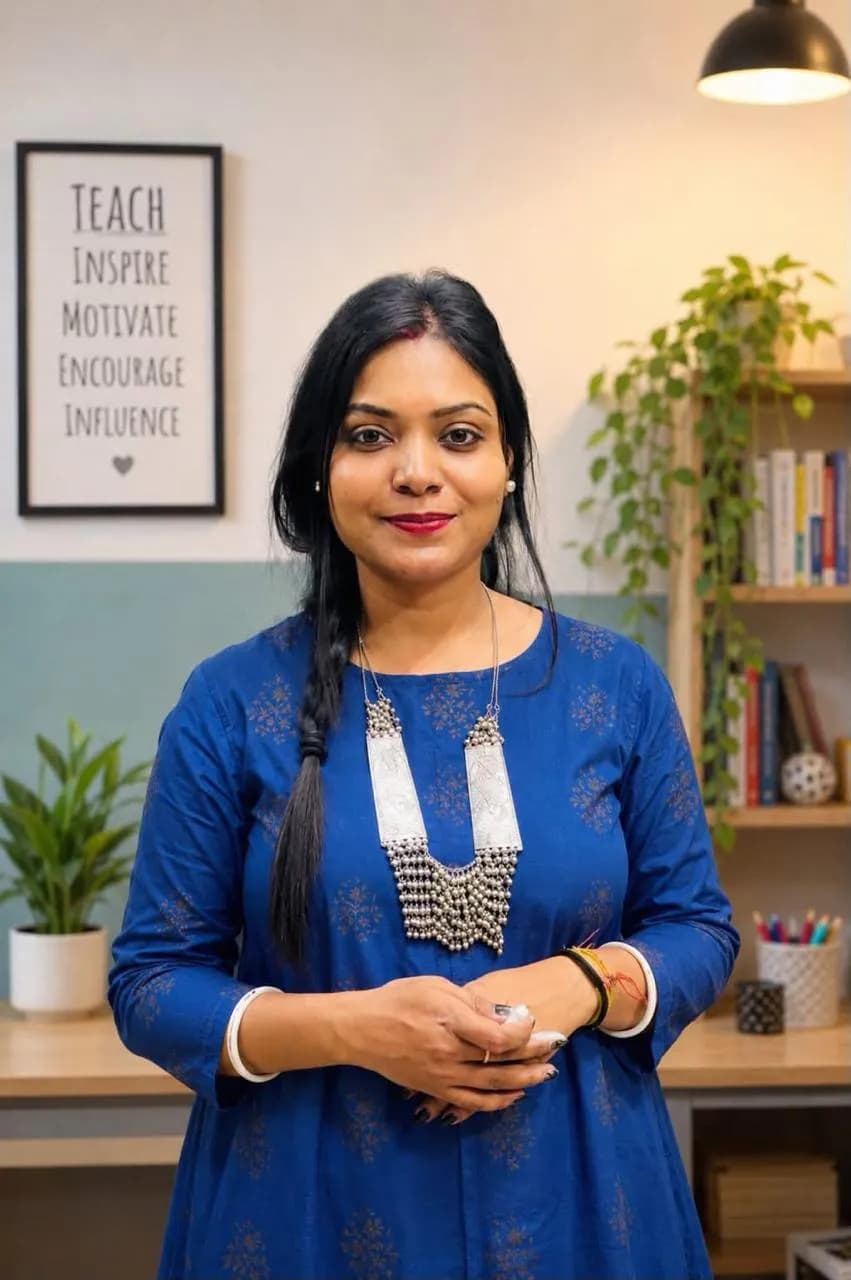
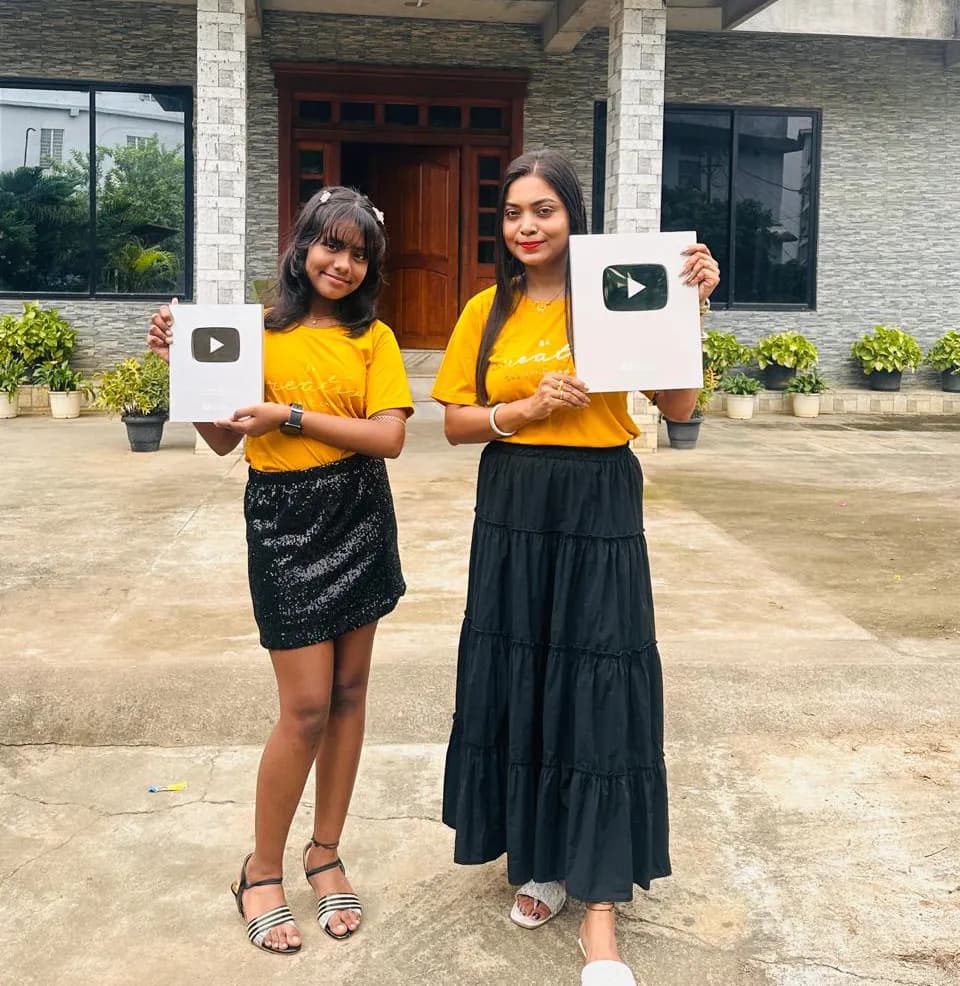
DIMAPUR — Debika Bhattacharjee is an art teacher and proprietor of Debika Art Centre, Dimapur. A passionate artist and educator, she has built a thriving art community through her teaching and online platforms, with her YouTube channel garnering more than 6 lakh subscribers, and she has been presented with two YouTube Play Buttons till now.
A graduate with a Post Graduate Diploma in Fine Arts from Surnandan Bharati, Kolkata, she had made up her mind from childhood to pursue a career in fine arts. With the support of her husband and family, she set up Debika Art Centre in Dimapur in 2014. Today, it has flourished into two schools with more than 300 students.
Through Debika Art Centre’s presence on Facebook, YouTube and Instagram, she has been able to share her passion for art with a wider audience. Her YouTube journey has also earned her YouTube Creator Awards.
She has received numerous awards and recognitions for her contribution to art and for nurturing young artistic talents. She is often invited as a jury member, guest or art expert at art competitions and cultural events.
In 2019, she joined Little Star Hr. Sec. School, Dimapur, as an assistant teacher. In this interview with Eastern Mirror, Debika shares her insights on pursuing a career in art.
Also read: Prasenjit Bhadra on Exploring Career Opportunities in Finance and Investment
For a student who enjoys drawing but knows little about art as a field, how would you explain what studying and pursuing art actually involves?
I would tell them that enjoying drawing is the best starting point, but studying art is much bigger than drawing. It is about learning to observe light, shadow, form, and emotion and understanding the language of art through line, colour, texture, composition, perspective, and art history.
It also involves regular practice, experimenting with different mediums, and learning from mistakes. Finally, art is about finding your own voice and can lead to careers such as fine art, illustration, graphic design, animation, teaching, fashion, architecture, and UI/UX design. It teaches you to turn your love for drawing into a skill, a language, and even a profession.
Is artistic ability something a person is born with, or can an average student become a good artist through training and consistent practice?
I believe it is both, but practice is far more important than natural talent. Some children may have a natural inclination, but that head start alone does not make a good artist. An average student can definitely become a very good artist through structured training, consistent practice, right guidance, feedback, patience, and observation. Sometimes students who are not naturally talented become better because they are more disciplined and hard-working. Talent can make you start fast, but only practice makes you go far.
What are some of the major areas of visual art that students can explore?
Visual art is a vast field. I explain it in five major areas: drawing and painting, which build observation and fundamentals; applied art and design, including graphic design, illustration, advertising, and UI/UX; sculpture and 3D art, which develop an understanding of form, volume, and space; traditional and cultural art, such as Warli, Madhubani, Gond, and Pattachitra; and modern and digital art, including digital painting, photography, animation, comics, mixed media, and AI-assisted art. I make sure students get a taste of different areas so they can find what they love the most.
In my class, I make sure students get a taste of all these areas, not just drawing in a book. For example, I start with drawing, then take them to craft, then to traditional art, and then to digital design. This way, every student can find what they love the most.
What fundamental skills should a young aspiring artist concentrate on developing first?
Before style and colours, a young artist must build a strong foundation. I tell my students to focus first on observation—learning to really see, not just look. They should develop line and shape by breaking complex objects into simple forms and learn light, shadow, and shading to create depth. Proportion and perspective are also important to make things look right. Finally, patience, a daily sketchbook habit, and consistency are essential. Once these fundamentals are strong, different mediums become easier to learn.
If a Class 10 or Class 12 student decides to pursue art professionally, what educational path would you recommend?
For a Class 10 student, I would suggest completing Class 12 in any stream, though Arts/Humanities can be helpful. Alongside classes 11–12, they should build a strong portfolio, take foundation coaching if needed, and practise still life, composition, and creativity for entrance exams. Those who are very sure may also explore a Diploma in Fine Arts after Class 10.
For a Class 12 student, I would recommend a Bachelor of Fine Arts, Bachelor of Design, Bachelor of Visual Arts, Bachelor of Arts in Animation and Multimedia, or a relevant diploma. After a BFA, they can pursue an Master of Fine Arts and careers as professional artists, art teachers, illustrators, or in research. My advice is, don't worry about your stream. Start preparing your portfolio and focus on the right entrance exams.
When students hear "career in art", they may think mainly of becoming a painter or an art teacher. What other career opportunities are actually available to someone with strong artistic skills?
'Painter' and 'art teacher' are just two options. Today, there are numerous opportunities across design, digital industries, commercial art, media, fine arts, and education. Strong artistic skills can lead to careers as a graphic designer, animator, game designer, illustrator, fashion or interior designer, product designer, cartoonist, photographer, cinematographer, tattoo or mural artist, and content creator. There are many more career options for skilled artists in today’s world.
How realistic is it today for an artist to earn a stable livelihood from art, and what are the different ways professional artists can generate income?
Yes, it is realistic today for an artist to earn a stable livelihood, but the definition of an artist has changed. Earlier, an artist's income often depended heavily on selling paintings, which could be unstable. Today, artists can follow a multiple-income model rather than depending on only one source.
Artists can find stable jobs as graphic designers, UI/UX designers, art teachers, illustrators, animators, or art directors. They can also earn independently through logo design, portrait commissions, wedding illustrations, murals, caricatures, and by selling original paintings, prints, and merchandise. Platforms like Instagram, Behance, Fiverr, Upwork, and ArtStation can help them reach clients. Other opportunities include online classes, private workshops, content creation, and licensing designs to brands for products such as t-shirts, phone covers, and stationery.
Read more from Education series: Swarup Acharjee shares insights on careers in taxation and commerce
Art can provide a stable livelihood if you treat it like a profession. You need strong skills, a good portfolio, adaptability, and business sense. That is why students should learn not just how to make art, but also how to present and price their work and develop both traditional and digital skills.
Digital illustration has become a major field. Should young artists learn both traditional drawing and digital art, or is specialising in one sufficient?
My clear answer is that young artists should start with traditional art and then learn digital. They are not two different fields, but two languages of the same art. I explain it simply: traditional art is your grammar, and digital art is your typing.
Traditional art builds strong fundamentals. On paper, students learn control, observation, colour mixing, light and shadow, and develop their hand, eye, and patience through pencil sketching, still life, watercolour, and observation drawing. Once these basics are strong, learning digital art becomes very valuable for a career. Digital tools provide speed, layers, easy editing, and the ability to work with clients anywhere. Fields such as illustration, animation, graphic design, character design, concept art, and social media commonly use digital tools.
With AI now capable of generating illustrations and artwork within seconds, how do you think it will affect the careers of artists, illustrators and designers?
I would say, don't fear AI; understand it. AI will certainly change the careers of artists, illustrators, and designers, and artists who learn to use it may have an advantage. Just as cameras didn't kill painting, AI is unlikely to kill art, but it will push artists to become more creative and adaptable.
AI can take over some repetitive and generic work, such as basic stock images, simple backgrounds, multiple variations of a design, and similar illustrations. However, artists bring original ideas, human experience, emotion, culture, and storytelling to their work. Designers also understand clients, their needs, and the problems they are trying to solve rather than simply generating an image.
Traditional and physical art, such as Madhubani painting, murals, and sculpture, also offers a human touch that AI cannot reproduce in the same way. So I see AI more as a tool that artists need to understand and use wisely, while originality, creativity, human connection, and strong artistic skills will remain important.
Social media has created opportunities for artists that did not exist earlier. How can a young artist use platforms such as YouTube and Instagram to showcase their work and eventually build a career?
Earlier, becoming a known artist often depended on galleries and exhibitions. Today, your gallery can be in your pocket through platforms like Instagram, Facebook, and YouTube. I tell students that if they are serious about art, they should start building a digital portfolio early.
I suggest treating social media as a portfolio rather than a personal profile and creating a separate art account. Don't just post finished artwork; show the process through reels or videos, along with completed work and some content about yourself as an artist. Post consistently and engage with your audience by replying to comments and interacting with other artists.
Instagram and YouTube are not just time-pass apps if used smartly. They can become your exhibition space, portfolio, resume, and a place to connect with future clients. What you need is skill, a smartphone, and consistency.
You teach art at Little Star Higher Secondary School and also teach hundreds of children through Debika Art Centre. What have these experiences taught you about the way children learn art?
Teaching in these two places has taught me different but very important lessons. At Little Star Higher Secondary School, I teach art in a formal classroom where students have different interests and confidence levels. There I learned that children often learn better when you first remove their fear of drawing. Instead of saying, “This is wrong,” I prefer to say, “Good start, now let’s try this way.” Art can also help develop discipline, focus, confidence, and self-expression.
At Debika Art Centre, I teach children from different age groups, from those learning as a hobby to those interested in a career. Teaching hundreds of children has shown me that no two children learn art in exactly the same way. Small children respond well to stories and play, while teenagers often need technique, patience, and a step-by-step process. Senior students are more career-focused and benefit from working towards portfolios, exhibitions, and commission work.
The biggest lesson is that you cannot teach art with one method. You have to understand each child and adapt your approach. As art teachers, we are not just teaching children to draw; we are also giving them a language to express themselves.
For artists interested in entrepreneurship, can running an art school, studio or online teaching platform become a viable career?
Absolutely. Art entrepreneurship can be a viable and respectable career. From my experience with Debika Art Centre, it allows you to create income for yourself and other artists as well. A physical art school or studio requires relatively low investment, mainly a good space, skill, and trust.
Parents don't just pay for drawing; they also value their child's confidence, focus, and screen-free time. Online teaching offers further growth. Debika Art Centre has successfully gone hybrid, with offline classes in Dimapur and online classes watched and paid for by students across India and abroad.
RAPID INSIGHTS
Portraits or landscapes?
Lanscapes.
Teaching children or creating alone in your studio?
Teaching children.
What is one career outside the arts that you find fascinating?
Psychology.