


A Nagaland University-led study reveals how seasonal climate variations influence soil microbes and enzyme activities in Assam's tea plantations, supporting sustainable and climate-resilient tea cultivation.
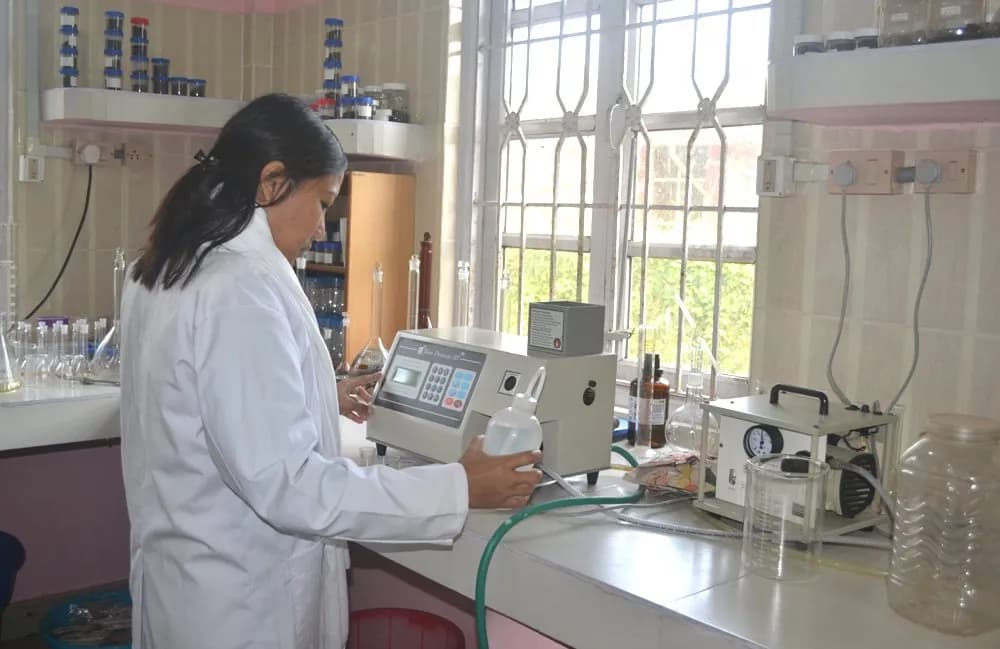
DIMAPUR — A collaborative team of researchers from Nagaland University and several research institutes across India has found that seasonal climate variations significantly influence soil microbial communities and enzyme activities in tea plantations, offering valuable insights for sustainable and climate-resilient tea cultivation in Northeast India.
The study, conducted across five representative tea estates in Jorhat, Assam, examined how seasonal changes in climate affect soil bacteria, fungi and enzyme activities, all of which play a vital role in maintaining soil fertility and nutrient cycling, an update from Nagaland University stated.
The findings are expected to help improve soil health monitoring and support sustainable tea production in the face of climate change.
Tea productivity and quality have increasingly been affected by climate variability, yet little information has been available on how changing climatic conditions influence the biological processes of tea plantations in the region.
To address this gap, the researchers carried out one of the first comprehensive multi-year assessments (2016–2019) of seasonal microbial dynamics across multiple tea estates in Assam.
The research integrated microbiological, biochemical and climatic data with advanced statistical techniques, including probability distribution fitting, correlation analysis, hierarchical cluster analysis and principal component analysis (PCA), to assess ecological variability and soil biological responses under different climatic conditions.
The findings have been published in the scientific journal Environments.
Congratulating the research team, Prof. Jagadish Kumar Patnaik, Vice-Chancellor of Nagaland University, said the study provides valuable insights into how climate variability influences soil microbial communities and biological health in Assam's tea plantations.
"Such research is vital for developing sustainable and climate-resilient tea cultivation practices in Northeast India. This study also reinforces Nagaland University's commitment to advancing research that addresses regional environmental challenges and supports sustainable agricultural development," he said.
The researchers identified climatic conditions that promote beneficial microbial activity and found strong positive relationships between microbial abundance and soil enzyme activities.
More than 80 per cent of the variation in biological data was explained by the first three principal components, highlighting the robustness of the statistical analyses.
The hierarchical cluster analysis also successfully grouped tea estates according to their microbial and enzymatic characteristics, establishing soil microbial communities and enzyme activities as sensitive indicators of environmental change and sustainable tea production.
According to the researchers, the findings could support climate-resilient tea production systems by improving soil health monitoring through biological indicators.
The study also offers practical guidance for tea growers to optimise nutrient management and adopt sustainable cultivation practices, while providing scientific evidence to assist policymakers and agricultural extension agencies in strengthening the long-term resilience of India's tea sector.
Explaining the significance of the research, co-author Prof. Tanmoy Karak of the Department of Soil Science, School of Agricultural Sciences, Nagaland University, said the study sought to identify seasonal conditions that favour beneficial microbial communities and to understand how climatic variables regulate soil biological processes.
"We attempted to determine seasonal thresholds that favour beneficial microbial communities and also understand how climatic variables regulate soil biological processes. The study establishes soil microbial communities and enzyme activities as sensitive indicators of environmental change and sustainable tea production," he said.
The study also enhances scientific understanding of seasonal changes in soil bacterial and fungal populations, provides evidence to support sustainable tea cultivation under changing climatic conditions, and contributes to the development of strategies for climate-resilient tea production.
The research team included scientists and researchers from Nagaland University, the Tea Research Association, ICAR-Indian Agricultural Statistics Research Institute (IASRI), Dibrugarh University, Tocklai Tea Research Institute, the University of California, San Francisco, the University of Kansas Medical Center, Diphu Medical College and Hospital, and other collaborating institutions.