


Chakhroma Public Organisation stages protest, demanding government action over the Maova land dispute and enforcement of longstanding administrative orders
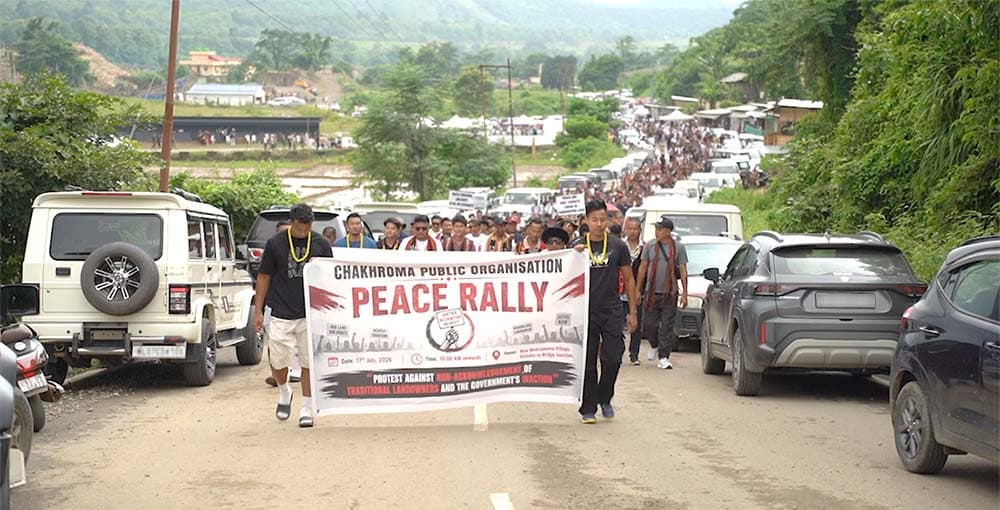
DIMAPUR — Declaring that they were defending the ancestral land and customary rights of the Chakhro people, hundreds of members of the Chakhroma Public Organisation (CPO) on Friday staged a protest rally at Dzümha Rü Bridge Junction in New Medziphema village, demanding that Nagaland government implement decades-old administrative orders and resolve the long-running land dispute with Maova village.
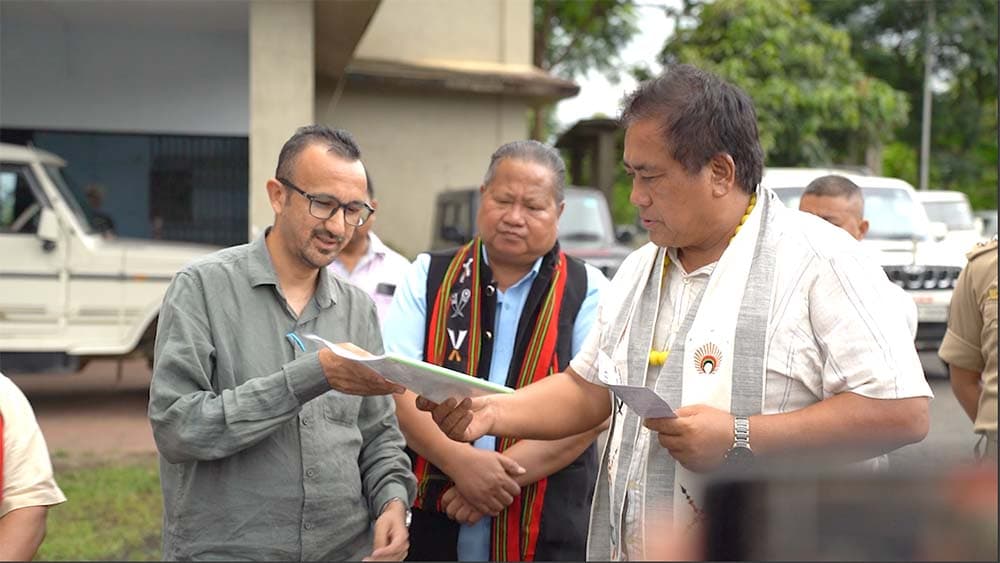
Carrying placards calling on the government to enforce its own directives, protesters marched before submitting an eight-point charter of demands to the chief secretary through the additional deputy commissioner (ADC) of Medziphema.
The CPO maintained that successive administrative authorities had recognised Tsüüma village as the traditional landowner in the disputed area but alleged that the government's failure to enforce those directives had allowed the dispute to persist. It urged the state to acknowledge what it described as the customary ownership rights of the Chakhro people and ensure compliance with earlier official orders.
Among its demands, the organisation called for enforcement of administrative orders issued between 1979 and 2001, payment of the customary annual token tax by Maova Village to Tsüüma Village in recognition of traditional land ownership, a review of the status of the Maova Village Council, and the immediate derecognition of Maova village.
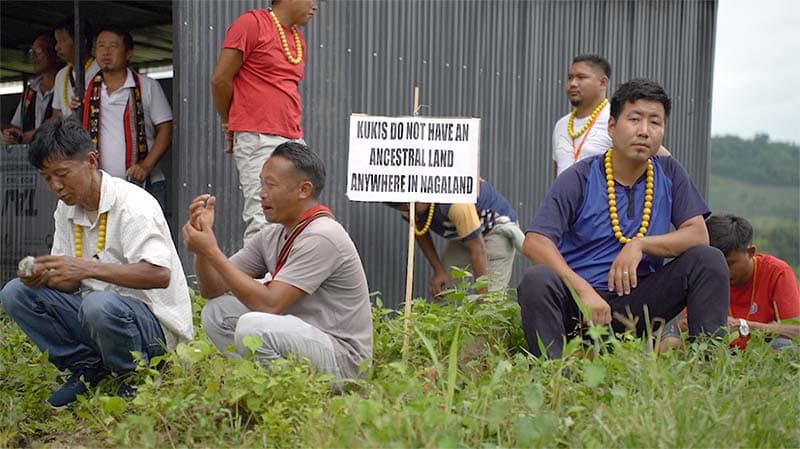
The memorandum also sought the removal of the Head GB of Maova village, suspension of the issuance of official documents to the village pending verification based on the 1963 Electoral Roll, and implementation of the Chakhroma Youth Organisation's customary expulsion order against three Maova Village leaders.
Addressing the gathering, CPO president Zhato Kimho said the protest was aimed at protecting what the organisation described as the ancestral land and customary rights of the Chakhro people. He alleged that despite repeated representations and administrative directives spanning several decades, the government had failed to implement its own decisions.
Referring to Article 371A of the Constitution, Kimho alleged that recognition of Maova village had been granted without the consent of the traditional landowners and urged the government to immediately derecognise the village.
He also appealed to Naga political groups not to provide shelter or training to Kuki youths, alleging that such support could undermine the interests of the Naga community. Referring to the ongoing ethnic conflict in neighbouring Manipur, Kimho claimed that similar attempts were being made to create divisions among Nagas in Nagaland and urged the community to remain united in safeguarding its customary land rights.
Kimho further alleged that attempts had been made to prevent Friday's protest after representatives of Maova village met government officials ahead of the rally. He added that the CPO had pursued a peaceful resolution since February but claimed continued government inaction had compelled the organisation to intensify its agitation.
Speaking at the rally, Angami Public Organisation (APO) president Thejao Vihienuo claimed that Kukis first entered Naga areas about 170 years ago as mercenaries and later settled in Naga territory with the consent of Naga landowners. He alleged that the settlements were established on the understanding of peaceful coexistence, but contended that the trust extended by the Naga community had since been repeatedly violated.
He urged the government to examine historical records and review the legal status of such settlements, contending that the Bengal Eastern Frontier Regulation, 1873, and Article 371A were intended to safeguard the customary rights of indigenous Nagas.
Chakhroma Youth Organisation (CYO) president Medochüzo Medoze maintained that the youth had exercised restraint at the request of community leaders but warned that patience was wearing thin due to what he described as the government's failure to act. He urged the authorities to resolve the dispute without further delay.
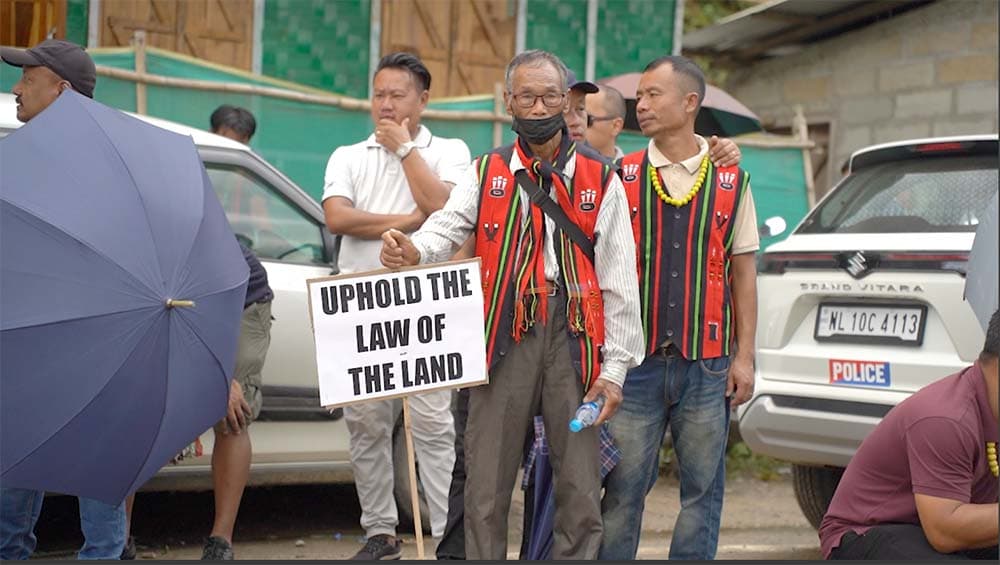
Tracing the history of the dispute, CPO vice president Sebastian Zumvü claimed that successive administrative authorities had recognised Tsüüma village as the traditional landowner and directed Maova village to pay annual token tax but alleged that those orders were never effectively enforced. He said that the rally reflected growing frustration over what the organisation viewed as decades of official inaction.
Representatives of the Angami Women Organisation, Poumai community, Zeliangrong Youth Front Nagaland and Zeme Council Nagaland also expressed solidarity with the CPO during the rally.
Eastern Mirror could not immediately obtain a response from representatives of Maova village or the state government on the specific allegations at the time of filing this report.