


Zakir Alam shares insights on statistics careers, courses, and growing opportunities in data-driven fields.
Share



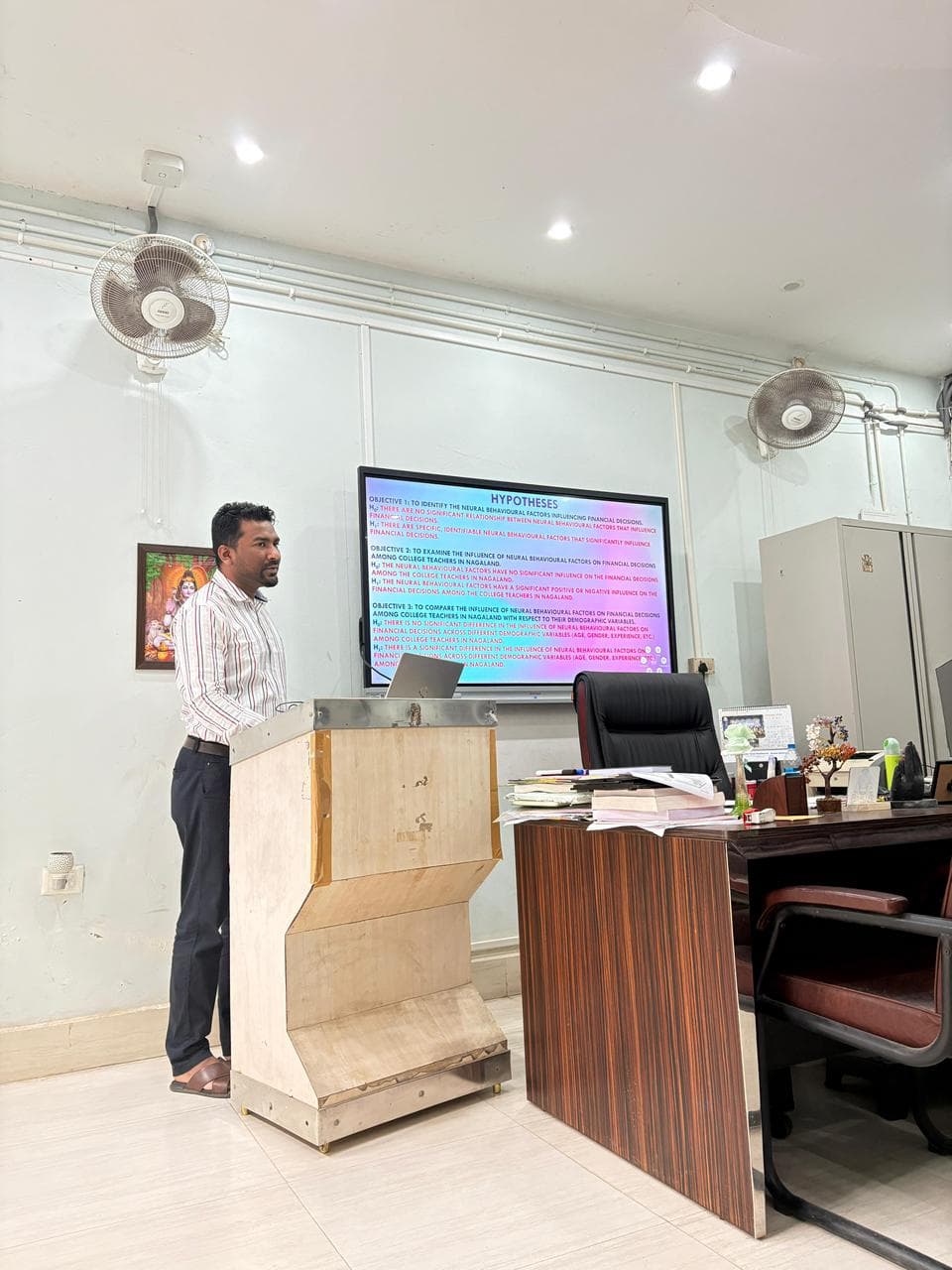
DIMAPUR — Zakir Alam is currently serving as an Assistant Professor in the Department of Commerce at Patkai Christian College (Autonomous), with around eight years of teaching experience.
He began his journey as a tutor while he was a student of class 9 in 2008, starting with only one student who used to come to his place to learn Mathematics. After completing his class 12 in 2011 from Pranab Vidyapith Higher Secondary School, he pursued his undergraduate studies in Commerce at Patkai Christian College.
He completed his postgraduate studies in Commerce from Assam University, where he developed an interest in research and data analysis, particularly in financial decision-making and behavioural finance. Over the years, he has continued learning statistical analysis techniques. He is currently pursuing his PhD from Assam University, focusing on how neural and psychological factors influence financial decisions among educators and exploring Neurofinance.
Also read: Selling on Marketplaces from Nagaland
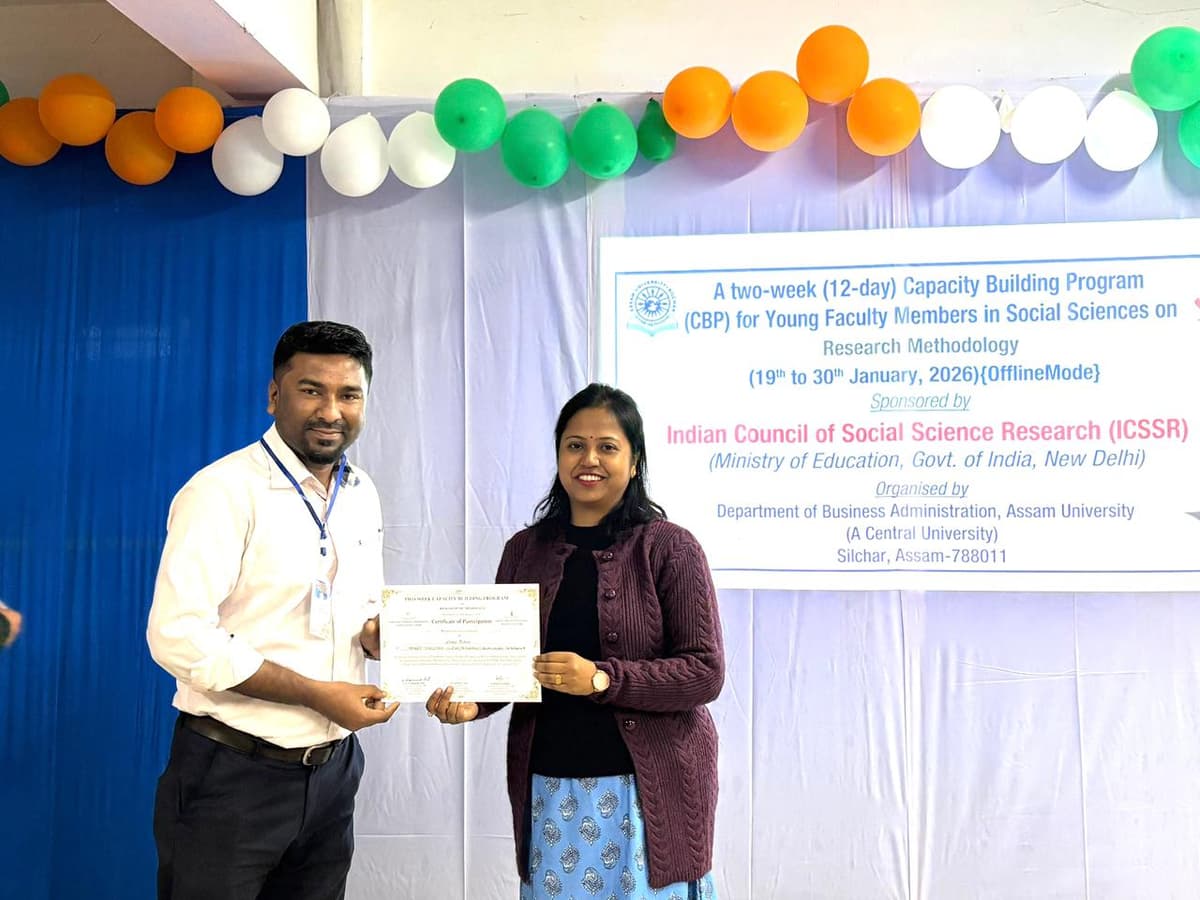
Alongside teaching, he has attended multiple Faculty Development Programmes (FDPs) and Capacity Building Programmes (CBPs) and presented papers at national and international seminars and conferences. He has also published review papers in international journals.
He has also been given the opportunity to work as a visiting faculty, teaching finance to M.Voc. students in the Department of Vocational Studies and Skill Development at Nagaland University. He describes teaching as not just delivering content but also shaping thinking, building confidence, and helping students understand subjects like Statistics in a simple and practical way.
In this interview with Eastern Mirror, Alam shares insights about Statistics and opportunities in this field.

How would you explain Statistics to students?
In today’s world data is everything, and data comprises numbers that need statistics to make meaningful conclusions. Statistics is the art of making sense with the help of numbers. It helps by collecting data, organising it into meaningful information, and drawing logical conclusions from it. Statistics tells us what the numbers are trying to say, whether it is about exam results, weather patterns, or even social media trends. Therefore, students should know the importance of statistics in this modern education system.
Why is Statistics considered such an important subject in today’s world?
We are living in a data-driven world where decisions are based on evidence (facts and figures) rather than guesswork. From businesses to governments, everyone relies on data to plan, predict, and perform better. Statistics gives us the power to understand that data and make smarter, more informed decisions.
How is Statistics different from Mathematics, and why should students understand that difference?
People often mix statistics with mathematics. But Mathematics focuses on solving exact problems with precise answers, while Statistics deals with real-world data, which is often uncertain and variable. Statistics teaches us how to handle uncertainty and make decisions even when we don’t have perfect information; this is what makes it extremely practical and powerful in real-world scenarios.
What are the main branches or areas of Statistics that students should know about?
To gain a solid understanding of statistics, students should be familiar with the main types of data, including qualitative and quantitative data, particularly the distinctions among individual, discrete, and continuous data. They should also understand the basic methods used to collect such data.
Students should also be acquainted with two principal areas of the subject. Descriptive statistics focuses on summarising data through measures such as averages, graphs, and charts, while inferential statistics involves using data to make predictions or informed decisions about a larger population.
How is Statistics used in everyday life, even by people who are not statisticians?
Everyday decisions like comparing prices, understanding discounts when we go for shopping, checking weather forecasts, or even interpreting news reports are based on statistics. When comparing our marks with our previous performances and also with our friend’s performance. Whenever we analyse information before making a choice, we are unknowingly using statistical thinking.
Can you give examples of how Statistics is used in business, sports, health, education, and government planning?
Statistics is widely applied in everyday life and shapes many routine activities. In business, it is used to predict sales and understand customer behaviour. In sports, it supports the analysis of player performance through graphs and charts and assists in planning strategies against opponents. In health, it is used to study diseases and develop treatments. In education, it helps evaluate student performance and improve systems. In government departments, it supports the planning of policies, budgets, and development programmes.
What undergraduate courses can students choose after Class 12 if they want to study Statistics seriously?
Statistics is not limited to a specific academic stream, though students are advised to develop a clear understanding of the subject before choosing a course.
Those who wish to pursue higher education in statistics can opt for undergraduate programmes such as a B.Sc. in Statistics or a BA/B.Sc. with Statistics as a major. Degrees like B.Com with a focus on accounting and finance may also be relevant, particularly where statistical methods are applied in business contexts. In addition, newer interdisciplinary programmes in areas such as data science and analytics are increasingly available and incorporate substantial statistical training.
What postgraduate degrees or specialised courses can help students build a strong career in Statistics?
Students can pursue postgraduate qualifications such as an M.Sc. in Statistics or an M.Stat., which offer specialised training in the subject. Degrees such as an MBA in Business Analytics or a master’s in Data Science or Econometrics are also relevant, as they combine statistical methods with practical applications in business and research.
In addition, a range of online courses now provide focused training in specific areas of statistics. Together, these pathways can support careers in both academia and industry.
What are some promising career opportunities for students with a Statistics background?
There is a wide range of career opportunities in statistics, including roles such as data analyst or data scientist, financial analyst, market research analyst, statistician in both government and private sectors, and stock market analyst. With the increasing reliance on data across industries, these careers are in strong demand and offer substantial professional and financial prospects.
What role does Statistics play in artificial intelligence, machine learning, and big data?
Statistics has become an essential area of study in the modern world. It forms a foundational component of artificial intelligence and machine learning, supporting the development of models, the identification of patterns, and the generation of predictions. Applications such as fraud detection systems and voice assistants rely on statistical methods operating in the background.
What software, tools, or programming languages should Statistics students learn today?
Students should place greater focus on statistics. At the outset, they can begin with tools such as Microsoft Excel to learn basic data handling, including organising numerical data and creating charts. They can then progress to R and Python, which are widely used for data analysis and for identifying patterns in an accessible yet effective manner. For research purposes, software such as SPSS and Stata enables users to carry out statistical analysis efficiently. Learning these tools in stages provides students with a strong practical advantage for further study and professional work.
At present, individuals with the ability to operate statistical software often charge substantial fees for conducting analyses. Numerous consultants, both online and offline, offer such services on a paid basis. For students of commerce, business administration, and economics, a working knowledge of statistics is essential for demonstrating competence and remaining competitive. Whether pursuing employment or managing a business, statistical skills are increasingly necessary.

RAPID INSIGHTS
Who was your biggest inspiration growing up?
My parents, younger brother, and teachers.
What quality do you admire most in students?
Curiosity to know and explore beyond textbooks.
Mountains, beaches, or libraries — where do you think best?
Every place works for me.