


Biometric barriers leave Nagaland’s PwDs struggling with Aadhaar enrolment, delaying access to UDID cards and disability-related benefits
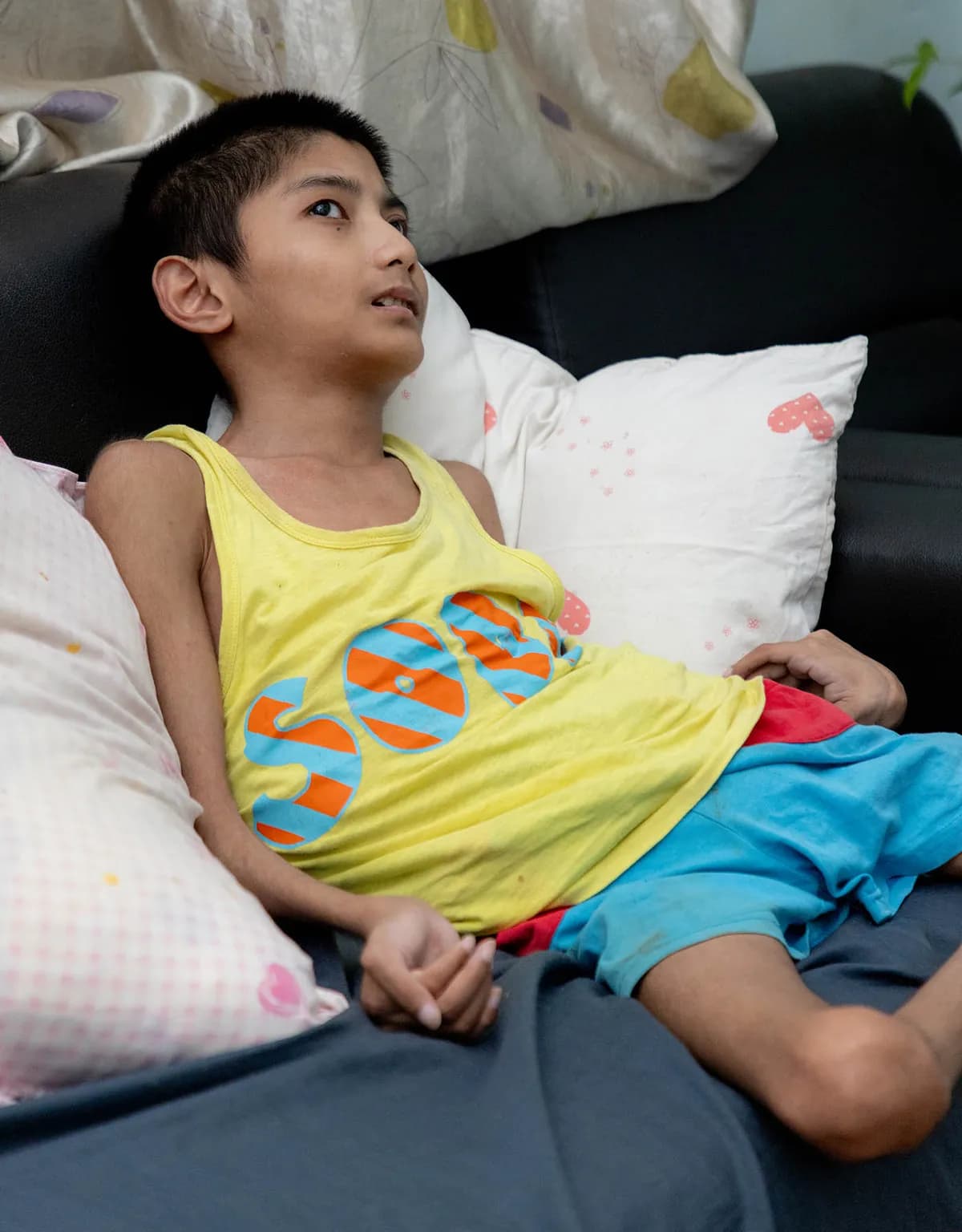
DIMAPUR — Nchumthung is 17, bedridden and unable to use any of his four limbs. He has been in this condition since he was seven, when a severe seizure caused extensive brain damage and left him with post-epileptic quadriplegia.
His family has been trying to obtain an Aadhaar number for him.
That has proved difficult because the standard Aadhaar enrolment process requires biometric information that Nchumthung cannot provide in the usual manner.
His disability certificate from District Hospital Dimapur records “100% permanent impairment/mental disability”. His mother, Viholi, said the family had repeatedly approached Aadhaar enrolment centres in the past.
“When we inform the centre operators about his condition, they tell us that it cannot be done. We are willing to carry him to the centre and wait the whole day to get it done, but we are not even given that option,” she said.
The Unique Identification Authority of India (UIDAI), however, has provisions for people in such circumstances.
Also read: Nagaland’s disability rights challenge: Turning laws into everyday inclusion
Its Aadhaar enrolment and update regulations provide for biometric exceptions when a person is unable to provide fingerprints because of injury, deformity, amputation or another relevant reason. Its operational guidance also provides for adjustments to the enrolment process where an applicant cannot maintain the required position for biometric capture or photography.
For persons who cannot travel to an Aadhaar centre, UIDAI has a separate home-enrolment provision for persons with disabilities (PwDs), senior citizens and bedridden individuals.
Nchumthung eventually underwent a home enrolment in March 2025. But more than a year later, his family was still waiting for an Aadhaar number.
His case points to a gap between the safeguards available under the Aadhaar system and the experience of PwDs trying to use them. Interviews with families and Aadhaar enrolment operators in Nagaland found cases involving failed enrolments, difficulties in capturing biometrics and limited awareness of the home-enrolment provision.
For people who require Aadhaar before they can register for a Unique Disability ID (UDID), such failures can also become a barrier to accessing disability-related support.
Data gap with consequences
Nagaland may have far more people eligible for disability-related entitlements than the official UDID figures currently capture.
According to Census 2011, the state had 29,631 PwDs. That figure predates the Rights of Persons with Disabilities Act, 2016, which expanded the number of recognised disabilities from seven to 21.
Yet only about 3,864 UDID cards had been generated in Nagaland as of January 2025.
The gap in disability data has been raised previously by disability-sector stakeholders, who have pointed to the limitations of relying on the 2011 Census figures, as well as stigma and social exclusion that can keep PwDs outside official records.
More recently, the State Commissioner for Persons with Disabilities (SCPD), Tongpang L Jamir, met Census officials on September 1 to discuss the identification and inclusion of PwDs in the upcoming Census. The meeting focused on ensuring that all 21 recognised categories of disability are covered and that no person with a disability is left uncounted. Jamir said accurate and comprehensive disability data is essential for planning, resource allocation and implementation of government programmes.
Meanwhile, for people who require Aadhaar before they can register for UDID, the identity document can become one point at which the process stalls.
An August 8, 2023, notification of the department of Empowerment of Persons with Disabilities requires those without Aadhaar to first enrol for Aadhaar before registering for UDID, if they are eligible to obtain it. (https://depwd.gov.in/en/document-category/udid/)
Nchumthung's experience is not an isolated case in Nagaland.
A second family
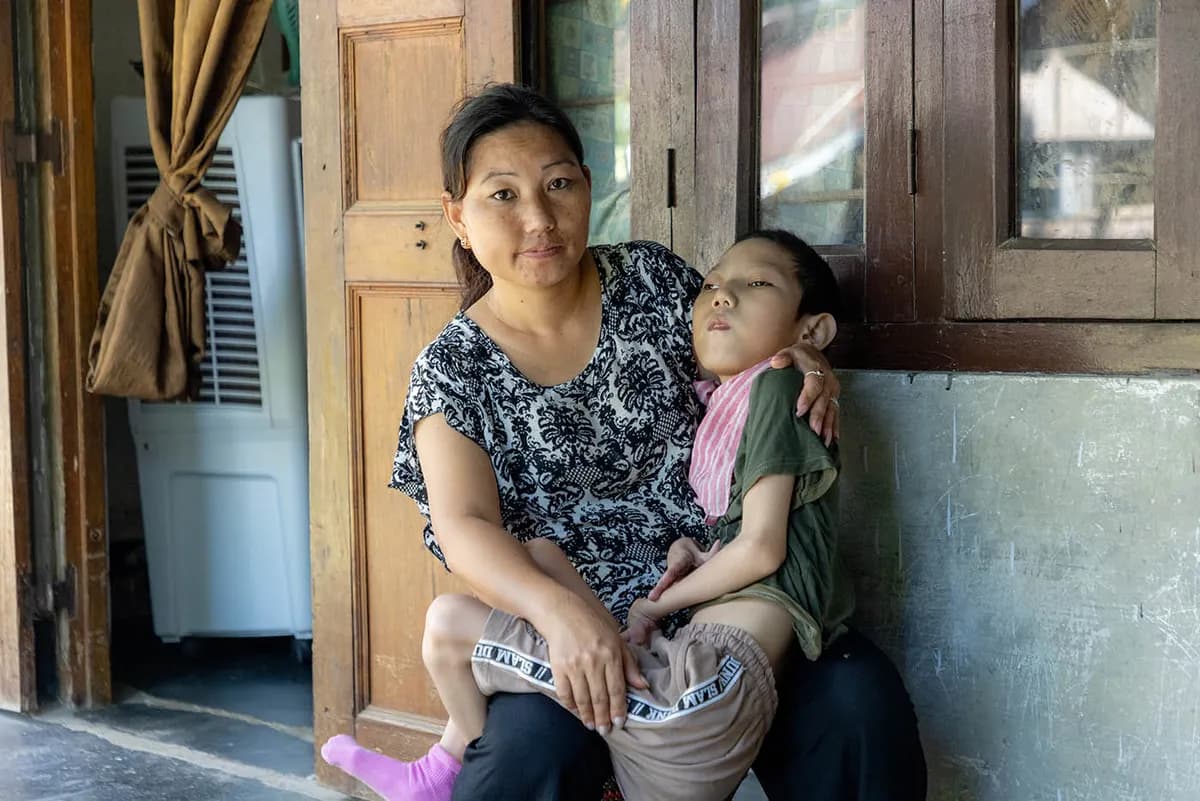
Nipuvi, another teenager with cerebral palsy, had also experienced difficulty obtaining Aadhaar.
His mother, Mughali Chishi, said she too had been unable to get the process completed for her son. Like Viholi, she was unaware that UIDAI had a home-enrolment provision for persons who could not come to an Aadhaar centre.
Both families eventually became part of a special Aadhaar enrolment exercise held in Dimapur and Chümoukedima on March 26 and 27, 2025.
Nchumthung and Nipuvi were among 11 PwDs registered during the exercise, which was supervised by representatives of UIDAI's Regional Office in Guwahati and included home enrolment.
According to Viholi and Mughali, however, the enrolments encountered technical problems.
“We kept waiting and waiting for the confirmation message on my phone, but it didn’t come. Only after an NGO worker contacted one of the officials, we were told that Nipuvi’s enrolment was rejected due to technical issues,” Mughali said.
On February 12, 2026, a second enrolment was arranged for both teenagers, and this time, officials from Kohima carried out the enrolment.
Subsequently, on April 28, 2026, Mughali received an SMS stating that Nipuvi’s enrolment had been delayed “due to technical issues”. The message said no action was required from her and that she would be notified once the process was completed.
Later that day, however, another message informed her that the enrolment request had been rejected “due to mismatch of details in enrolment/update form and proof of address document”.
Mughali then contacted officials who had conducted the second enrolment in February. On their instruction, she sent them a copy of Nipuvi’s birth certificate to address the discrepancy.
She has not received any further communication since then.
As of September 2026, neither family had received an Aadhaar number.
For Nchumthung's family, the wait has affected access to disability-related support, as the family could not proceed with his UDID application.
“Last year (2025), we attended a disability-aid distribution camp hoping to obtain a wheelchair for him. But we were told he was ineligible because he did not have a UDID.”
Viholi said the family spends around INR 5,000 to INR 6,000 a month on medication, digestion aids, suppositories and diapers.
Before his death in November 2025, Nchumthung's father, Thunglamo Lotha, had sought to include him in his Chief Minister's Health Insurance Scheme (CMHIS) policy, but the process could not be completed without an Aadhaar number.
The family is still waiting for his Aadhaar so that he can be included under his mother's policy or access other insurance and benefit schemes available to PwDs.
Nipuvi's family remains without an Aadhaar number as well.
“I am a single mother, and my income is not steady,” said Mughali. She earns a living by making and selling pickles and handmade flowers, while also taking up skills training whenever livelihood programmes for families of PwDs are organised, mostly by NGOs.
“I cannot add him to my ration card without an Aadhaar. Even a few kilos of rice a month is a big help because my earnings are not steady,” she added.
The provisions
UIDAI's Home Enrolment Policy sets out a procedure for PwDs, senior citizens and bedridden individuals who are unable to visit an Aadhaar centre.
According to the policy, an eligible person can request home enrolment by submitting supporting documents, including a medical certificate from a registered practitioner or a disability ID card. The request can be submitted to the deputy commissioner or directly to UIDAI's Regional Office in Guwahati.
UIDAI officials in Guwahati explained the procedure to Eastern Mirror in March 2025. They said that following verification, the Regional Office assigns the request to an Aadhaar Registrar within two working days. The Registrar then schedules enrolment within seven days, extendable to 15 days if a slot is unavailable.
The home-enrolment service is chargeable at INR 700, including GST, for the first applicant at an address and INR 350 for each additional applicant at the same address.
The policy also sets out what is to happen when a home enrolment fails because of a technical problem. The request is to be reprocessed through UIDAI's technical operations. If the first home-enrolment service is unsuccessful because of technical issues and cannot be reprocessed, the Registrar is required to provide another visit free of cost within 10 days of the rejection.
The March 2025 enrolment exercise brought the provision into use for Nchumthung and Nipuvi, but according to their mothers, the technical problems remained unresolved.
A different problem
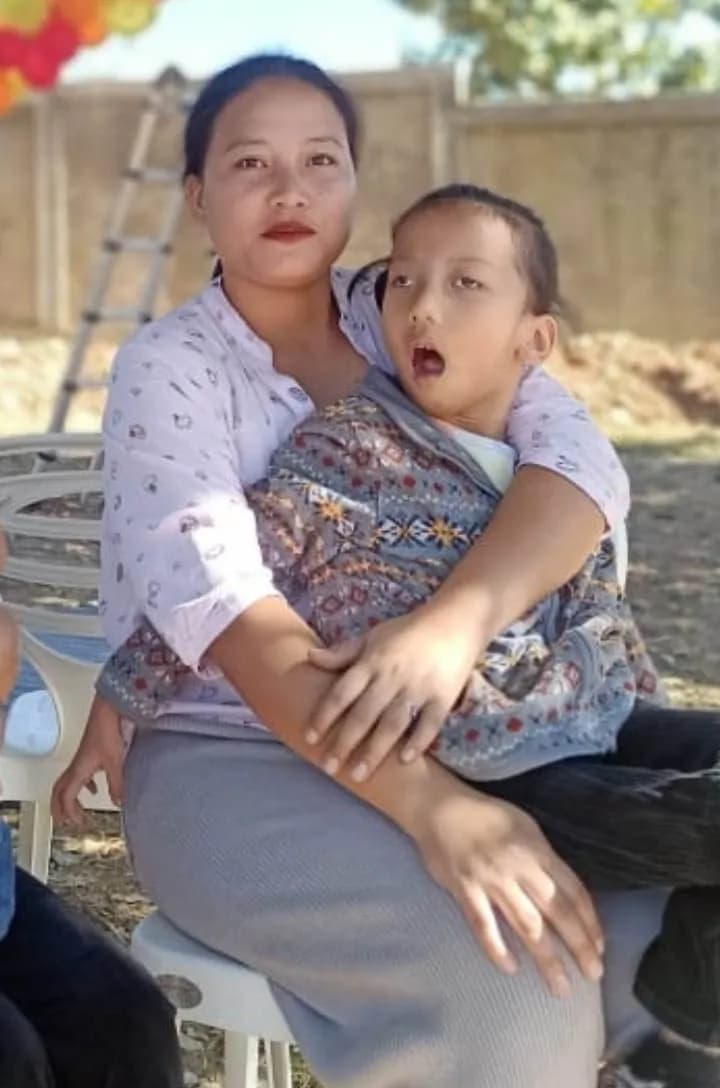
Meanwhile, in nearby Peren district, Kerehunglungle already has an Aadhaar number.
Born in 2018, she lives in Jalukie with her mother, Kimkhohoi, who is her primary caregiver. Kimkhohoi, a single mother, supports the family by running a small shop in Jalukie town.
Kerehunglungle's disability certificate records cerebral palsy with spastic quadriplegia and assesses her permanent physical impairment at 90%. Both upper and lower limbs are affected.
Her Aadhaar was issued when she was four. She now needs a mandatory biometric update. UIDAI requires children to undergo mandatory biometric updates at the ages of five and 15.
According to Kimkhohoi, three attempts to update her daughter's biometrics this year have failed because her fingerprints could not be successfully captured.
During the mandatory Aadhaar/biometric updation for ration-card holders two years ago, Kerehunglungle's name was removed from the family's ration card because her update remained incomplete.
Her case involves an update rather than a first enrolment, but the difficulty again concerns the capture of biometric information.
Operators’ experience
Three Aadhaar enrolment operators from Dimapur, Phek and Zunheboto districts, all of whom requested anonymity because they are not authorised to speak to the media, described difficulties they encounter while assisting PwDs.
One operator in Dimapur said PwDs involving involuntary movements have difficulty remaining still during photographs, while some have difficulty extending their fingers or applying pressure to a fingerprint scanner because of muscle stiffness and restricted movement.
“It takes longer to register their biometrics, and there is also no guarantee that the system will accept the scans,” the operator said.
An operator in Zunheboto district said he had encountered cases in which an applicant with a disability experienced distress or seizures during the enrolment process.
All three operators said they had not received any requests for home enrolment from PwDs over the previous two years.
Where families are left
When asked what they intended to do next, Viholi said she had no option but to wait and see whether the second enrolment would produce any result.
Mughali said she was similarly unsure of what to do next.
“I am not a well-educated person, and I really do not know what to do. My only hope is that since the head office sent people to carry out the enrolment, we will get his Aadhaar. I mean, if even the head office cannot do it, who can?” she said.
(This story was supported by the International Foundation for Disability Inclusion's (IFDI) Journalism Fellowship on Disability Inclusion).