

Benry Moses and Avoni Odyuo share insights on music education, career opportunities and the value of practice.

DIMAPUR — For Benry Moses and Avoni Odyuo, music has been an important part of their lives from an early age, shaped by a family environment where music, faith and service were closely connected.
Although both grew up surrounded by music, their journeys have taken different directions, with Moses exploring songwriting, guitar performance and teaching, while Avonihas devoted much of her work to choral conducting, church music education and mentoring aspiring musicians.
For singer-songwriter and guitarist Moses, music has always been more than a form of entertainment. It is a means of storytelling, expressing emotions and connecting with people. Moses discovered his love for the guitar early in life, eventually developing an interest in fingerstyle playing and songwriting. Influenced by pop, rock and indie sounds, his music often explores themes of love, personal experiences and, most importantly, hope.
His talent earned wider recognition when his song ‘Breathe’ won the Song of the Year award at the 14th Music Awards of Nagaland in 2022. He has also performed at the Ziro Festival of Music, bringing his compositions to audiences beyond his home state.
For Odyuo, her musical journey began with formal piano lessons at the age of six. She went on to obtain a Bachelor of Arts in English and a Certificate of Higher Education in Creative Arts from the University of Wales, followed by a Master's in Church Music, specialising in Choral Conducting, and a Master of Divinity from Singapore.
Her musical experience includes being a member of the Singapore Symphony Chorus in 2008 and from 2017 to 2018, during which she participated in various musical works and concerts in Singapore and Malaysia. She also sang for several seasons with Canticorum in Singapore between 2017 and 2019.
As a choral conductor, Avonienjoys working with children, youths, young adults and senior citizens. Her contributions to choral music have earned her recognition, including the Best Conductor award at both the 2014 and 2016 seasons of the Harmonic Surge Choral Contest.
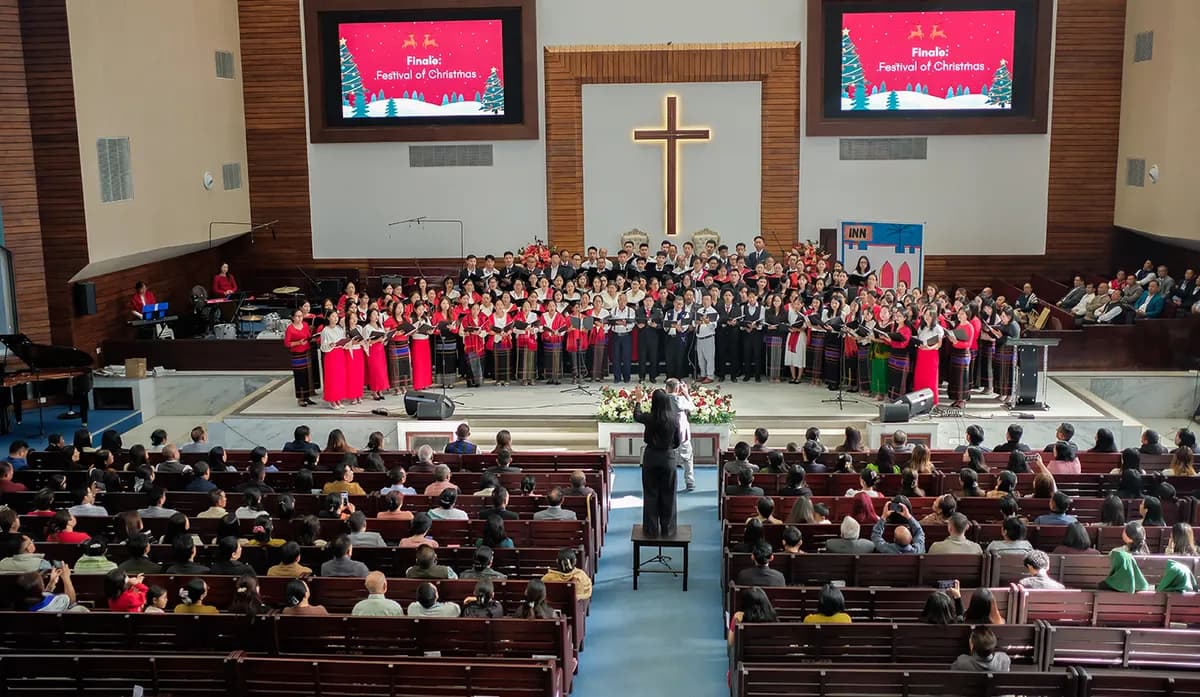
Under her direction, Coronation Choir has performed at several events, including Octave 2010 in Amritsar, the North-East India Choral Music Concert organised by All India Radio in 2012, and a friendship concert with the Embassy of Latvia in collaboration with TaFMA in 2013.
Most recently, it performed at ‘Echoes of Italy’ alongside accomplished Italian musicians Tommaso Benciolini on flute and Lorenzo Bernardi on guitar. Avonihas also organised and conducted various Christmas concerts in Singapore and Dimapur.
Currently serving as the Music Director at Lotha Baptist Church Dimapur, Avonimentors 23 music department executives and 67 cantors, who assist her with weekly church duties across six sectors. She also facilitates the musical and spiritual training of several worship teams and a string ensemble, with the primary goal of developing leaders within each group.
In this interview with Eastern Mirror, Avoni and Moses share their approaches to nurturing aspiring musicians and offer insights into pursuing music as a career.

How did music become such an important part of your family life?
Moses: I think the musical inspiration in our family comes from our father, who was a musician and a great music lover in his younger days. He was also the one who taught us and encouraged us to pursue music as a field of study.
Avoni: We are blessed to have Rev. Dr. Nzan Odyuo as our father. Although he did not have any formal music training like the four of us, he was instrumental in bringing basic music training to the towns and villages of the Lotha districts in the 1980s and 1990s.
Therefore, the four of us grew up with music around the house and were often included in some of his gigs as children. We were called The Radical Kids, and we still have fond memories of singing and dancing together.
It was never about fame or popularity. We performed together because it brought us great joy and was an avenue for us to spread Jesus.
For a child who loves music but knows very little about it as a field of study, how would you explain what it actually means to study music seriously?
Moses: Just like any other field, you can always learn music on your own. But having a proper music education means learning the right foundations, the most efficient methods, and the many skills and opportunities that are available in the wider world of music.
Music is a very broad field. What are some of the different areas students can explore, and how can they discover which one is right for them?
Moses: I think finding an instrument that you like is a good way to start. You can listen to different instruments online and find out which ones you would like to try. You can also visit a music store or music school and try out different instruments to see which one really intrigues you or connects with you. I feel this is important because it is easier and more enjoyable to learn an instrument that you feel comfortable with.
Avoni: Young people nowadays are blessed with countless opportunities and possibilities. Apart from traditional stage performance-related jobs, such as singer-songwriters and concert artists, and pedagogical vocations, musicians can now choose to become music therapists in hospitals, music producers, audio engineers, forensic musicologists, Foley artists, music journalists, music app developers, music software developers, playback engineers, recording artists for commercials and products, booking agents, and music festival organisers.
Other jobs in the film industry include sound designers, boom operators, music editors, film music composers, and music supervisors. In addition, we are in Nagaland, where musicians are highly employable in schools, colleges, and churches. Students do not have to confine themselves to a box.

How much of becoming a good musician is natural talent, and how much comes from training, practice, and discipline?
Moses: Natural talent always helps, but even that requires proper training, practice and discipline to unlock your full potential. The right training can help you find the most efficient methods and develop the necessary skills, while consistent practice and discipline can help you master and perfect those skills. I think this is very important if you want to become a good musician.
Avoni: To a certain extent, natural gifting and musical aptitude propel a student's progress. However, even geniuses need regular practice and training to advance their music careers. Through my interactions with some of the best musicians I have heard, I discovered that most spent at least eight to twelve hours practising daily when they were students. Even now, as professionals, they continue to spend several hours practising every day.
How important is formal music education? What can a degree or structured programme offer that learning independently may not?
Moses: Formal music education helps you build a proper foundation in music and allows you to cover a wide range of areas in one place. A degree or music certificate can also help you gain recognition wherever you go, whether in Nagaland or internationally. This can help in securing better job opportunities and gaining admission to better schools and institutions, both nationally and abroad.
Avoni: If one wishes to pursue a career in music, formal education is generally a safe route, although there are certainly geniuses in every field who succeed without formal education.
One must also not confuse weekly instrument lessons, such as 30–45 minutes of piano, voice, guitar or violin, with a formal degree course. For the rest of us, a formal degree provides a well-rounded music education that equips musicians holistically. For instance, an understanding of music history, a strong foundation in music theory, basic musicianship training such as sight-singing, rhythm and ear training, and music literature classes all work together to develop the musical skills needed to pursue music professionally.
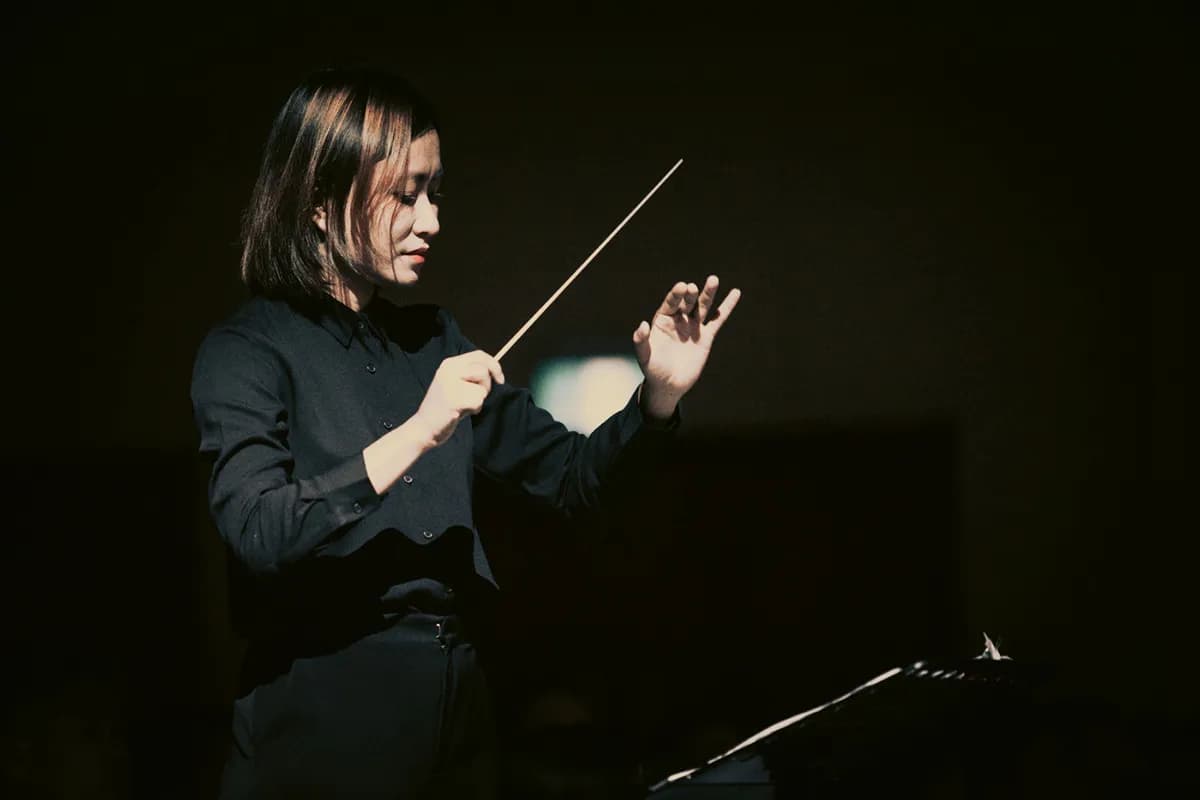
Even in my field of conducting, a common misunderstanding among the general public is that conductors merely wave their hands or batons. While that is part of the work, it comprises only about 10% of what conducting actually involves.
On a regular basis, one has to read books on rehearsal techniques, gestures and methods, listen to a wide repertoire of works, and watch masterclasses or videos of renowned conductors. This helps us build a catalogue of tools to utilise when conducting choirs or ensembles.
What should students consider when choosing a music school, college, conservatory, course or teacher?
Moses: When choosing a music school or college, you should consider the outcomes of the institution, particularly how previous students are doing and where they are today. Feedback and online reviews, as well as recommendations through word of mouth can also be helpful. You should also check their courses and syllabus to see if they align with what you are looking for.
Avoni: When choosing an institution, a student should begin with the end goal in mind. What do you want to become after you graduate? What is your vision? What do you wish to work as after graduation? Knowing the answers to these questions will help you find the ideal college or school that fits your ambition or vocation, without wasting time moving from one college to another.
For instance, if you desire to become a classical performing artist, choose a college with a strong emphasis on Western classical music. If you wish to work in church or ministry, choose a college with a solid curriculum in church music.
In addition, a personal tip I follow is to choose colleges based on the professor I desire to learn from. Even if a college is reputed, it may not help my career if it does not have the right professor for my discipline, whether piano, voice or conducting.
Many young musicians become discouraged when they compare themselves with others. How can students deal with comparison, mistakes and slow progress?
Avoni: Sadly, when it comes to music and the arts, comparison is inevitable due to the nature of the vocation. There is also a high emphasis on accuracy and performance, and therefore, unlike other professions, there seems to be very little tolerance for mistakes. As a result, many musicians suffer from anxiety, perfectionism, fragile egos and insecurity.
Due to this nature, a musician may either become a primadonna when successful or feel like an insignificant failure. One may develop either impostor syndrome or the Dunning-Kruger Effect. This appears to be a general trend in the performance environment, and it is important to recognise this reality to better understand how to tackle it.
Personally, I strongly believe that we can adopt a different philosophy or approach to life. As musicians, we need to build a strong identity and mental fortitude that are not based on our musical gifts or talents. In my case, I overcame this atmosphere by developing my identity in Christ as a child of God.
When it comes to slow progress, we ought to view it from the perspective of compound interest. It does not matter how fast or slowly you learn a piece, as long as there is a daily investment in the bank of practice. The interest of progress will compound over time.
If you give up halfway because you are not progressing as fast as your friends, you will never experience the joy of making beautiful music. On the contrary, however minuscule the improvement, if you focus and practise regularly, your investment will eventually compound into a resounding success.

How are technology, social media, streaming platforms, digital music production and AI changing the opportunities available to young musicians?
Moses: I think technology has become a vital part of music today. You cannot produce or put your own music online without it. Because of this, schools and colleges also need to embrace technology, whether for teaching students or marketing themselves.
Music production is a very useful tool and skill to have as a musician. AI can also be very helpful, but I do not think musicians should rely entirely on AI to create a song. Rather, I see it as another efficient tool that can help musicians in their creative process.
Is it realistic to earn a stable living through music? What should students understand about the financial realities of building a career in this field?
Moses: Yes, you can earn a stable living through music if you know how and where to market yourself. As someone who is both a music artist and a music teacher, I can say that there are many opportunities out there.
However, it is a very competitive market, so you need to work hard and keep developing your skills if you want to reach a high level.
This is the second and concluding part of a two-part series featuring four siblings and their journeys in music. Following last week’s feature on Albert Kanken Odyuo and Khristin Kimeri, this edition of the Education page highlights Avoni Odyuo and Benry Moses.
RAPID INSIGHTS
One musician—living or dead—you would love to have dinner with?
Moses: An inspirational acoustic guitarist.
Avoni: Gustavo Dudamel – one of the best conductors alive.
The sibling most likely to start singing randomly at home?
Avoni: That would be me! The theatre kid in me never left my soul!
Your best cure for stage fright?
Avoni: Firstly, practise thoroughly to build confidence; secondly, use daily breathing exercises to calm nerves; and thirdly, focus on the audience’s foreheads rather than their eyes to maintain a sense of connection without feeling overwhelmed.