

Share


Our Correspondent
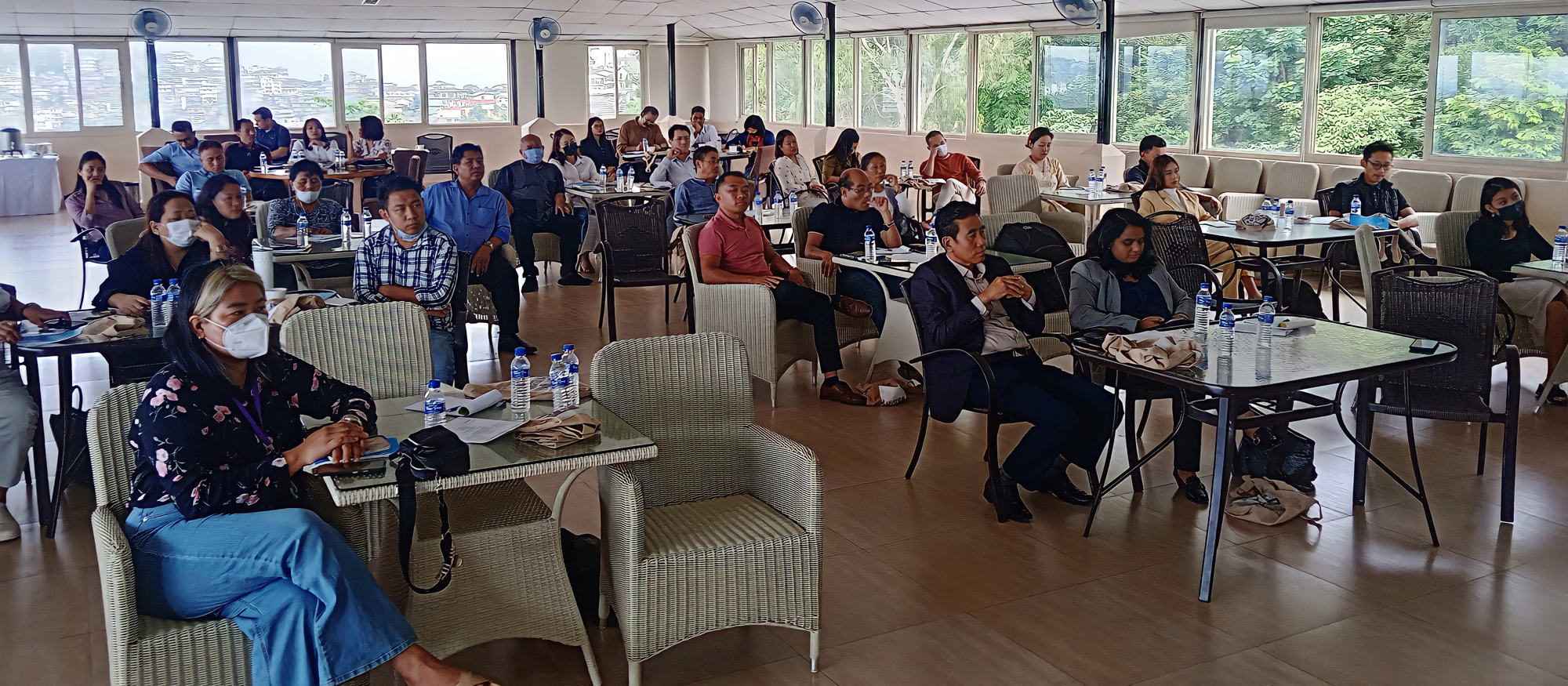
Kohima, Aug. 10 (EMN): A state-level stakeholders meet on building an ecosystem for tech innovators and vernacular entrepreneurship through localising sustainable development goals (SDGs) was organised by Atal Incubation Centre (AIC) under SELCO Foundation, in coordination with SDG Coordination Centre (SDGCC) under the Planning and Coordination department in Kohima on Wednesday.
Speaking on the occasion, Nayantara Sasikumar, OSD (Planning) and SDG nodal officer of Nagaland, acknowledged the initiative of AIC SELCO Foundation based in Guwahati and United Nations Development Programme (UNDP) for reaching out to seek their collaboration in identification of stakeholders and mobilisation of rural innovators in the state.
"I am sure the team from AIC SELCO would be delving deep into the salient aspects of the work that they do in supporting innovation and local entrepreneurs in the North East and how the government and organisations in Nagaland can support this initiative," she said.
To encompass a whole of government approach to institutionalising and streamlining the activities related to the SDG, Sasikumar informed that the government of Nagaland has established the SDG Coordination Centre (SDGCC) in 2019 within Planning and Coordination in technical partnership with UNDP.
The SDGCC was established with a mandate to act as a centre for knowledge dissemination, SDG monitoring and policy strengthening in order to accelerate SDG implementation from the state to the village council level, she apprised adding that the state also has a high-level steering committee headed by the chief secretary for monitoring, policy review and course correction.
In line with the mandate of SDGCC, she informed how they have engaged all departments of the state government in a dialogue on the SDG through state and district level workshops and consultations and subsequently formulated the Nagaland SDG Vision 2030 Plan and indicator framework.
She informed that the 'Nagaland SDG Vision 2030: Leaving No One Behind' document that was launched by the state chief minister in August 2021 provides state specific targets with measurable indicators and strategies to achieve the SDG. She also informed that they are developing a SDG dashboard as a single point source for state and district data for strengthening monitoring and evaluation of progress on SDG implementation through robust data collection and analysis.
Sasikumar also briefed on how they have recently started the SDG innovative participatory research action initiative that was aimed at fostering innovation and community participation at grassroots for achieving specific SDG. As a part of this initiative, three projects have been identified and are being implemented in the state, she informed.
To take forward the Nagaland SDG vision 2030 and translate into reality, she said they are focusing on ‘strengthening the institutional mechanism,’ ‘mainstreaming the SDG indicators into all existing state government schemes/ development programmes,’ and ‘capacity-building and outreach at the district, block and village levels.
Sasikumar expressed hope that all the stakeholders would develop a better understanding of the concept of innovation and vernacular entrepreneurship where innovative projects/ innovators could be identified and promoted in the state.
She further urged everyone to actively participate in the day's event, which is an important step towards building an ecosystem for identifying and fostering rural innovators in the state.
Betsie K Vanlalpeki, consultant (MSME), UNDP, North East Region, informed that they have been working in different sectors for the last three years in Northeast India.
She stated that capacity building of entrepreneurs, FPOs, weavers and artisans especially in Mizoram, Assam, Nagaland and Manipur were conducted besides organizing seminars, webinars, creating online marketing platform, offline buyers-sellers meet, exposure visit etc.
Vanlalpeki informed on how they are collaborating with SDG Coordination Centre (SDGCC) under Planning and Coordination department in Nagaland for the last three years for all MSME related activities. Vanlalpeki added that they have been partnering with AIC SELCO Foundation in finding innovators and implementation of their incubators programme in the Northeast.
Ditismita Chowbay, CEO of AIC SELCO, said they aim to provide an equal playing platform for underserved and vernacular speaking entrepreneurs and innovators in the Northeast with end-to-end technology business incubation support and create an ecosystem that enhances the aspects of technology, financial elements and social linkages leading to a holistic solution for socially, financially and environmentally inclusive sustainable innovation.
Topics on innovation of local technologies, knowledge partners and exchange of resources, policy and research, funding and investment, IPR certification and business model and scalability were also discussed.