


Nagaland University-led team develops an AI framework to support the preservation of India’s cultural heritage
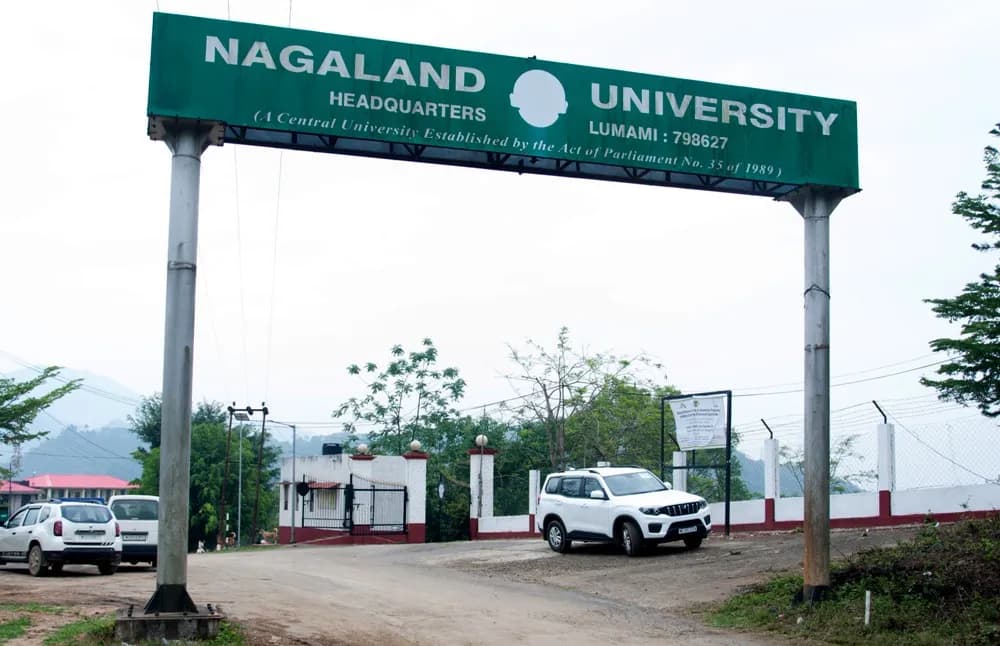
DIMAPUR — A research team led by Nagaland University (NU), in collaboration with scholars from institutions across India, has developed a framework to assess how Artificial Intelligence (AI) can support the preservation of the country’s rich cultural heritage, including manuscripts, endangered languages, oral traditions and historical records.
According to a press release issued by the university, the study focuses on heritage materials that are increasingly at risk due to ageing, physical damage and the gradual disappearance of traditional knowledge.
The researchers emphasised that AI-driven preservation should go beyond digitisation to ensure that historical accuracy, deeper meanings and cultural contexts are retained.
They also stressed that AI should complement, rather than replace, the work of archivists, linguists, subject experts and cultural custodians.
The research team comprises scholars from institutions in Tamil Nadu, Delhi, Uttar Pradesh, Telangana and Karnataka.
Together, they developed a framework to evaluate AI-assisted cultural preservation across nine areas: digitisation accuracy, text recognition, classification, translation, visual reconstruction, descriptive information, cultural context, accessibility and ethics.
The framework combines technical assessments with reviews by subject experts and relevant communities.
Prof. Jagadish K Patnaik, Vice-Chancellor of Nagaland University, said the collaborative research initiative reflected the growing potential of AI in safeguarding India’s diverse cultural heritage.
“The integration of AI with the preservation of manuscripts, endangered languages, oral traditions and historical records can open new avenues for documenting and transmitting our invaluable cultural knowledge to future generations,” he said.
He, however, emphasised that technological interventions must respect cultural contexts, community rights and ethical considerations. He expressed confidence that the initiative would contribute towards developing an inclusive, responsible and culturally sensitive framework for applying AI to heritage preservation.
Elaborating on the study, Prof. Ravi Ranjan Kumar of the Hindi Department, Nagaland University, said technical accuracy did not necessarily guarantee cultural accuracy.
An AI system, he explained, might correctly transcribe a document or translate spoken words while failing to capture historical references, cultural nuances or the significance of a tradition.
Expert verification and community consultation were therefore essential, particularly when dealing with less commonly used languages, unusual scripts, damaged documents and oral histories.
The study identified five key areas where AI could support cultural preservation: printed and handwritten documents; photographs and artworks; oral histories and endangered languages; archaeological and architectural heritage; and folklore and community knowledge.
Potential applications include making historical documents searchable, organising image collections, identifying damage to artworks, transcribing oral recordings, translating multilingual materials, and creating digital maps and three-dimensional models of heritage sites.
The researchers also highlighted the need to distinguish between restoration and reconstruction.
While restoration seeks to preserve or recover existing material, reconstruction may involve inferring information that is missing or unavailable.
To ensure transparency, the study recommended retaining original digital files, documenting AI-generated changes and clearly indicating uncertainties so that users can distinguish original evidence from computer-generated interpretations.
It further called for safeguards covering data use, privacy and access, stressing that communities whose heritage is being preserved must have a say in how their cultural knowledge is documented and used.
The researchers maintained that AI could become an important tool in protecting India’s cultural legacy if deployed responsibly, with due regard for ethics, cultural sensitivity and community ownership.
The findings have been published in Acta Innovations, a peer-reviewed, open-access multidisciplinary journal published by Rotherham Academic Press Ltd., covering engineering, environmental science, sustainability, technology and social sciences.
The proposed framework could be particularly relevant to India, where historical manuscripts, regional languages, oral traditions and community knowledge represent a vast and diverse cultural record.
In the Northeast, it could help explore approaches to preserving endangered languages and documenting oral histories, provided the tools are suitable for the languages concerned and communities participate in decisions about how their heritage is recorded and shared.
The research identifies several questions requiring further investigation, including the accuracy of AI tools when processing damaged documents and less commonly used languages, the role of communities in validating translations and descriptions, and the need to communicate uncertainty in digital reconstructions.