

KT Sukhalu says NLTP Act 1989 has failed, urges review as MLAs discuss policy gaps, drugs and budget priorities in Nagaland.
Share


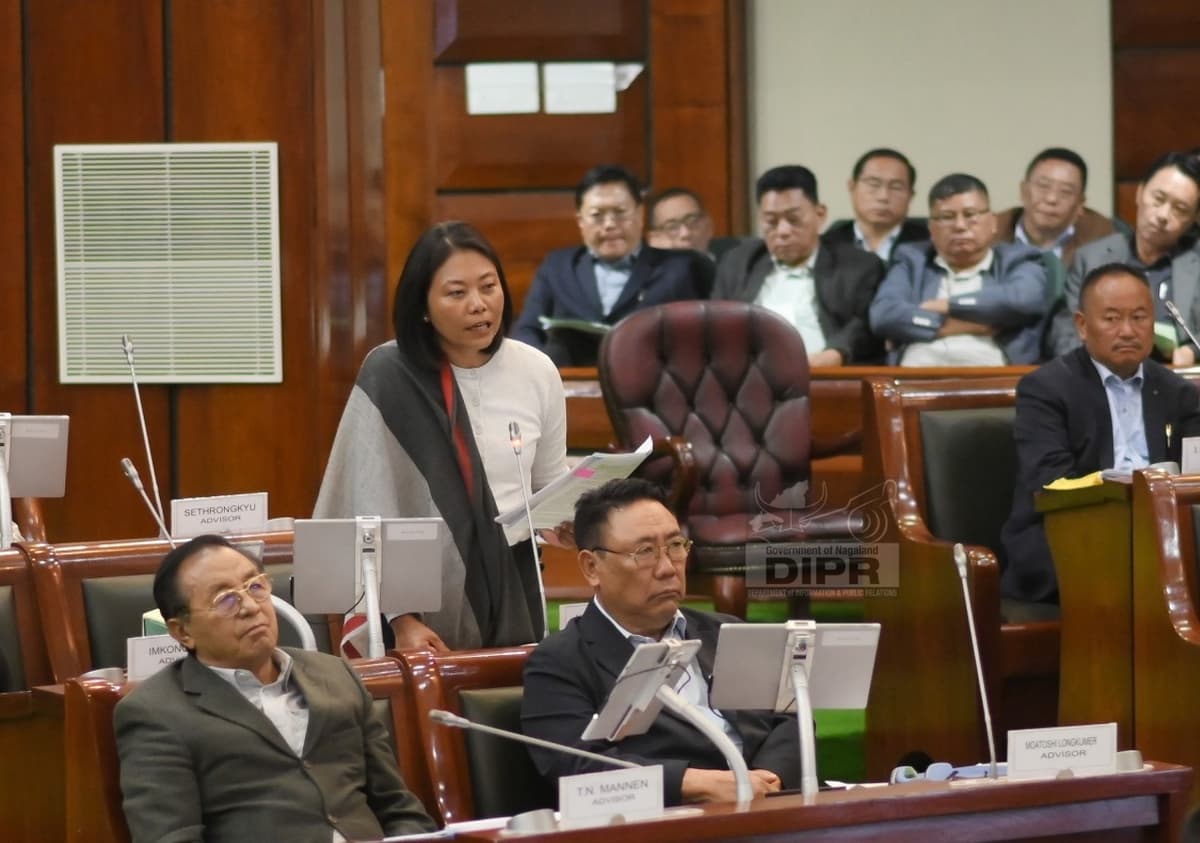
KOHIMA — Advisor and NPF legislator KT Sukhalu on Friday said that the Nagaland Liquor Total Prohibition (NLTP) Act, 1989 has failed and called for a comprehensive review of the policy.
Participating in the ongoing budget discussion, the advisor said it is important to acknowledge the shortcomings of the Act and examine the reasons behind its failure.
Prohibition, he noted, was originally introduced to address serious social issues arising from alcohol abuse. However, despite efforts by the police and the Excise department, liquor remains widely and easily available across the state.
Sukhalu pointed out that much of the liquor in circulation is adulterated, making it even more dangerous. He added that many families have lost loved ones to alcohol-related issues, while others continue to suffer emotional and financial distress due to alcoholism.
Also read: NLA passes Nagaland Jan Vishwas (Amendment of Provisions) Bill, 2026
Suggesting that the prohibition be lifted, he said the current Act restricts citizens’ freedom of choice and prevents the government from effectively regulating the sale of spurious liquor.
He stressed that proper regulation would help curb the circulation of unsafe alcohol and better serve public interest.
The advisor further stated that the government must work towards reducing dependence on borrowing and lowering the fiscal deficit. In this regard, he urged the ministry to consider both reviewing the prohibition policy and initiating oil exploration to boost revenue generation and ensure financial sustainability.
Raising concern over the growing drug menace, Sukhalu highlighted Nagaland’s vulnerability due to its proximity to Myanmar, one of the world’s largest producers of illicit opium.
While acknowledging the efforts of law enforcement agencies in tackling drug peddling and illegal liquor trade, he cautioned that without strong policy decisions, such efforts would remain insufficient.
Centre’s “step motherly” treatment
NPF MLA Achumbemo Kikon, speaking on the Naga political issue, asserted that it is fundamentally political and has been recognised as such by the Government of India.
He emphasised that the matter should be handled at the highest political level, preferably by the Prime Minister, rather than being left to bureaucrats or intelligence agencies.
Kikon stated that the Naga people are seeking an honourable and inclusive solution.
He maintained that the issue goes beyond the creation of Nagaland, noting that a significant Naga population resides beyond international borders.
The legislator also expressed dissatisfaction with what he termed the Centre’s “step-motherly” treatment of the Nagas, particularly Eastern Nagaland. Citing funding disparities, he pointed out that allocations for the Frontier Nagaland Territorial Authority remain far lower compared to major project announcements in Assam’s western region.
Women-centric budget
Participating in the budget discussion, Advisor Hekani Jakhalu lauded the chief minister for incorporating a women-centric budget, stating it reflects the government’s recognition of women as equal stakeholders in the state’s growth and development.
She highlighted initiatives focused on women, including the Innovation Seed Fund, crèches, 50 pink scooty taxis, the Nagaland Weavers and Advancement and Market Formalisation Initiative, and others.
Expressing confidence in women’s capabilities, Jakhalu said these resources would be used judiciously, yielding tangible outcomes reflected in future budget statements.
Despite financial constraints, she noted that the state has begun progressing towards Viksit Nagaland 2047 by prioritising sectors that drive economic growth.
Tuli administrative office
Advisor and MLA A Pangjung Jamir urged the inclusion of funds for a new administrative office building at Tuli, citing the current infrastructure’s deplorable condition.
He noted that the poor facilities make it difficult to host visiting officials, especially as the town lies along the Assam border and serves as a key business corridor after Dimapur.
He described the 2026–27 budget as visionary and insightful, expressing confidence that its transparency will enhance governance and ensure smooth, all-round development across the state.
Slow progress on Kohima–Pfutsero stretch
Advisor Dr. Neisatuo Mero raised concern over the poor condition of National Highway 29 from Kohima to Jessami, which connects to Manipur. He highlighted Package II between Kohima and Pfutsero, stating that work is progressing very slowly while other stretches were completed years ago.
He shared the difficulties faced by commuters, noting that during the last monsoon, vehicles were stranded for days due to landslides, disrupting the lives of thousands. He urged the government to expedite the completion of Package II before the next monsoon.
Minister Tongpang Ozukum said MLAs should inform tribal hohos and the public about the government’s efforts on the foothill road. He clarified that the project is funded by the state, not the Centre, and stressed the need to seek central assistance due to limited state resources.
Advisor Dr. Kekhrielhoulie Yhome praised the improvement in state revenue, which increased from INR 1,283 crore in 2021 to INR 2,714 crore in 2025. He also noted a reduction in state debt from 29.8% to 11.6% of the budget.