

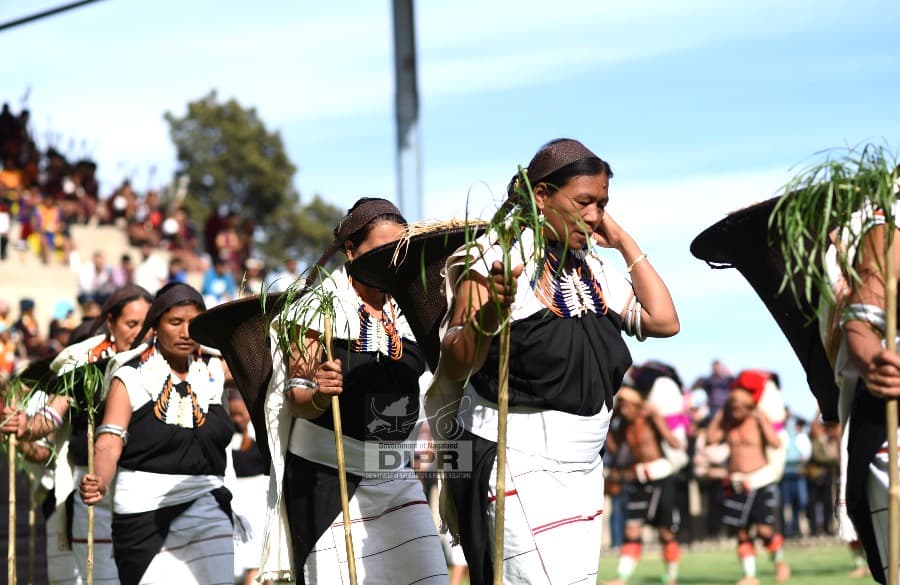
The ‘Cultural Show’ at the ongoing Hornbill Festival 2025 continues to draw visitors in large numbers.
Share


DIMAPUR — The ninth- day of 26th edition of the Hornbill Festival 2025 continued to draw visitors in large numbers as the celebrations for the day began with the ‘Cultural Show’ at Unity Plaza, Naga Heritage Village, Kisama, on Tuesday.
The programme was hosted by P Bashangmongba Chang, Minister for Housing & Mechanical Engineering, alongside co-host Zhaleo Rio, Advisor for Urban Development and Municipal Affairs, a DIPR report stated.
The event welcomed guests, including Air Chief Marshal, Amar Preet Singh, PVSM, AVSM, Chief of the Air Staff (CAS), and Subhash Chandra Mynam, Territory Manager (Retail), Shillong, Bharat Petroleum Corporation Limited.

As part of the day’s line-up, the cultural show unfolded, showcasing diverse performances from across Nagaland.
The Phom cultural troupe performed Kongshou Hokpo, a warrior dance celebrating victory, marked by singing and beating of the log drum.
The Pochury troupe showcased Hi-Lo Lokhro Rie, a folk dance that narrates the community’s history, social norms, and cultural values. The Sangtam troupe presented Fürü Thsüh Khidong, a rice-pounding folk song sung by womenfolk after the harvest, while the Rengma troupe performed Pen Kethü, a traditional rice-pounding song recalling ancestral practices.
Also read:
The Sumi troupe performed Aghacho Le, the great hornbill song celebrating eternal love and bravery. The Ao troupe showcased Nokjenjentepba, a traditional dao sharpness contest symbolising courage, discipline and martial preparedness.
The Tikhir troupe presented Tsin Tsüyok, a folk dance performed during feasts to praise the host’s generosity, food quality and household wealth throughout the day.
The Angami troupe performed Kere Phita, an indigenous bamboo-stilt walking game known for its fun, thrill, and camaraderie. The Kachari troupe presented Dhal Thungri Sibnai, a folk dance recalling women’s courage and prayers for warriors during times of war.
The Chang troupe showcased Laakbüei Khük Büpbü, highlighting the brave-men chest tattoos earned through headhunting.

The Garo troupe performed Rugala Chroka, this dance is part of harvest blessing, a ritual performed by the Nokma (chieftain and priest). The Khiamniungan troupe presented Hoi-e Tsui, a men’s folk song sung after harvest to strengthen bonds and express gratitude to the host.
The Zeliang troupe demonstrated Kamaguh-bu, a powerful performance by male when they goes to or return from war, hunting or on special occasions.
The Yimkhiung troupe performed Wochak Khün, a traditional ploughing work song, sung to motivate farmers and keep guards alert during olden-day raids.
The Konyak troupe showcased Rangme Ashoa-Bih, an indigenous bamboo-pushing game testing stamina and strength. The Kuki troupe presented Suhta Lam, a folk dance originating from a tragic love story, performed joyfully using bamboo poles.
The Chakhesang troupe performed Rütse Li, sung after the day’s harvest to celebrate the completion of agricultural work. Concluding the line-up, the Lotha cultural troupe showcased Ejan Sharü, a victory and agility dance reflecting strength, unity, and warrior spirit.