


First-time visitors from Bangalore, Chandigarh and England share why the Hornbill Festival in Nagaland left a lasting impression on them.
Share


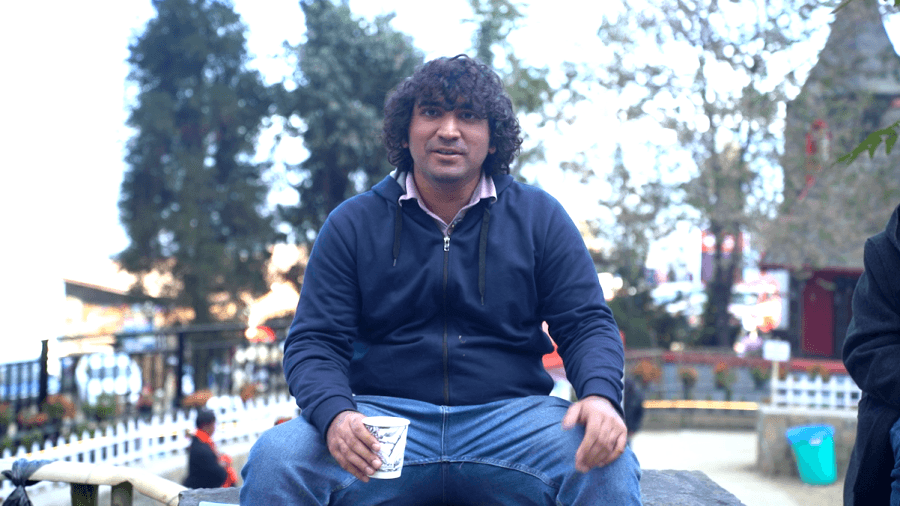
KOHIMA — Despite some criticisms of the Hornbill Festival on social media, first-time visitors say that the festival is fascinating and offer positive feedback as they get to witness and experience the unique culture of the Nagas.
Russell Mathias from Bangalore, visiting Nagaland and the Hornbill Festival for the first time, told Eastern Mirror that he is a solo traveller and learned about the festival two months ago when a stranger in Mulki mentioned it to him.
“I’m too spontaneous, so I just came anyway,” he said.
He shared that he was told there would be many traditional events, but joked that when he arrived on Sunday evening, “it was a place full of rock people.”
However, after watching the cultural performances on Monday morning, he said that he was able to witness “genuine tribal indigenous customs,” describing the experience as “great.”
Mathias also noted that Nagaland has a strong rock-music influence “which is not as prominent in the South, and that is interesting.”
Also read: Hornbill Festival 2025: Irish delegates highlight deep cultural parallels with Nagaland
Joking about food, he said that while he enjoyed the festival, he “did not like the dog meat that much.”
He also remarked that although Nagaland is officially a dry state, “they are drinking more alcohol here than they drink in Bangalore—definitely beyond my expectation, in a good way.”
“This festival is interesting enough, and as long as the government can make the state less dry and legalise things, it would be great. The festival is as perfect as it gets,” he added.
Pratima Aggarwal, a tourist from Chandigarh visiting for the first time, said that she came on the recommendation of a friend who attended last year.
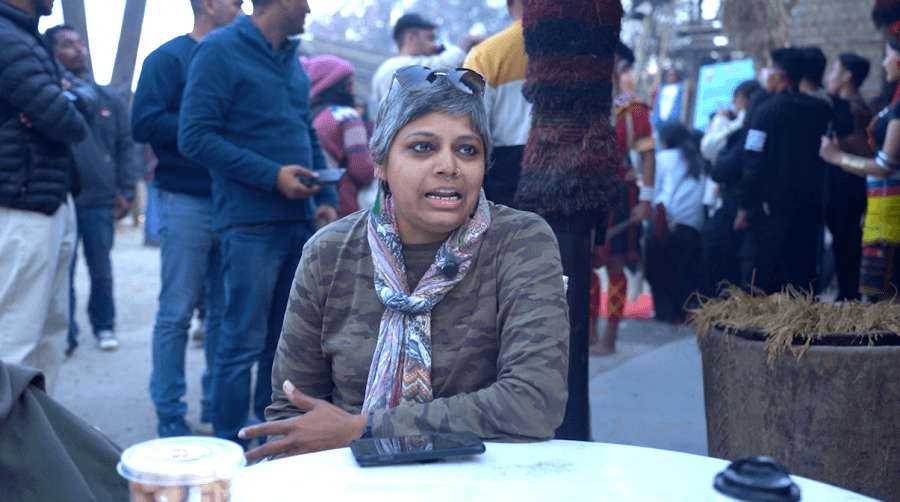
She arrived with an open mind, eager to experience something she had never seen before. She plans to attend the last four days of the festival and is looking forward to the closing ceremony.
Having witnessed only the morning segment so far, she said that the tribal performances were “beautiful,” adding that the event is well-organised, the venue is clean, and the village is “well maintained.”
Brits impressed
A senior citizen couple from southern England, Simon Hamlyn (81) and Susan Hamlyn (78), said that they are having a “fantastic trip” since arriving in Nagaland. They especially enjoyed their visit to a Konyak village, where they met former headhunters.
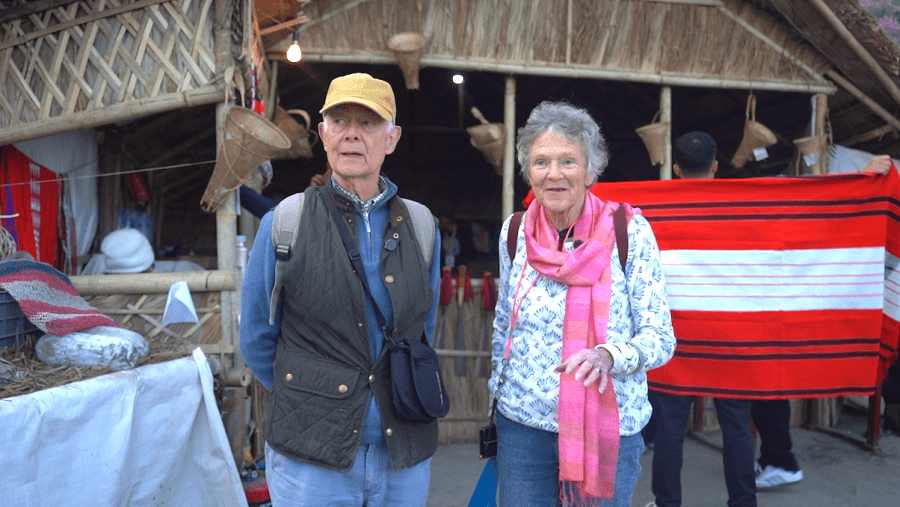
They described the Hornbill Festival as “a brilliant way to promote unity” while showcasing the distinct identity of each tribe, adding that the event is “well arranged and well put together.”
They expressed hope that the festival “lasts many more years,” observing that everyone seems to be enjoying the display of traditions and activities.
When asked how they learned about Nagaland, the couple said that in England, people have heard of the former headhunters, which sparks curiosity.
They added that they have close friends whose great-uncle served in the British Army during World War II in Nagaland, fighting alongside Naga soldiers, and those friends had shared stories about the state.
They said they would return home and tell those friends—who had warned them that Nagaland was dangerous—that it is, in fact, “a lovely place.”
Merenla Imsong, who was visiting Kisama, recalled attending the Hornbill Festival for the first time in high school when it was held at the local ground in Kohima with only a few stalls and morungs. She said that she never expected it to grow into such a large event.
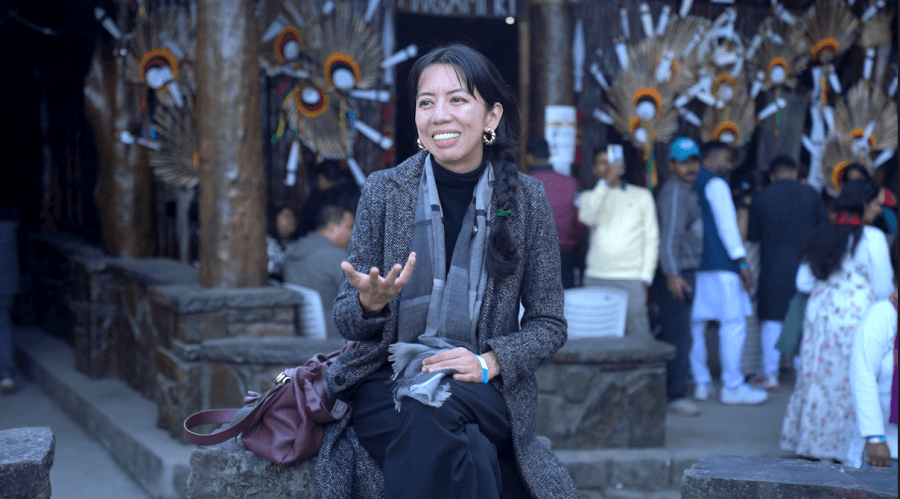
Now, with a dedicated venue and expanding every year, she returns mainly to watch the cultural programmes and enjoy the food.
She said that the festival is “a great introduction to Naga culture” for first-time visitors and always recommends it to tourists.
Apen Tanujang and Pfuzoto Tetseo, both working with the Tourism department for this edition, said that the Hornbill Festival is the only time of the year when all tribes come together to celebrate and showcase their heritage to the world.
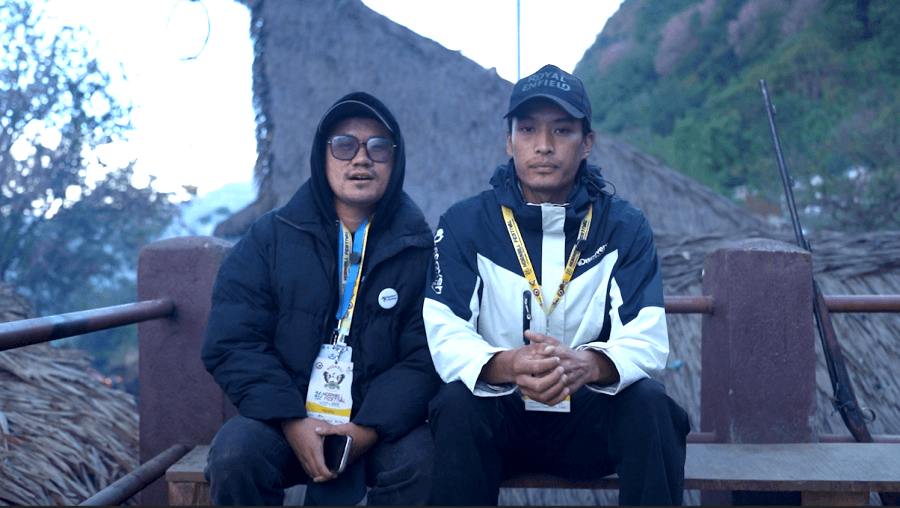
They shared that this year, the department is collaborating with four Nagaland-based creators and Pluc.TV, a social media marketing agency, to digitise all the morungs—an initiative that is helping travellers access information about tribes more easily.
The department of IT and Communication has also introduced the ‘Discover Kisama’ app, which provides details of morungs, restrooms, food stalls and other services, and works offline.
They recommended that tourists visit the festival as it offers a rare opportunity to meet all tribes in one place, something difficult to achieve by travelling across all districts.